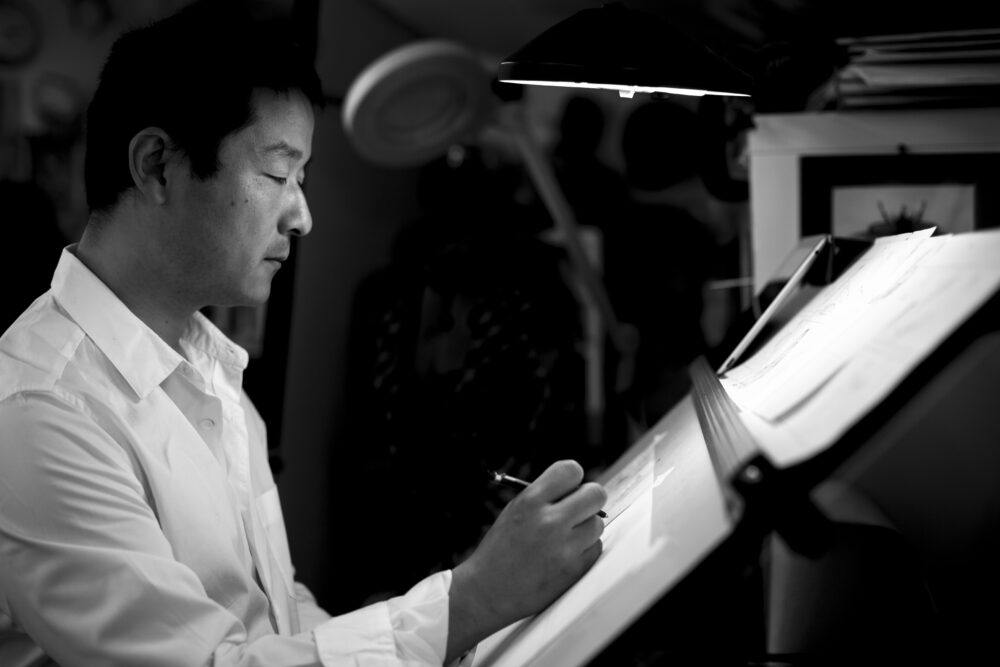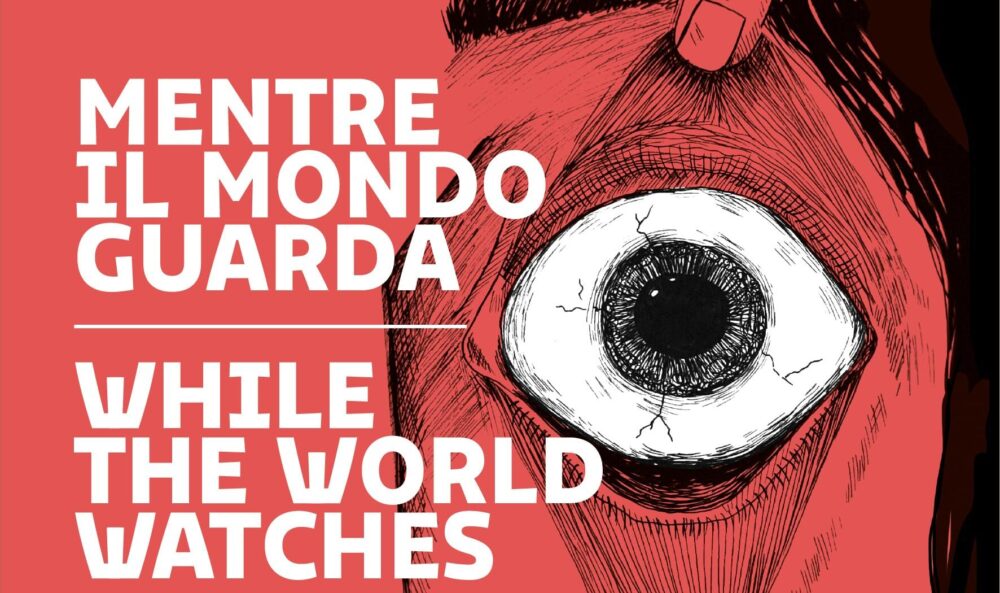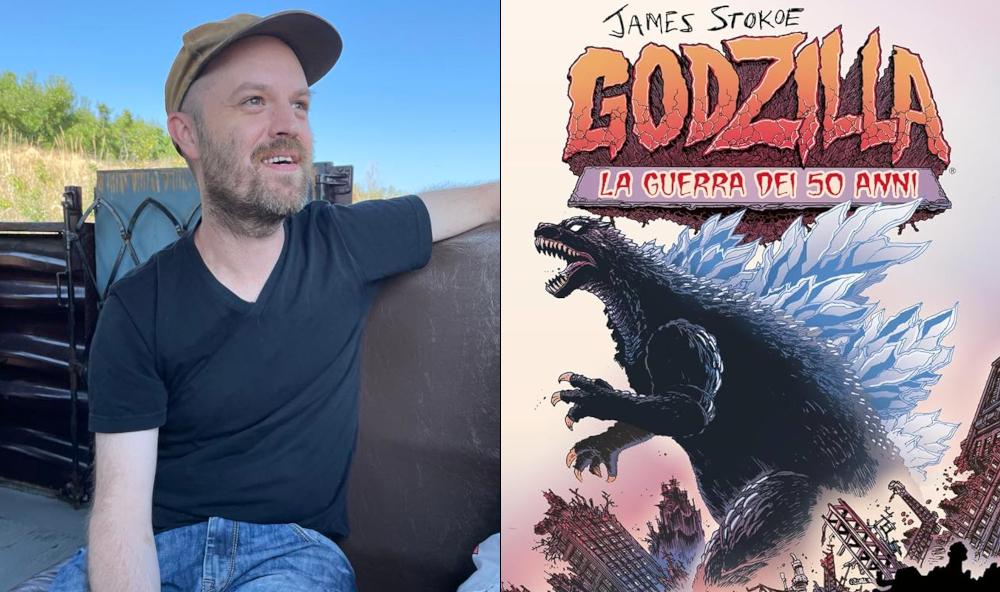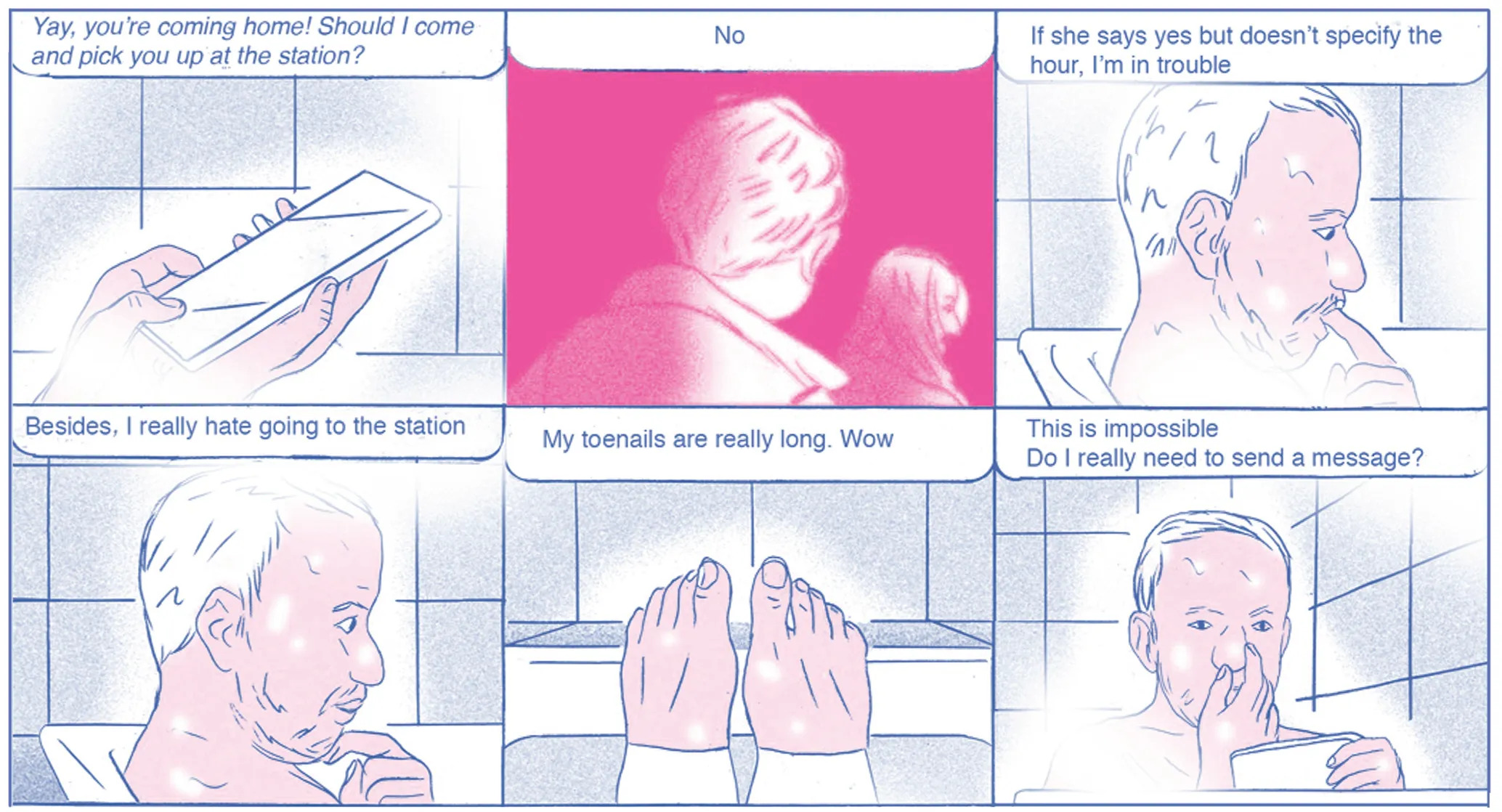
On the occasion of Coconino Fest 2026, the fifth edition of the festival organized by the publisher of the same name, we had the opportunity to interview Olivier Schrauwen, whose Portrait of a Drunk was published in Italy by Coconino in 2024 and who is presenting Sunday in 2026.
Originally published as four risograph-printed comic book issues by the Berlin-based publisher Colorama and later collected into a single volume, Sunday was one of the most acclaimed books of 2025 in the United States. Compared to Joyce’s Ulysses by none other than Chris Ware, the story follows a single Sunday in the life and thoughts of Thibault Schrauwen (loosely inspired by the author’s real-life cousin). The protagonist’s stream of consciousness, constantly present at the top of every panel, unexpectedly connects his day to that of a large ensemble cast moving through their own lives simultaneously, though in different places.
A rich, funny, and thought-provoking work, both narratively and visually, it can easily be placed alongside major comics such as Here by Richard McGuire and Blurry by Dash Shaw. It is an intimate yet universal story—cruelly ironic and subtly moving—compelling in its portrayal of everyday life, extraordinariness, pettiness, and the often unrealized potential of every human being.
With the Belgian author, we discussed both his works published in Italy and those yet to be translated, while also taking a closer look at the flawed protagonists of his stories and the next comic he is currently working on.
Hello Olivier, and thank you for your time. You’re returning to our pages more than ten years after our last interview: it was 2015, you were a guest at BilBolBul with a solo exhibition, and none of your works had yet been published in Italy. Now you’re back at Coconino Fest, and Coconino has published two of your books, Portrait of a Drunk and Sunday, which you’re presenting here in Ravenna. First of all, how does it feel to return to Italy and be at this festival with an exhibition dedicated to Sunday?
It’s definitely wonderful. This is the first exhibition devoted to Sunday since it was published, and quite some time has passed since its release, so it feels a little unusual. I certainly wouldn’t have expected an exhibition in Italy, especially in such a beautiful venue. It’s fantastic.
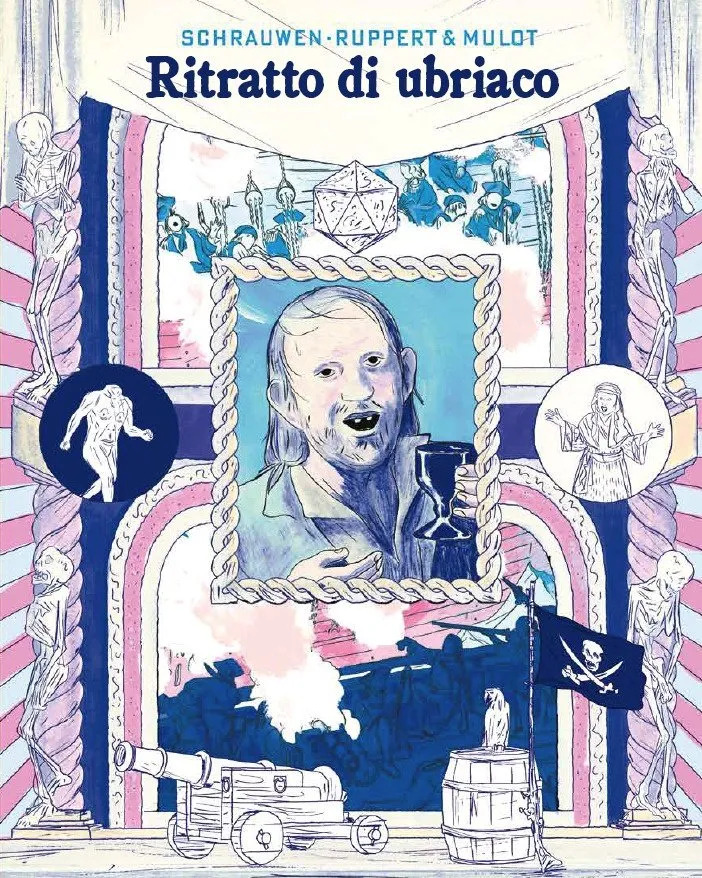
Let’s talk about Portrait of a Drunk, a decidedly grotesque pirate story whose protagonist is a rather petty and inept man who survives dangerous situations in the most absurd ways. What was it like for you to create this comic (based on a script by Ruppert & Mulot), particularly in terms of its historical depiction and the pacing of such a wild, adventurous story?
Portrait of a Drunk was made quite differently from the way I usually work because it was developed in collaboration with two other authors. We never clearly defined our respective roles, but in the end it was Ruppert who wrote most of the story. Even afterward, we didn’t discuss it very much; we simply started making the comic and gradually discovered where it would take us. At first, however, it was leading us in the wrong direction, and halfway through the process we had to steer the story back onto the right track. From that point on, it became something else entirely.
What do you mean when you say it was leading you in the wrong direction?
At first, we didn’t really know what the book was going to become. We followed the initial idea, but what emerged felt too conventional. That’s why we removed many elements, making the form simpler and more radical.
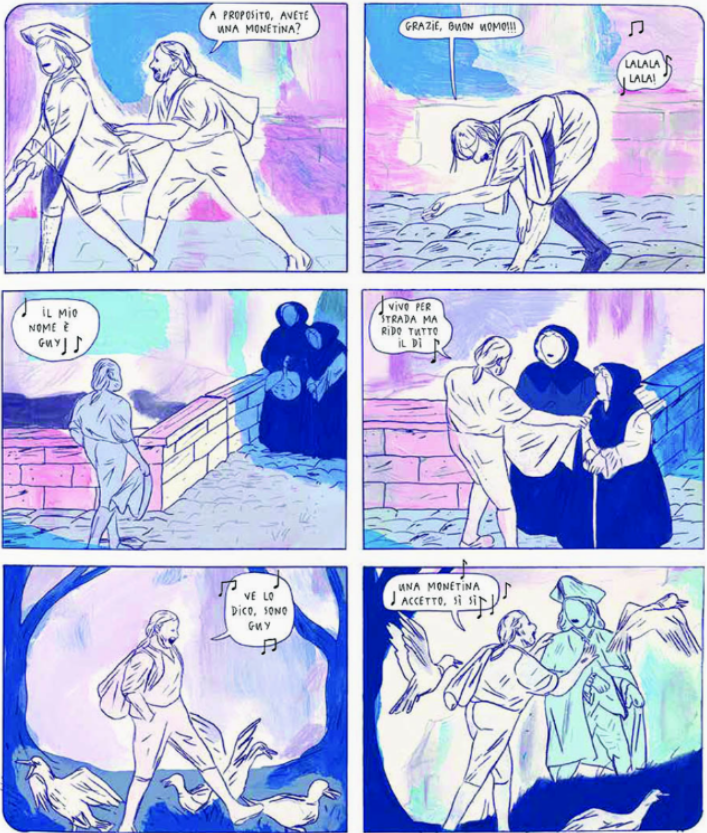
Guy, the protagonist, represents a deconstruction of the pirate myth. What attracted you to a clumsy drunkard who survives by the skin of his teeth, making him worthy of an entire book?
Pirates are often portrayed as rogues and alcoholics, but they usually have some quality that makes them relatable. Sometimes they have a heart of gold; other times there is something in their personality that makes them charming or worthy of sympathy. We didn’t want to give Guy any quality that could justify him or make him more understandable.
As a reader, you keep hoping that at some point during the story Guy will reveal some positive trait or emotion—for example toward the young boy who follows him around—but that never happens. The soul of the book is really Ruppert, and I think he’s slightly more nihilistic than I am in the way he approaches storytelling. If I had made this book on my own, I probably would have looked for another element to set against Guy, but that wasn’t the case here.
In the end, it’s a simple and bleak portrait of a person who never changes. By the story’s conclusion, it feels as though everything is beginning again in an endless loop, with the protagonist ending up in the very same place where he started.
Was that also your intention—to deconstruct a genre in order to offer a more ridiculous but also more truthful representation?
I wanted to get rid of the aspects I mentioned earlier, but I didn’t want to destroy the pirate figure altogether. I still wanted the book to contain recurring elements from pirate films and literature, such as the enormous ships and the epic tone of the adventure. I wanted those elements to remain intact so they could serve as a contrast.
In some ways, Guy resembles Thibault, the protagonist of Sunday. What draws you to these kinds of characters? They are often written in such a way that it’s difficult to truly empathize with them—in fact, they can be irritating or even repellent.
That’s a question I’ve thought about a lot without ever really finding an answer. There’s something about characters like Guy or Thibault that isn’t entirely clear to me, and that can make them interesting as a starting point for a story—but only if there’s a contrast with other characters who have very different personalities.
Having someone at the center of a story who is somewhat naïve or lacks strong willpower can be an interesting point of departure. A simpler explanation might be that, when I watch widely acclaimed films or read highly praised books, I often feel that the characters are made a little too deserving of sympathy in order to make the experience more enjoyable for the audience.
What about all those traits we see around us in everyday life that aren’t represented often enough in many forms of media?
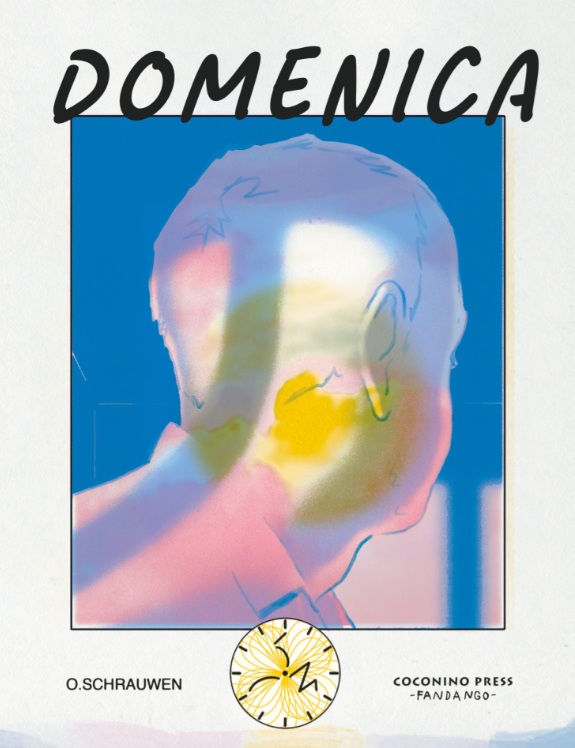
Sunday follows a single day in Thibault’s life with an extremely detailed temporal structure, opening a window onto each of his thoughts. First of all, how did you come up with such a distinctive and dense work? Was there anything from your own life, or from the lives of the people around you, that inspired this story?
I always draw on anecdotes from real life—things I hear, fragments of my friends and family, or whatever situations I happen to find myself in. There’s always some of that in my comics, but I would never make a completely autobiographical one. In comics, moreover, everything becomes more grotesque than it would be in real life. My characters are very comical, and I would never say that any of my friends behave as badly as the characters in my books.
I certainly hope so! What led you to introduce the figure of your fictional cousin (the protagonist of Sunday*, ed.)* ?
It’s something I started doing years ago with the introduction of an alter ego of myself. Over time, I created an entire family, and all of the characters contain scattered traits taken from my real relatives, because I liked the idea of inventing a family that would still maintain connections to real life.
How did you work on this comic? Did you run into moments of difficulty while building such a dense structure?
Yes, there were many difficulties during the development, but that’s what always happens to me when I make a comic. There was a lot of planning involved, and also a bit of luck at several points: some elements worked better than I had initially expected.
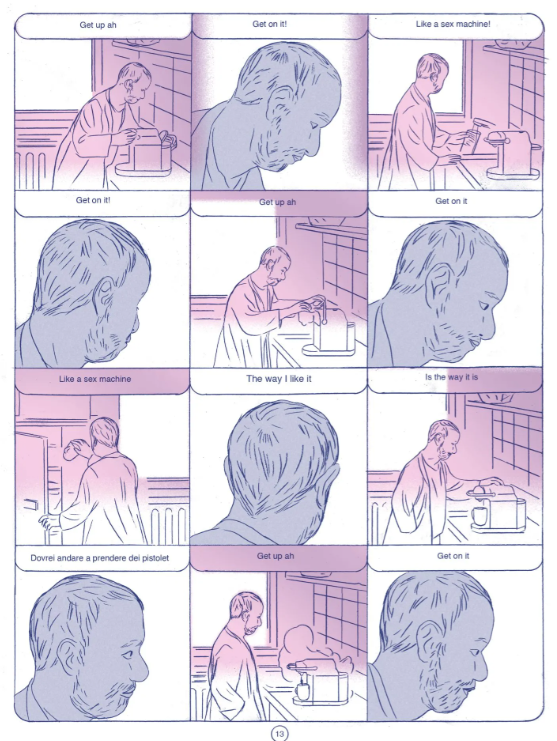
In Sunday, the top of each panel contains the protagonist’s inner voice, whose thoughts don’t always match what is happening in the lower part of the panel, so I didn’t know whether it would work. At first, I had written a script, but not all the elements were already there. Day by day, I added and completed this puzzle, until the comic developed the dense structure it has now—one that I couldn’t have imagined when I started.
So the structure of the comic also came later, once you already had a clearer overall picture of the story?
The outline was already there, but many details and small jokes were added as I worked on the comic. For example, his vision of himself as a stand-up comedian gradually found its way into the story.
And was this also true for the other characters? Did you already have something in mind, or did they develop as you continued working?
The characters were there, at least partially. I knew there had to be three people besides the protagonist: his ex-girlfriend, his current girlfriend, and his friend, who is a kind of party animal. I wanted those four characters, and the others were added more arbitrarily.
One could say that the protagonist of Sunday is a victim of his own stream of thoughts throughout the course of the day, ending up trying to distract himself through films, music, and pornography. Do you think the rise of social media and the constant speed of the modern world have intensified this tendency to try to always stay busy, even by constantly thinking about something?
I realized that Thibault doesn’t actually spend a huge amount of time on social media. He uses his phone sometimes, but not that often. Nevertheless, his day is completely fragmented.
I think he probably has some kind of ADHD or attention deficit, something that more and more people seem to have. Around me, I see an increasing number of people who struggle to focus on doing one thing at a time, and it even becomes difficult to talk about a single topic with some people.
Your work is characterized by a dense grid of panels on almost every page, with only a few sporadic exceptions. What were the main reasons that led you to develop this structure? Did you ever worry that this choice might limit you, for example in terms of drawing?
The grid is almost always made up of panels of the same size. When I started making comics, I varied the page compositions a lot, but the result was almost never what I wanted. That’s why I developed this very simple layout, which is still very comfortable to work with, so I never really felt restricted by it.
On the other hand, the new book I’m working on doesn’t have such a rigid grid—it’s very different. Maybe I really did want to change the kind of structure I was using, but the grid I chose was the one best suited to Sunday, because it was important to work with the rhythm of the day. For that reason, I needed a simple layout to work with.
Also, from the reader’s perspective, a structure that was too complex would have made this story excessively difficult to read.
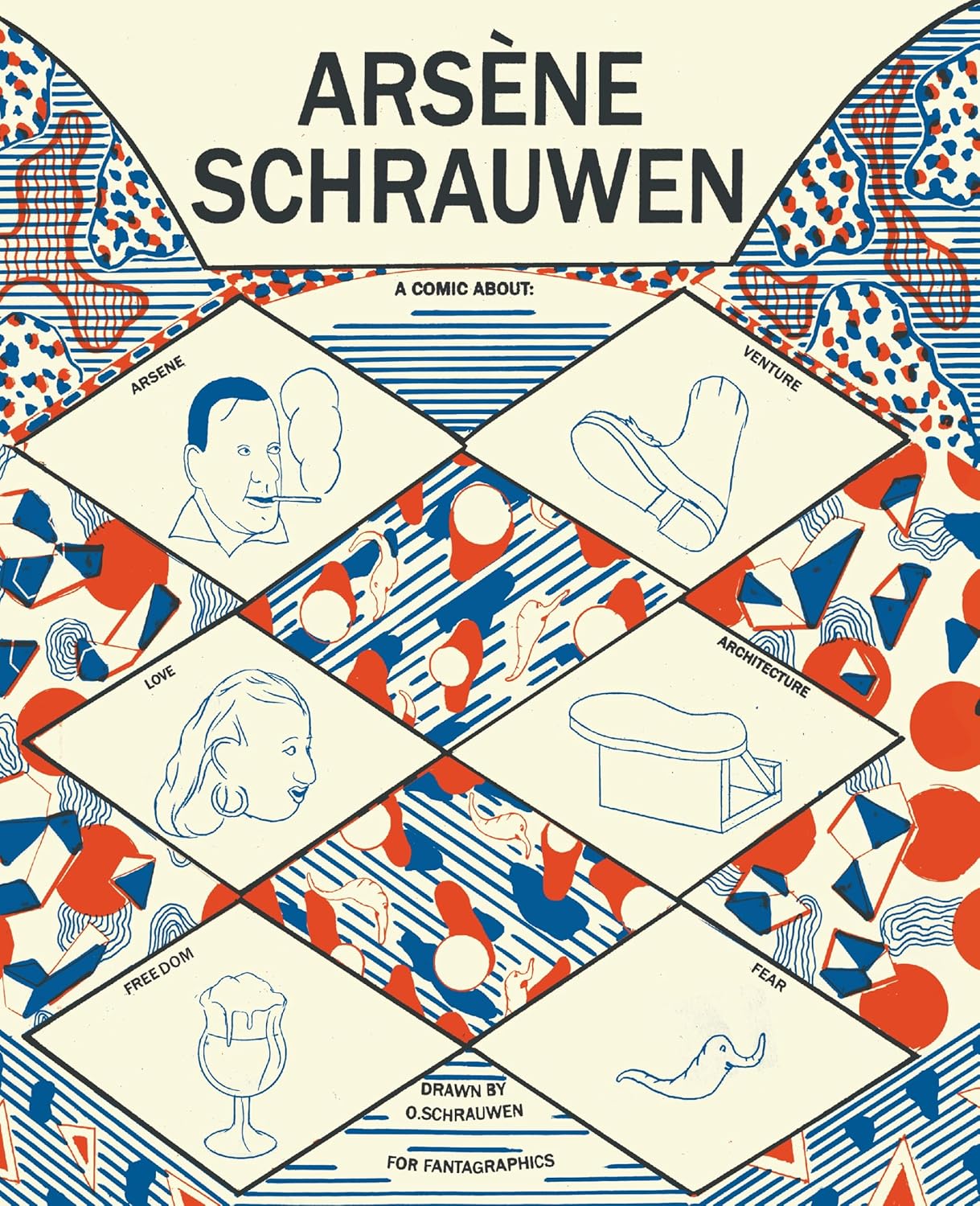
One of the questions we also asked you about Arsène Schrauwen concerned what surrounds the panels: in this case, many panels are framed by graphic and design motifs, almost as if they were creating frames for snapshots of life. How do these elements fit into your storytelling?
At first, I added them by coincidence. When I started working on Arsène Schrauwen, I hadn’t yet included those motifs, but around the same time I was working on another project for which I began studying various magazines, such as dog magazines or teenage magazines. I noticed that they all had these extravagant, detail-rich layouts, and looking at them inspired me to introduce them into Arsène.
At first, they were purely decorative, but I knew I could use them to communicate a certain kind of emotion—for example, at the end of a specific chapter or an important sequence.
This also connects to your choice of including moments in each of your books where reality and fiction blend together. It almost feels like a way of creating a counterpoint to what you are telling, which in this case is deeply rooted in an everyday context—not realistic, but believable. What do these dreamlike and surreal elements represent for you?
I have already reduced the amount of surreal elements compared to my earlier books, and my next book will also be more realistic, so I think this tendency is gradually disappearing. A story always contains some kind of metaphor for talking about something that isn’t actually present on the page, and I felt that using something absurd or surreal as a metaphor was more powerful as a way of expressing myself, especially when I was younger.
In the fourth chapter, there is an extensive reflection on language and its usefulness as a means of communication. Do you think language is what makes us unique and separates us from other species, or is it limiting, making it impossible to fully express ourselves through it?
That specific sequence was shaped around the character himself: both because he is a letter designer and because he can sometimes be a little too arrogant. Thibault has all these theories about communication and the limits of language, but at the same time he doesn’t talk to anyone and stays inside his own house. Maybe actually speaking with another living creature using real words would have helped him more (laughs).
And what was the page you enjoyed making the most? The book contains so many different graphic solutions, especially in terms of page construction.
There are very simple pages, where the drawing is reduced to its bare minimum, because I want people to read them quickly—maybe those are the ones… But I also draw them quickly myself, whereas other pages are painted on paper or digitally and are more fun to make.
Those pages, however, are also created for the reader, while I always try to think about the story as a whole. I’m only really happy when I look at a drawing in its context. When I look at it separately from everything else, I’m never particularly enthusiastic about it.
In the comic, the protagonist says: “We old people have to leave all the space to the young… It’s up to them to come forward with new ideas that we old people will increasingly struggle to understand.” Do you agree with this thought? Do you think your works can help young people grow and develop?
I had never thought about it, but this sentence was also very closely tied to the character. I hope my comics contain that sense of playfulness that makes them appealing enough to excite people, making them think: “I could do this too.”
That’s what inspired me at the beginning: when I read comics by certain artists and they seemed both beautiful and within my reach, I found that very stimulating.
When comparing your works, you can see that there are always two main colors used for most of the story: in Arsène Schrauwen and Mowgli’s Mirror, blue and orange dominate, while in Sunday and Portrait of a Drunk you use blue and pink more prominently. What led you to this choice, and why these two colors specifically?
One of the reasons is practical: my comics are printed using the RISO technique and, since the machine can only print two colors at a time, it’s more convenient.
Also, I’m slightly color-blind, and everything becomes more confusing if I introduce too many colors. When I started out, I used every color, but it became too complicated. Now I use at most seven or eight shades.
Generally speaking, I prefer to keep the drawing as simple as possible, creating something more complex only occasionally.
Thank you again for your time. I have one final question. Is there any meaning behind the “Rambo tequila”, the drinking game that appears both in Portrait of a Drunk and Sunday [the game consists of taking a shot of tequila, biting into a slice of lemon, and then getting slapped in the face — ed.]?
The main reason is that I was working on both books at the same time, and I thought it was funny that a pirate-related element could return four hundred years later in a contemporary context. I have some friends who used to do it in the past, and it’s such a ridiculous game that it fit perfectly into both works.
In Italy, we usually just lick a little salt, but we don’t slap our friends.
Yes, it’s a stupid custom. But it’s great for cleaning your nasal cavities (laughs).
Interview conducted live in Ravenna on 01/06/2026.
Thanks to Coconino’s press office, and especially Luca Baldazzi, for their availability.
Olivier Schrauwen
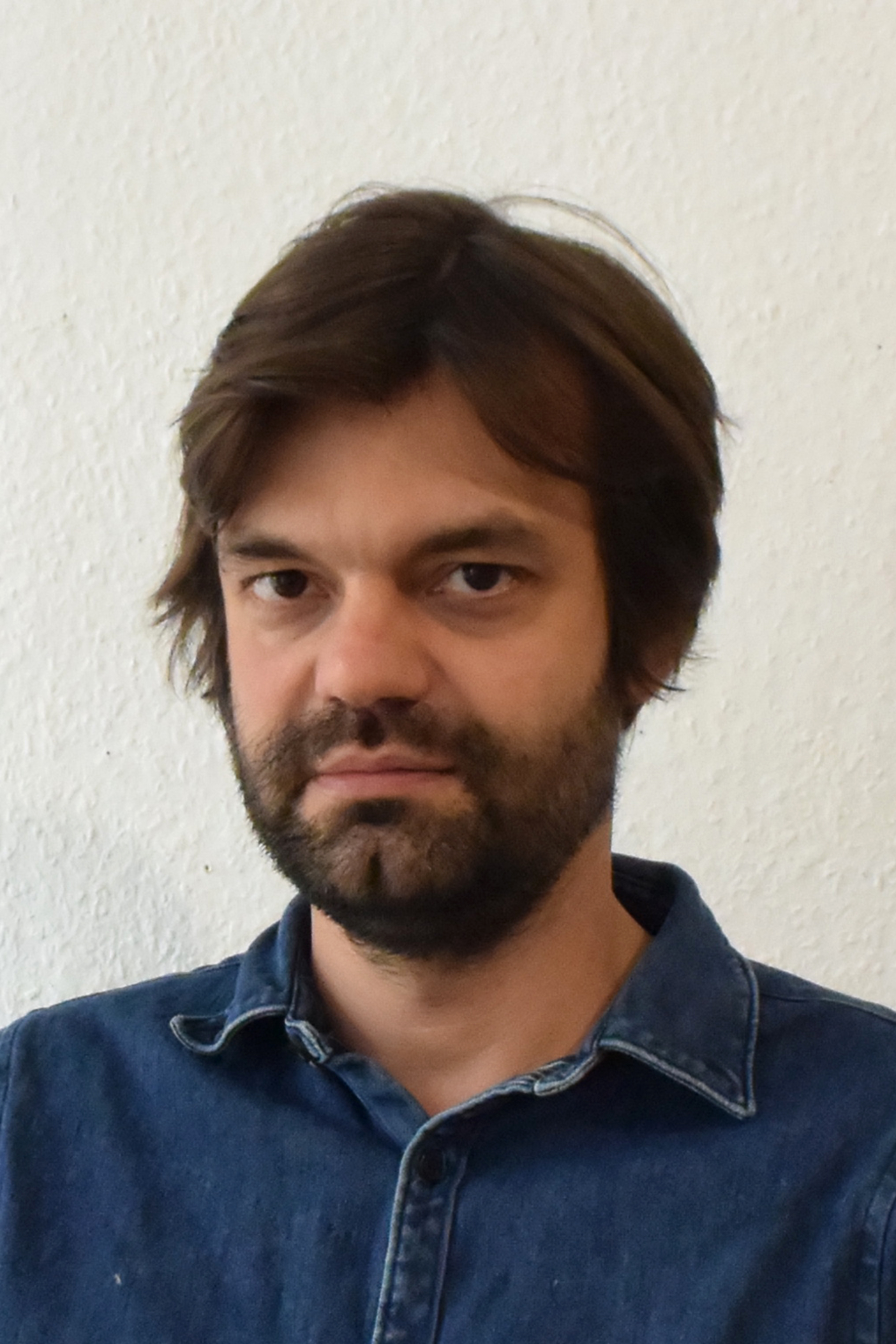
Born in Bruges in 1977, he studied animation at the Academy of Fine Arts in Ghent and comics at ESA Saint-Luc in Brussels. My Boy (2006), published in Italy by Comma 22, was his first book, followed by The Man Who Grew His Beard (2011), numerous collaborations with major avant-garde magazines—including the Italian Canicola—and the graphic novel Portrait of a Drunk (Coconino, 2021).
With Arsène Schrauwen (2014), Parallel Lives (2018), and Sunday (2025), he has established himself as one of the most original and innovative voices in contemporary comics. His work is characterized by a constant exploration of the boundaries between reality and imagination, by unconventional narrative structures, and by characters who are often flawed, absurd, and profoundly human.