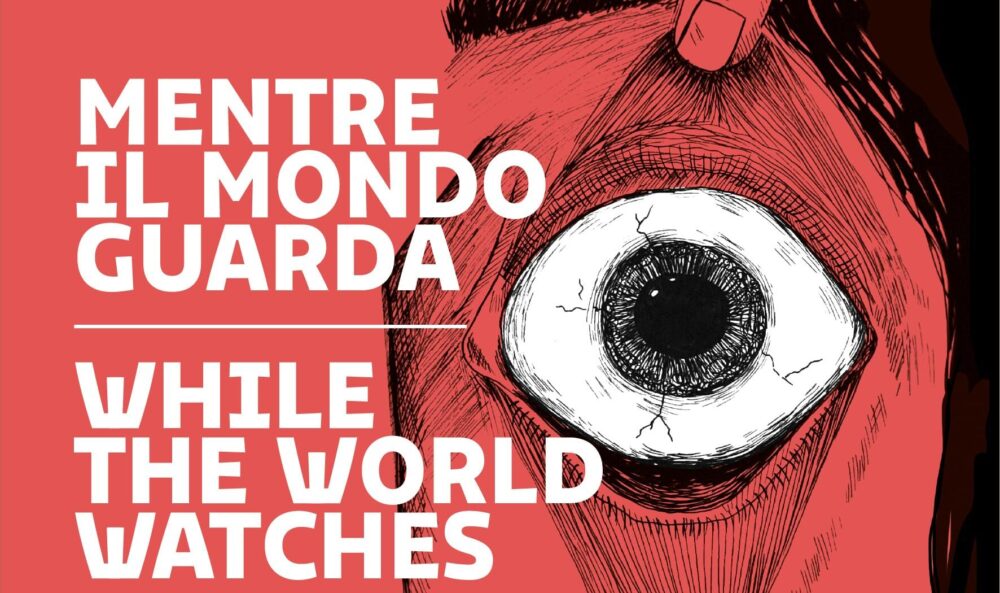
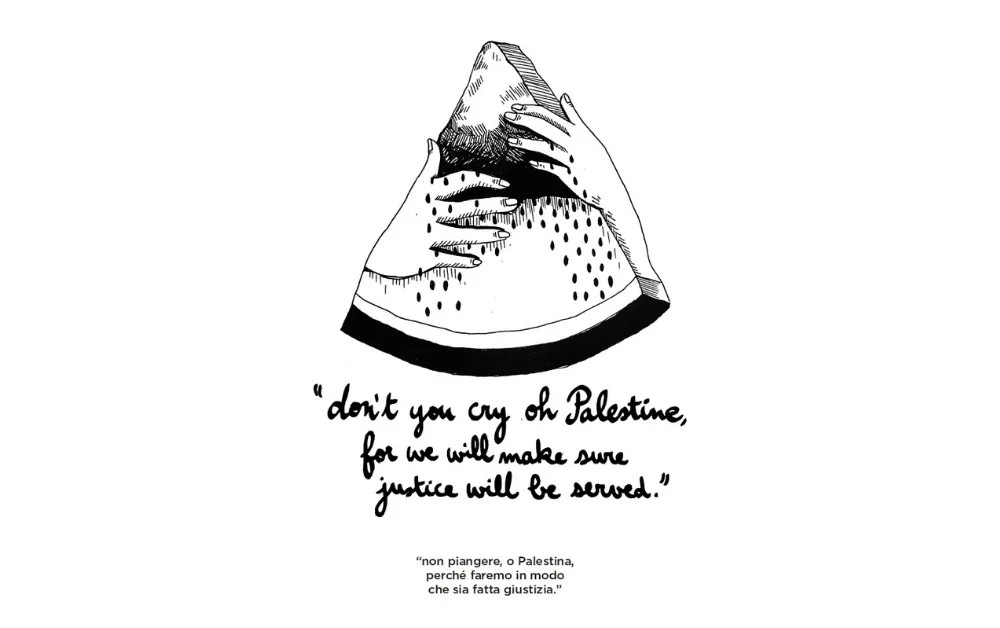
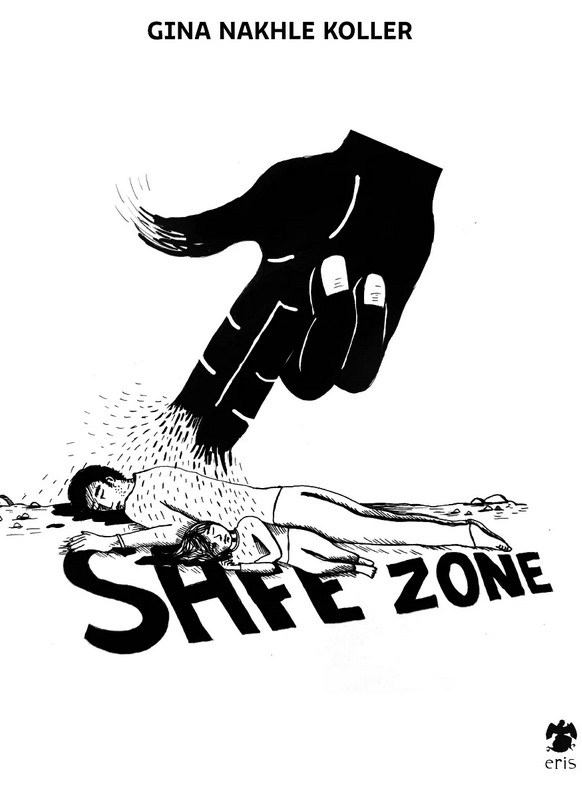
At this year’sNapoli COMICON 2026, the story of the invasion of Gaza and the genocide of its people received particular attention through Pop Wave – COMICON for Palestine, a series of exhibitions that brought together Palestinian and Italian artists to represent not only the ongoing tragedy, but also the culture and art of an entire people. Among these exhibitions was also a selection of cartoons from Mentre il Mondo Guarda/While the World Watches, a volume published in Italian and English by Eris Edizioni and created by Lebanese illustrator and cartoonist Gina Nakhle Koller, a guest of the publisher and featured in several talks during the festival.
We spoke with her about Gaza, activism, and how comics can portray the reality we live in.
Hi Gina and thanks a lot for your time. I would first like to start from your beginning. When did you think about starting as a cartoonist, as an illustrator?
I’m one of those people who knew exactly what I wanted to be since I was really a child. My mother is an art teacher, so I grew up around art, but I really started very young, probably around five years old when I started drawing. My very first comic was when I was about 13 or something like that.
Then, of course, I continued in this direction: I studied and focused on graphic design and illustration.
When did you decide to go into activism and political drawing? Your comics are a lot about what’s happening around us, especially those regarding Palestine.
I was always very interested in drawing or depicting things that came from my own experiences or from real life. My master’s thesis, for example, was about the visa process. Because I’m Lebanese, I made a book, which actually was never published, about how difficult it is to get a visa, about the bureaucracy around it, how complicated it is, and how many people, especially those having a European passport, have no idea. So I always knew I wanted to do something that matters, something that shows others these differences.
Coming to the book I’m doing now, I didn’t start with activism in mind. After October 7th, I was alone, living in Switzerland, being Arab and away from my family. Growing up with the whole situation in the region, I knew exactly what kind of response the Israeli government would have toward the Palestinian people. I was full of mixed emotions and had to start drawing my feelings. That’s how it began.
I had been creatively blocked for about eight years after my master’s, and that’s when I picked up pen and paper again. This gradually turned into what people now see as activism or resistance. But it wasn’t planned—it started with expressing my feelings and became, in a way, documenting a genocide.
Here in Italy Arab or Middle East comics and comics artists are not really well known (maybe in France it is a bit different). Since you said you were surrounded by art as a child, were there artists from your country or nearby regions who influenced you? Or others from outside?
To be honest, as a child I was much more influenced by foreign comics rather than those from the region. They weren’t as popular, or I just didn’t know them at the time. I grew up reading a lot of French comics like Tintin and Asterix & Obelix, and also American comics like Archie Comics or Garfield. Very different from what I do now, of course, but I think I absorbed a certain sense of humor from them.
Later on, works like Persepolis from Iran really influenced me, especially stylistically with its black-and-white approach, which I love. And one of my biggest idols, though not from the region, is Joe Sacco, whom I admire immensely.
Only recently I’ve started discovering more Arab artists, which I wish I had done earlier.
Also because in Europe, or in Italy at least, many artists from those regions become known especially when they deal with social unrest or political topics.
Yes, exactly. And just to add, I grew up very internationally. I didn’t grow up in Lebanon, I grew up in Saudi Arabia, but in an American compound, and I attended a French school. So my influences were very mixed. Still, I was affected by the region through Lebanon, where I spent summers, and through events like the Gulf War, which I experienced firsthand.
What do you think comics can represent compared to other forms of art like photography or video, especially when dealing with political or real-world topics?
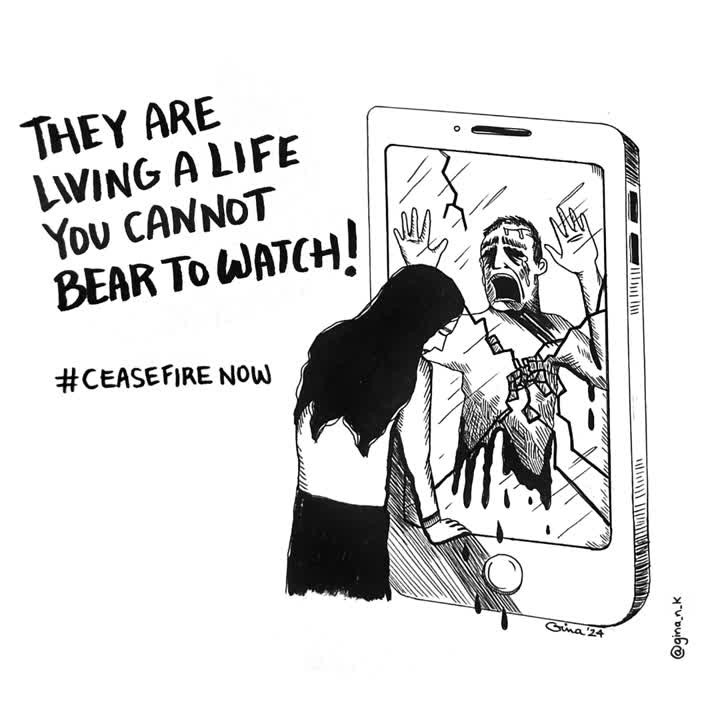
I think comics and illustration bring an extra layer to it. It’s a limitless medium. What I do now is often based on real photos from Gaza. Photos are very direct, but my drawings add a human element, mixing my interpretation with reality. It becomes a blend of fiction and reality.
This can make it easier for people to absorb. Sometimes images are so brutal that you can’t look at them for long, but illustration allows for reflection.
And this gets to my follow up question: what is your opinion on social media in relation to activism?
For me, social media has definitely helped spread my work. I didn’t even have an account when I started. One image went viral after a journalist in Gaza, Muathaz Aziza, reshared it, and that’s when I realized it wasn’t just about me: it was about spreading a message.
Social media, especially platforms like Instagram (really much used in Gaza), have been very powerful in showing what’s happening. But it’s also very fast—images are quickly consumed and forgotten. That’s why we decided to publish a book, to make people not forget it.
Yes, because there’s the risk of becoming desensitized, seeing everything quickly and moving on.
Exactly. That normalization is already happening. Even now, despite ceasefire discussions, bombings continue. That’s why the book is important to me: it’s a testimony, a record. We see the images and we know there’s a genocide, but we need to keep the memory alive somehow, to have it with us. Like many books from history about many other genocides that had happened.
Have you ever feared censorship or threats because of your work?
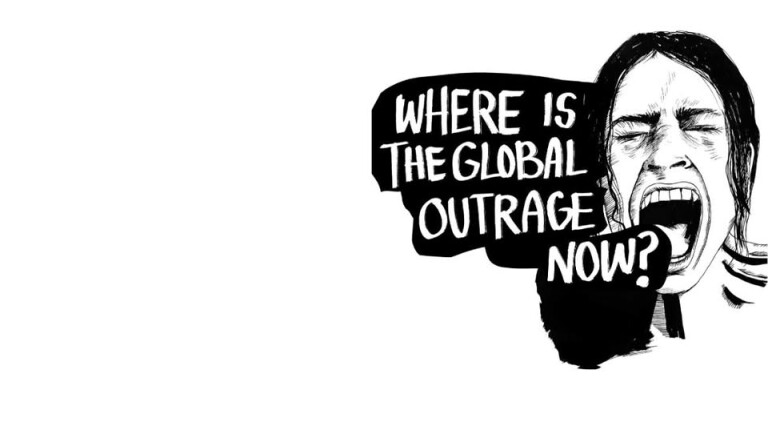
Yes, I’ve experienced some censorship on Instagram, like shadow banning. I’ve had criticism too, as some say my work dehumanizes people. But I’m trying to show reality through my perspective.
Nothing has been taken down so far, luckily. And no, I’ve never held back from posting something. Even if I hesitate, I always end up posting. I listen to the urgency of it and then I post it. So it’s very spontaneous as well: it’s part of the whole process. And the imperfections of my work makes it kind the best I can think about.
Have you received threats?
No direct threats, fortunately. But I’ve faced rejection. For example, in Germany I tried to publish a version of the book, and it was rejected without clear explanation. They said not mentioning October 7th was unacceptable, but my book is about what happened afterward, about Palestinian people.
So yes, it has been difficult to find understanding.
On the other hand, were there ever moments where you said that something was too much, that you couldn’t process it through your art and you said, I cannot do this? And on the other hand, when you’re doing that, how do you maintain some distance? So is there some distance you create in order to create the artwork?At first, there was no distance. I was emotionally overwhelmed, constantly crying. But I felt I had to do it.
Later, I stepped back a bit and tried to approach it more as an observer, a bridge between Gaza and the audience. Understanding my own background helped. My grandmother was Palestinian and left in 1948, and reflecting on my family history helped me process my emotions.
There are still things I cannot draw, like severely disfigured bodies by the bombings. I’ve drawn death, but some images are too difficult.
When watching all these horrors, we all feel really angry and powerless. What can individuals do against it?
We all feel powerless, including me. But I believe awareness matters. There’s a growing movement, more people are informed because they talk about it.
Boycotts, demonstrations, even just informing one person: all these things matter. I believe this system is not sustainable, and change will come, but we need to keep talking and applying pressure.
We attended your panel “COMICON e la Pop Wave palestinese”, where you were together with many activist and palestinian artists. We would like to ask you how was your experience in Italy compared to other countries, and how was especially in Naples?
It really moves me. When I first came to Italy, in Turin, I was shocked by how many Palestinian flags I saw. I had been living in a bubble in Switzerland.
Talking to people here, I realized how close many Italians feel to the Palestinian cause, even before October 7th. In Naples especially, I feel at home—it reminds me of Beirut.
It makes me feel that humanity is not dead. There are people who deeply care and feel something when they hear about Palestine. It’s very touching, and I’m truly grateful.
Thanks a lot for your work, Gina.
Interview done on May 2nd at Napoli COMICON
Thanks to Sonny Partipilo and Francesca for the support
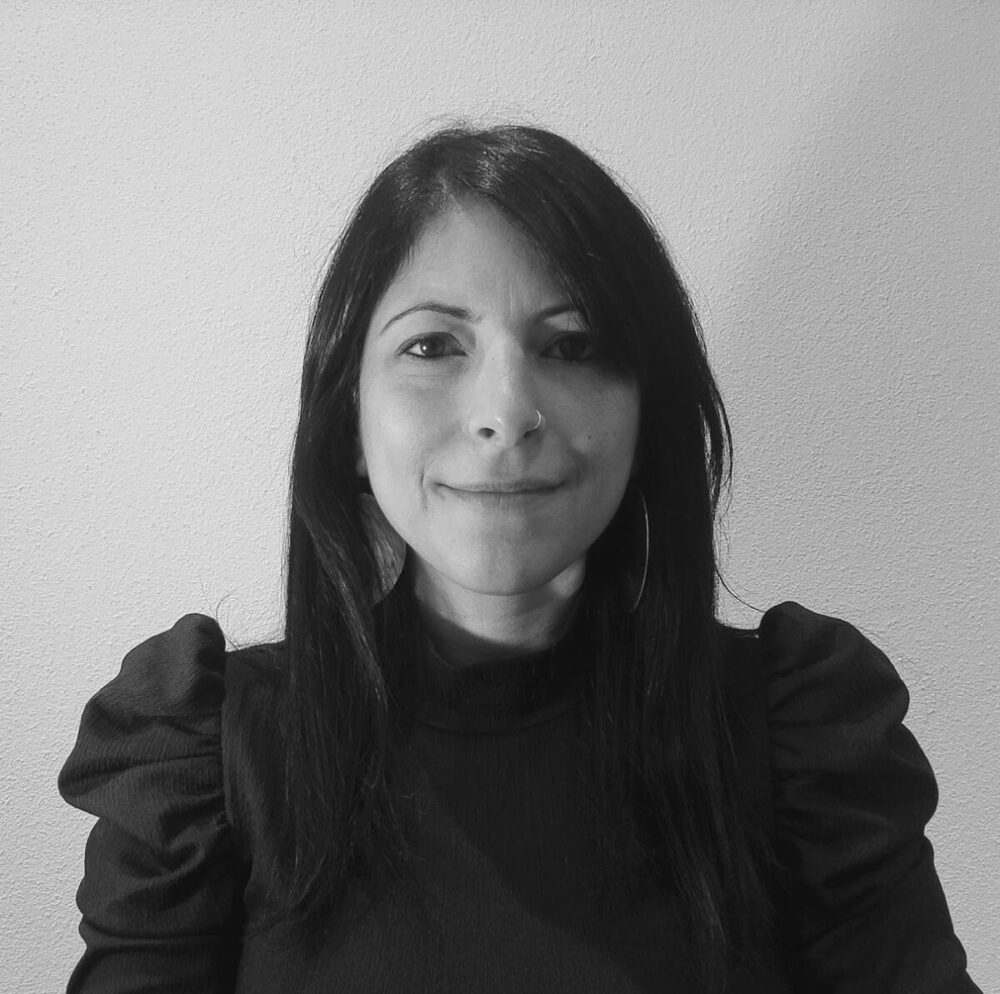
Gina Nakhle Koller
Born in 1982 in Lebanon, is an Comic Artist whose work is deeply rooted in her Lebanese and Palestinian heritage. Growing up amidst the challenges of a turbulent region, Gina discovered art as a powerful tool for self-expression and storytelling, a means to connect with her identity and shed light on the untold stories of her people. Palestine remains a central theme in Gina’s work, fueling her passion to create art that captures the resilience, struggles, and humanity of its people. In 2013, she pursued a Master of Arts in Illustration in Switzerland where she lives now, deepening her commitment to storytelling through visual narratives. Gina’s art transcends borders, inviting audiences to see the world through the lens of empathy and to engage with the voices of those too often unheard.