Over the past fifteen years, James Stokoe has emerged as one of the most versatile and creative artists in the North American comics scene, as his body of work clearly demonstrates. His highly dynamic style — blending American, Japanese (especially 1980s influences ranging from Katsuhiro Otomo to Masamune Shirow), and European inspirations, particularly the French tradition of Métal Hurlant — has been applied to grotesque and humorous stories (Wonton Soup, published by Oni Press and in Italy by Saldapress, or Sobek for ShortBox), action and fantasy stories (Orc Stain for Image Comics), as well as more reflective and horror-oriented works.
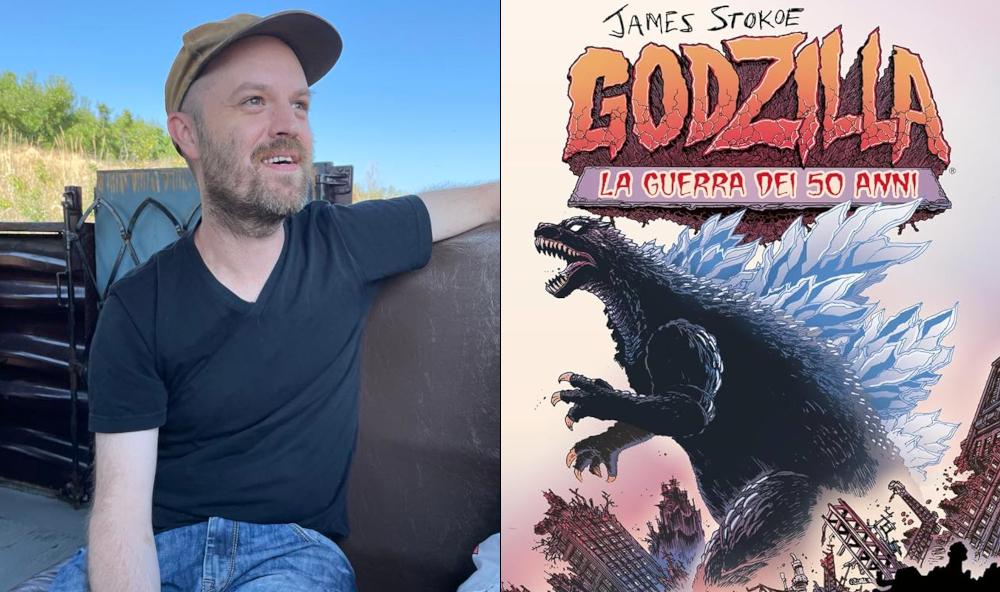
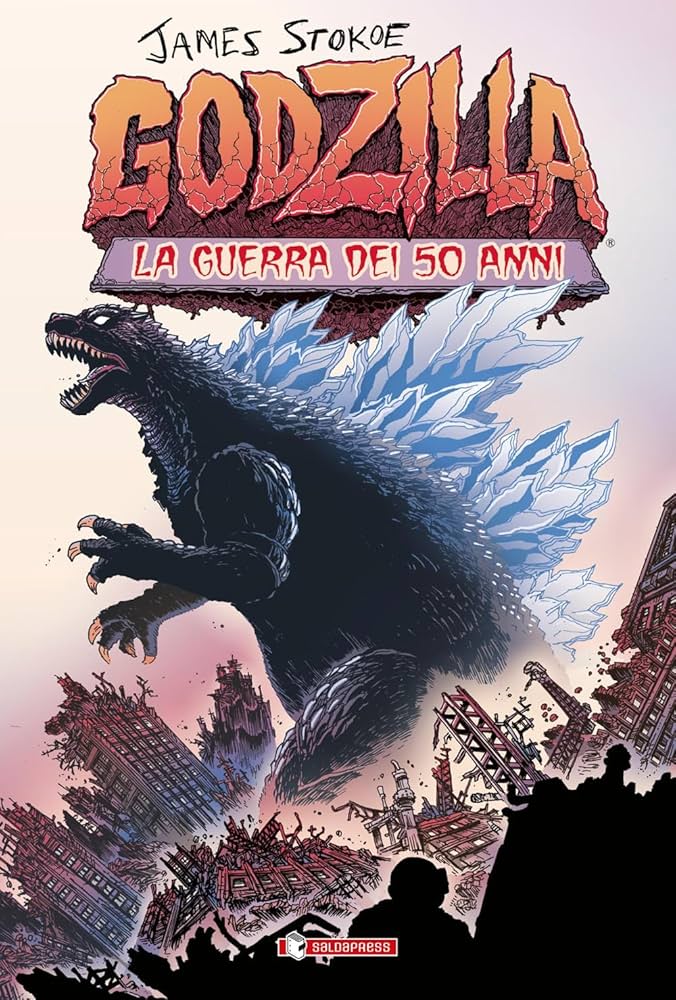
Among the latter are perhaps Stokoe’s most famous and powerful works: Godzilla: The Half-Century War, a story that explores the myth of the Kaiju through the eyes of a human being whose life is defined by a deep and inseparable relationship with this force of nature; and Aliens: Dead Orbit, which faithfully recreates the terrifying atmosphere of the first film.
A guest at Napoli COMICON 2026 for Saldapress, which has published nearly all of his licensed and creator-owned works in Italy, we spoke with James Stokoe about his career, his artistic tastes, his relationship with these iconic figures of popular culture, and his creator-owned projects — hoping that his latest work, Orphan and the Five Beasts (Dark Horse Comics), will soon be published in Italy as well.
Hi James and thanks for your time. I would like to start from the very beginning of your career: when did you start thinking about comics and illustration as a career? Where did it all begin?
Well, I’ve been drawing comics for as long as I can remember. I think I was drawing them even before I was really reading them. The idea of comics was already there…
I used to draw these little characters—there’s a candy in North America called Nerds, funny little cartoon-like things, basically small blobs with noses. I would create large cityscapes filled with these little Nerds characters having fun, and I started building small stories around them (laugh)…must have been about five years old at the time.
Later on, I had a friend who was really into collecting Marvel trading cards. I got into that as well, and we began drawing comics together. From there, it just kept growing. It’s always been something I wanted to do. I didn’t initially realize it could become a career, I figured that out a bit later on, but I knew comics had to come from somewhere, so I had to learn how to draw them.
Your style is very distinctive and personal. It blends different influences—not just American comics, but also Japanese and European elements. What shaped your taste, both at the beginning and today? Where do you draw inspiration from?
I read a lot of different things. When I was a kid, we did have a comic shop nearby, but I didn’t really like it that much. Instead, I used to go to a secondhand bookstore and browse whatever people had donated. So I read a lot of random material—Aliens comics that people had discarded, for example. I think someone once donated their entire Silver Surfer collection, so I read a lot of that, along with Spider-Man and similar titles.
Later, in high school, I got into manga, like Masamune Shirow’s Appleseed. As I grew older, I also discovered artists like Geoff Darrow, which led me to Moebius. So it’s just kind of bouncing all over the place (laugh). The internet also played a big role. I came up at a time when internet forums were very popular, I don’t know how many people remember that kind of things…
Yes, I remember those—I met many people from the italian comics community through them.
Exactly. They were great. Everyone would share what they were into, so you’d constantly be exposed to a wide variety of styles from all over the world. That had a huge influence on me.
One of the defining elements of your work is the presence of monsters and fantastical creatures. There’s a mix of playful, horrific, humorous, and even grotesque elements. What fascinates you about monsters, and what do they represent for you?
I just enjoy drawing them. When I draw a monster, I tend to “noodle” around until it looks right. That’s part of the appeal, as there’s no strict requirement for what it should look like. It can be completely freeform.
You don’t have to overthink it; it’s very instinctive, and that’s what I like about it. At the same time, there are projects like Alien, where the design is very specific and defined, and you have to really understand it. That’s interesting in a different way. But in general, I just love drawing organic shapes, it’s fun.
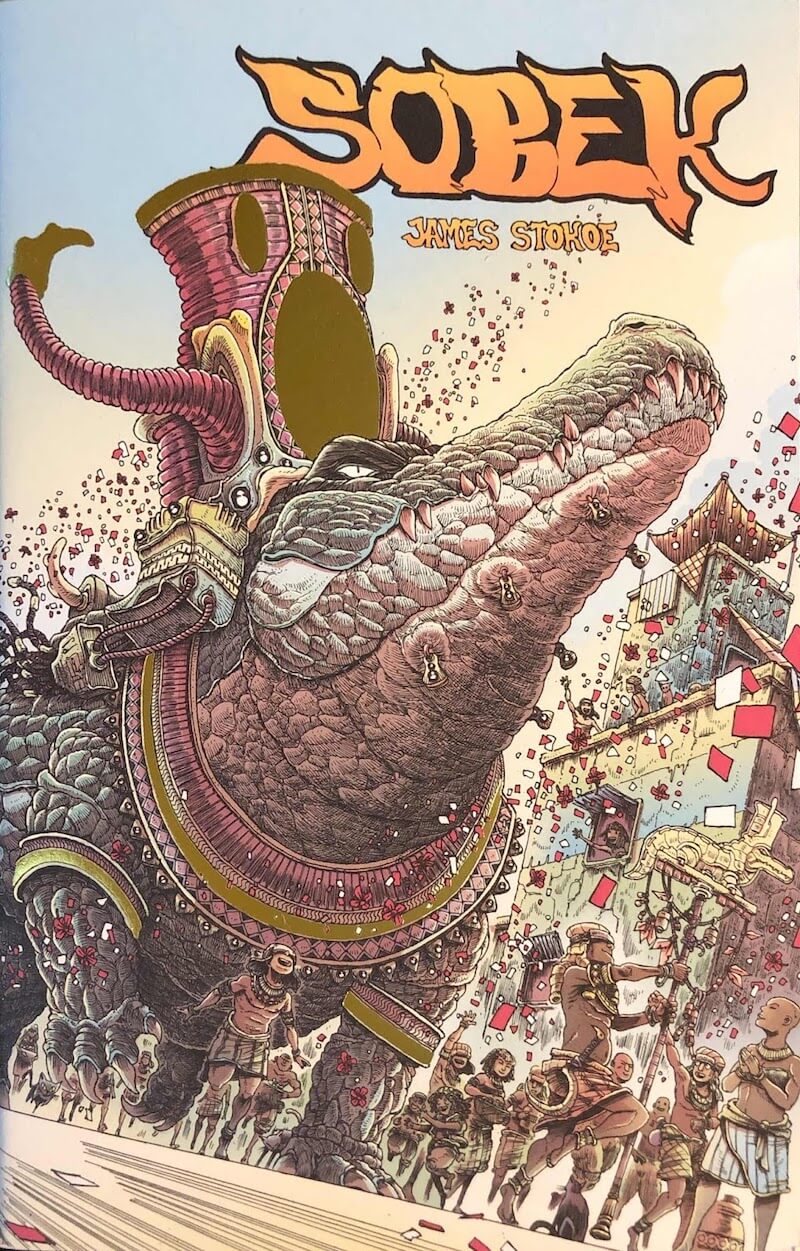
Looking at your career, from early works like Orc Stainand Wonton Soup, this one published in Italy by Saldapress, to later projects, you’ve often worked with publishers such as Image Comics, Oni Press, and Dark Horse, but also on smaller or independent projects, including Kickstarter ones, or for really small publishers (like Sobek, which you wrote for Short Box). In a market often dominated by two major companies, what has driven you to work mainly with independent publishers?
Well, if I think at Marvel projects, for example, they tend to be smaller in scope. I don’t want to speak negatively about them, because there are a lot of great people working there, but superhero continuity is something I’ve never really been deeply involved in. My contributions are usually more like “what if” stories, which I actually enjoyed as a kid.
Those kinds of projects allow for more freedom. Similarly, smaller independent publishers don’t expect you to follow a rigid structure. They simply want you to create something, enjoy the process, and make it as good as you can. I really like working that way.
You’ve created your own original works, but you’re also well known for working on established franchises like Godzillaand Alien. What is your relationship with these characters, and what was it like to work on them?
Both are things I’ve loved since I was very young. I grew up watching Godzilla movies, so getting the chance to draw him felt like a childhood dream come true.
Alien was different: it was funny, it came out of nowhere. It was my first collaboration with Dark Horse. I pitched several ideas, five or six, I think, and I had one I had drawn, I think it’s in the back of the big collected hardcover. It was more of an action story, but they were doing a lot of those at that time, so they wanted something more kind of like the first film, really claustrophobic and like a horror story. This ended up becoming Dead Orbit. I didn’t expect that one to be selected, so I had to quickly figure out how to make it work. It was a bit stressful, but in a good way.
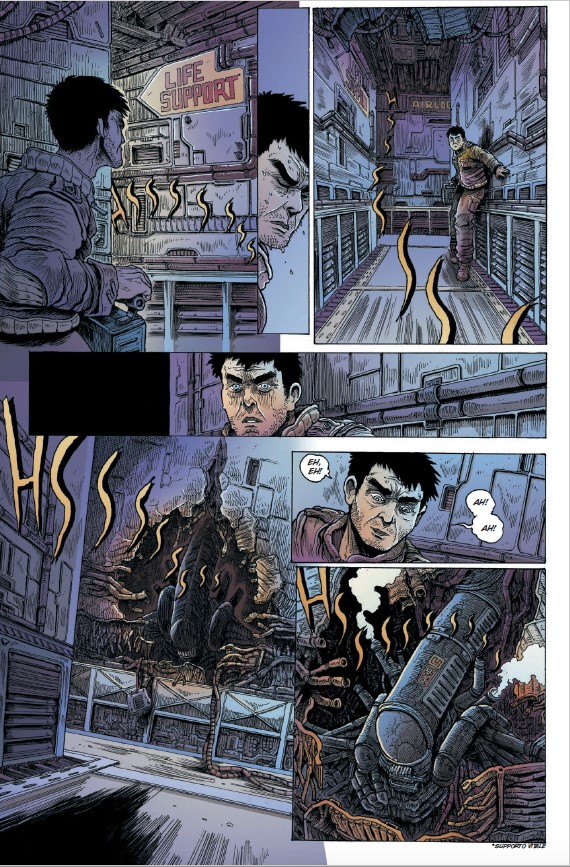
Speaking of Alien: Dead Orbit, it feels very faithful to the tone of the original film, really claustrophobic and horror-driven. What does the Alien figure represent for you, and how did you approach the story?
I wanted to keep things simple. The first Alien film is, at its core, a very simple story, and I like working with that kind of structure, like with Sobek, which talks about a giant crocodile that has to go somewhere and that’s it. I think the first movie was written something like “gremlin on a plane wing”, a straightforward concept. I wanted to stick to it.
Then I experimented a bit with timelines, having them converge and diverge, to make the narrative more engaging across individual comic issues. Otherwise, it might have felt too thin in a serialized format.
Going back to Godzilla: what is your personal connection to the character?
I started watching Godzilla films when I was around six or seven. One of the first I saw was Godzilla vs. Mothra, which is more on the playful, almost superhero-like side of the franchise, unlike the darker original film. Something more for kids, or at least some parts of it, as I discovered when trying to make it watch to my kid who was terrified by some parts (laugh).
I love how the character has evolved over time. There are so many different interpretations: there’s the serious one, there’s the superhero one, there’s like a Cold War metaphor at one point, and then there’s the newer ones that are completely different from the older ones. . It’s fascinating to see how a character can change so much over nearly seventy years.
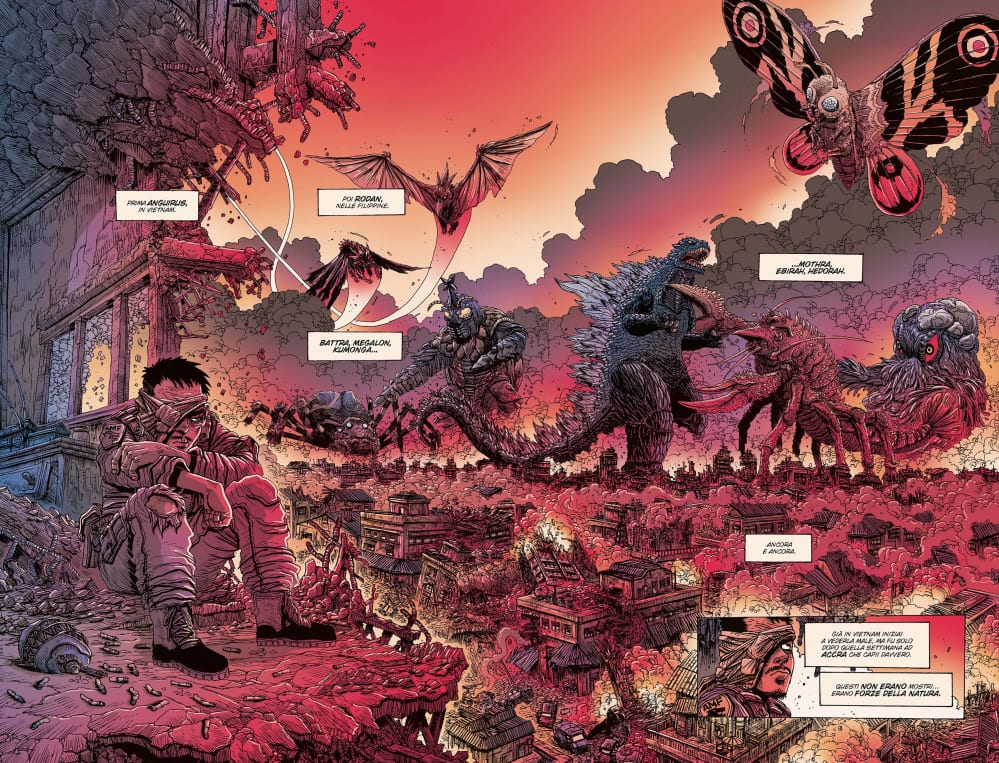
Godzilla: Half-Century War, is one of my all-time favorite Godzilla stories, and I think it’s one of the most faithful to the spirit of the very first film, as well as to Godzilla Minus One and Shin Godzilla. One of the most interesting aspects is the human perspective. The story follows a character interacting with Godzilla over a long period. How did you approach that narrative choice?
I think I originally described it as an unrequited love story, which is just kind of strange for a Godzilla movie or comic (laugh). There’s a common opinion that people don’t care about the human characters in Godzilla stories, they just want to see destruction. I’ve never agreed with that. The human perspective is what drives the story forward: if it were just Godzilla destroying things endlessly, it would get boring. You need characters reacting to the situation in meaningful ways to make the story engaging, people need to care about them. Otherwise, it’s just buildings collapsing.
And in the story, that relationship evolves—Godzilla shifts from being an enemy to something more like a force of nature.
Exactly. In some of the films, especially from the ’80s, Godzilla is portrayed almost like a natural disaster, a hurricane or typhoon. I found that idea really cool and tried to build on it: something you can’t truly stop, only plan for it. It is really interesting thinking about Godzilla in that way.
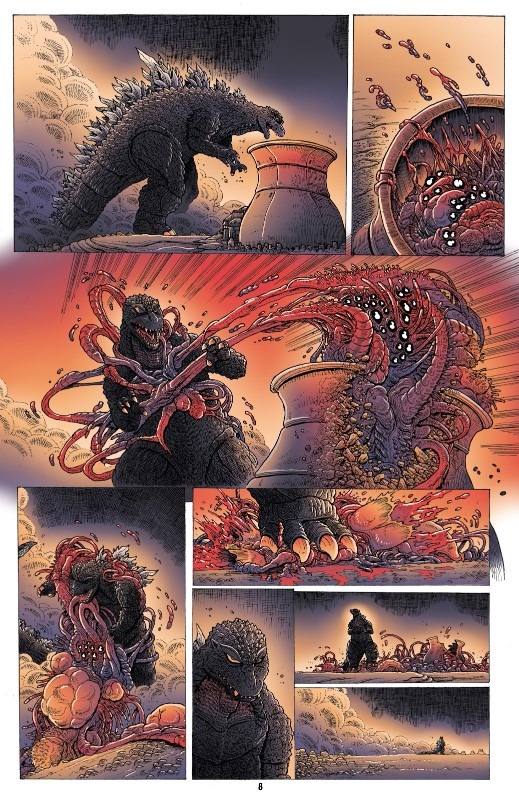
You also worked on Godzilla in Hell, which is a very different take, on the other side of the spectrum. How did that project come about, and what was it like to work in such a different setting?
That started with a very unusual email from my editor. The concept was quite strange, and I wanted to approach it almost like the manga Gon: I thought that was a good idea, no words, just following this kind of belligerent little creature through this very strange scenario. It was very experimental. I even designed a new monster for it, though it ended up resembling an existing one, Orga from Godzilla 2000, more than I intended (laugh).
Finally, if you could choose another licensed character, whether from comics or films, to work on, who would it be?
In comics, I’d love to work on Rogue Trooper from 2000 AD. I’ve been offered the chance a couple of times, but the timing never worked out. Colin Wilson’s work on it is incredible, every one of those just blows my mind.
As for films, I think I’ve already worked on two of the big ones for me—Godzilla and Alien. I’m quite content with that.
And what are you currently working on?
I’ve just finished the second volume of Orphan and the Five Beasts, and I’m waiting to see whether I’ll get the green light for a third volume.
I’ve read the first volume and really enjoyed it—it was great to see the second one come out: are you telling me there might be a third one?
Thank you! Well, I hope so. We’re waiting to see how the collected edition performs before making a decision. Between the first and second it took some time, I had two kids during that time, so things got a bit busy (laugh).
I also received an interesting email recently. I can’t say much yet, but I might revisit one of my earlier works with a new volume. It’s still very early, so we’ll see what happens.
Interview done on May 1st at Napoli COMICON
Thanks to Rachele Bazoli from Saldapress for the support
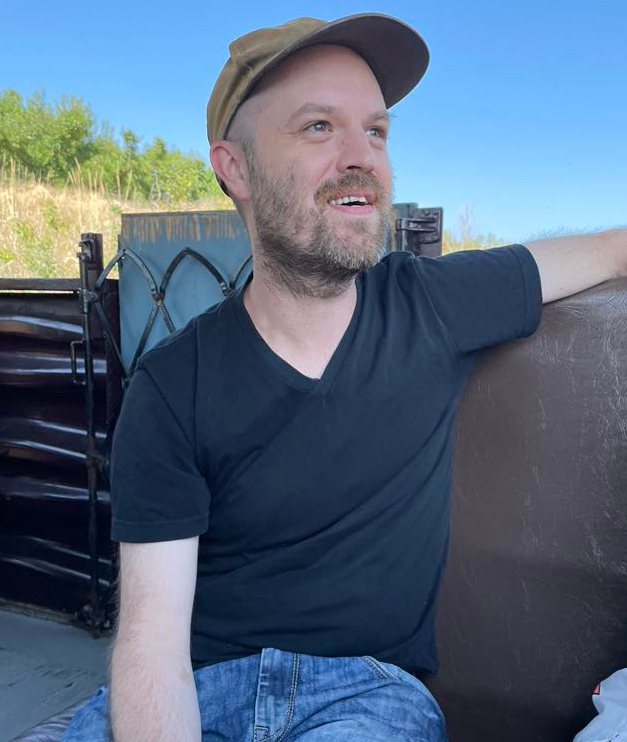
James Stokoe
Canadian, born in 1985, began his career contributing to small-press anthologies and early works like Wonton Soup (published by Oni Press). He later worked with Image Comics through Yosh Comics, a studio collective with Corey Lewis, Brandon Graham, and Marley Zarcone, before achieving wider recognition with Orc Stain (2010).
He has since collaborated with major publishers including Marvel Comics, Image Comics, Dark Horse Comics, and IDW Publishing. Among his best-known works are Godzilla: The Half-Century War (2012–2013, IDW) and Aliens: Dead Orbit (2017, Dark Horse). In 2022, he launched the creator-owned series Orphan and the Five Beasts.