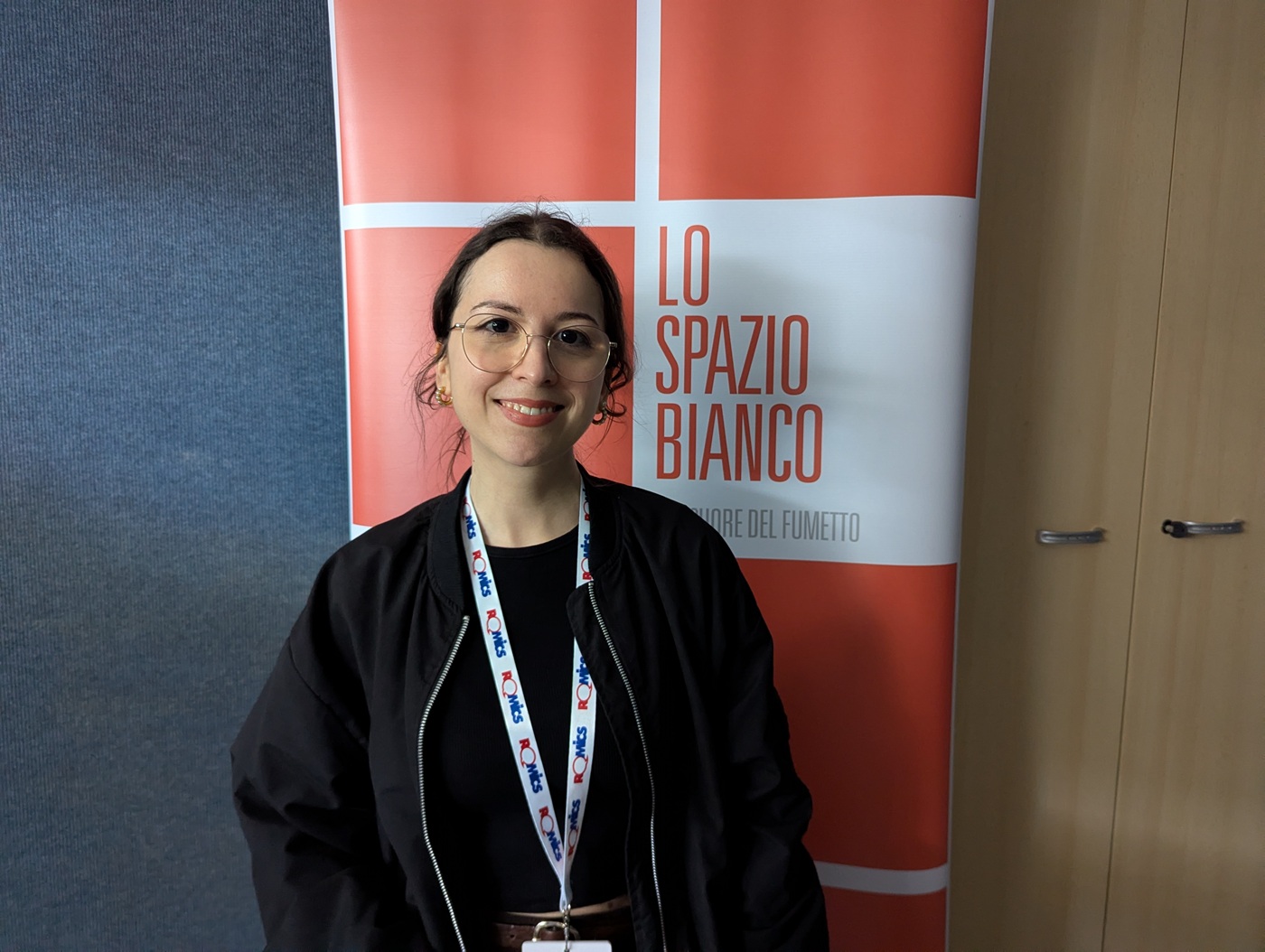
A cartoonist who has been writing online comic strips for many years, Cassandra Calin has succeeded in capturing the small, everyday problems of ordinary people’s lives, winning the hearts of millions of readers around the world. In her first graphic novel, The New Girl, she explores the theme of emigration through the autobiographical story of young Lia, who moves from Romania to Canada with her family. We met her during the 36th edition of Romics, where she was a special guest at the festival.
Hi Cassandra, welcome on Lo Spazio Bianco and thank you for the interview. Your comics have a universal language that can speak to multiple generations at once. Is it difficult to find a way to communicate with multiple generations or does it come naturally?
I think it comes pretty naturally because the way I take my drawings, it’s like a visual diary. What I write about my life, about struggles, about things that I think are interesting. And I think a lot of people can relate to those things.
Even younger and older, I think a lot of them can see themselves in those situations. So it’s pretty easy to connect when you know that the things you talk about are generally speaking relatable to people.
Your strips have been published regularly online for years. The protagonists of the strips are the small daily defeats or imperfections of the common people. Have your strips ever been misunderstood or did they generate negative or critical comments about the situation you describe?
Mostly no. I would say most people are receiving it well. I don’t dive into politics, for example, so I think those subjects are more touchy.
My situations are really my personal experiences. So if somebody says something negative, I’ll just be like: “okay, that was your experience or it wasn’t mine and it’s okay”. We can have different experiences. But most people, they receive it well. And I think those are very lighthearted subjects that most people can find joy and they can smile from them.
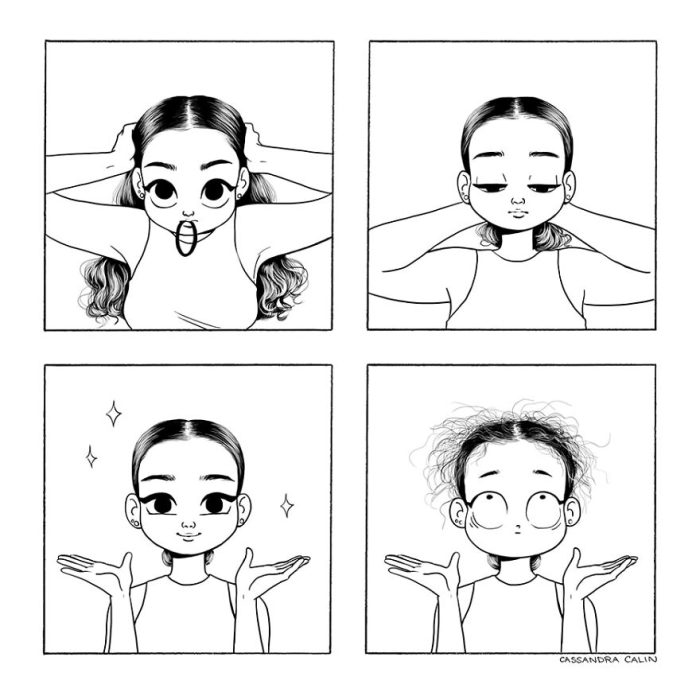
Everyone has a bad hair day sometimes. Everybody has relationship struggles. So I think most of the time it’s very relatable to people.
Posting on social media inevitably exposed you to the evil algorithm of the platforms. How do you find the balance between what you want to design and what you know works on social media?
That’s a difficult one. Because sometimes I want to write an episode, but I know people are not necessarily going to receive it or they’re not going to see it because it’s not a popular topic or it’s not a popular art style or I don’t know. So I tend to, usually I draw what I like.
And if it doesn’t do well, so be it. I think I built enough of an audience to have readers, to have their trust, to have the people who actually are interested in my work; they will see it. And there’s so much you can do at the end of the day.
If Instagram decides not to show your post to other people, then you can try as much as you can to make a reel to do this and that. But at the end of the day, you have to enjoy what you do too. It’s hard to find the balance, but you have to.
The humor in your comics often focuses on elements that even today are not common themes, or even taboo. I’m thinking, for example, of the strips of the two protagonists with body hair on their legs. Do you think this could be a way to break down taboos that are part of people’s everyday lives?
I think it’s good to show what a body looks like in real life. Body hair with fat rolls with whatever, because it’s normal. I think the fact that if you think about it as normal, it doesn’t become taboo anymore, right? You just draw about it. It’s life.
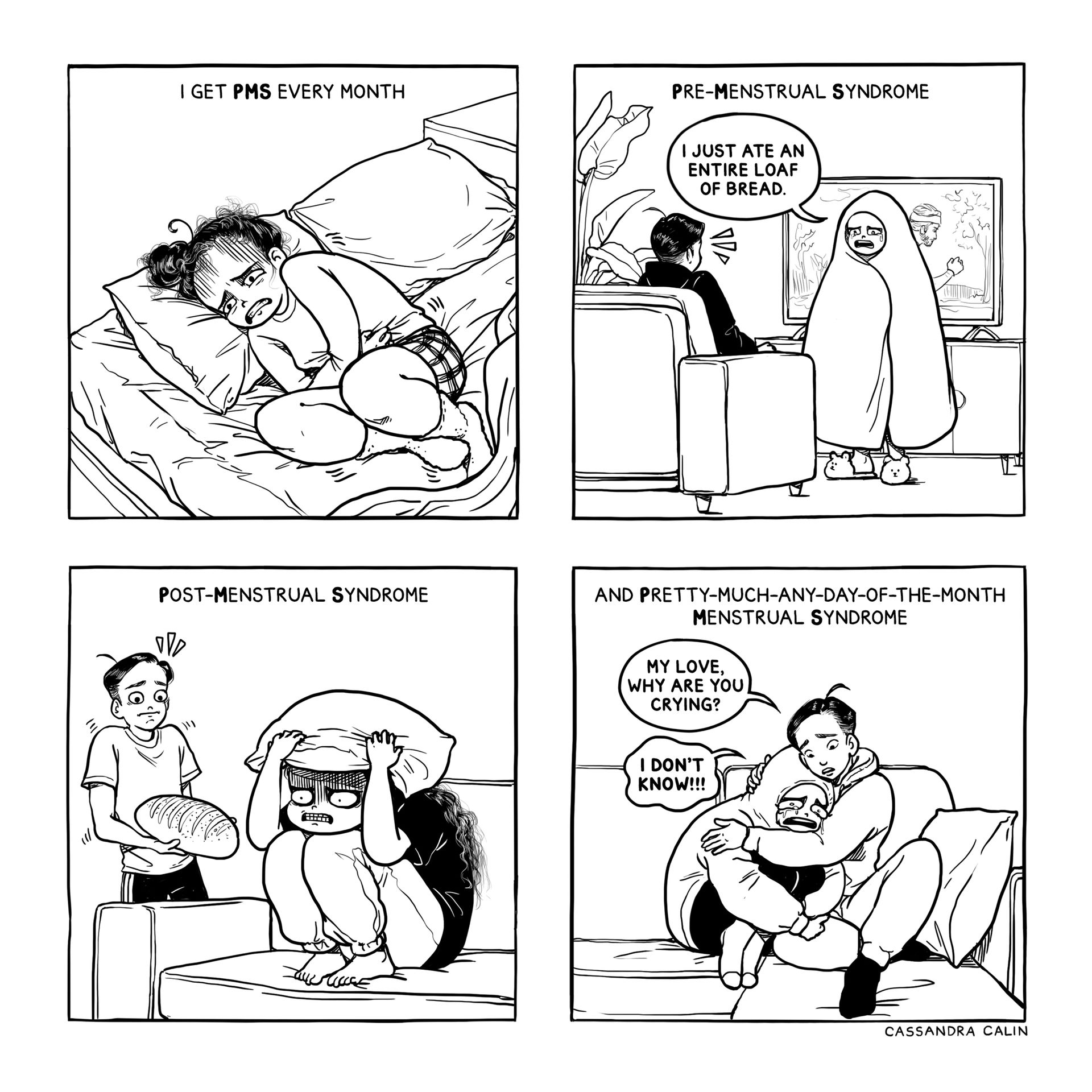
It is what it is. I talk about periods very openly, because every woman is going through it. Most people experience periods, and it’s okay. It’s not a taboo, so I think that’s how I take it. I think it’s very much part of real life, and we should talk about it.
Your comics often feature embarrassing moments from everyday life. Was there a moment in your life that was so embarrassing that you said, “No, that’s too much even for comics”?
Of course, I think there are. I think as much as I talk about my life, I am a private person in general, so I don’t share absolutely everything. There are some things that I’d like to keep to myself or between friends. I don’t want people to see too much of me either. I think just keeping a nice balance is good. If it’s something I’m not comfortable with sharing, I don’t share it. That’s basically my rule. That’s it.
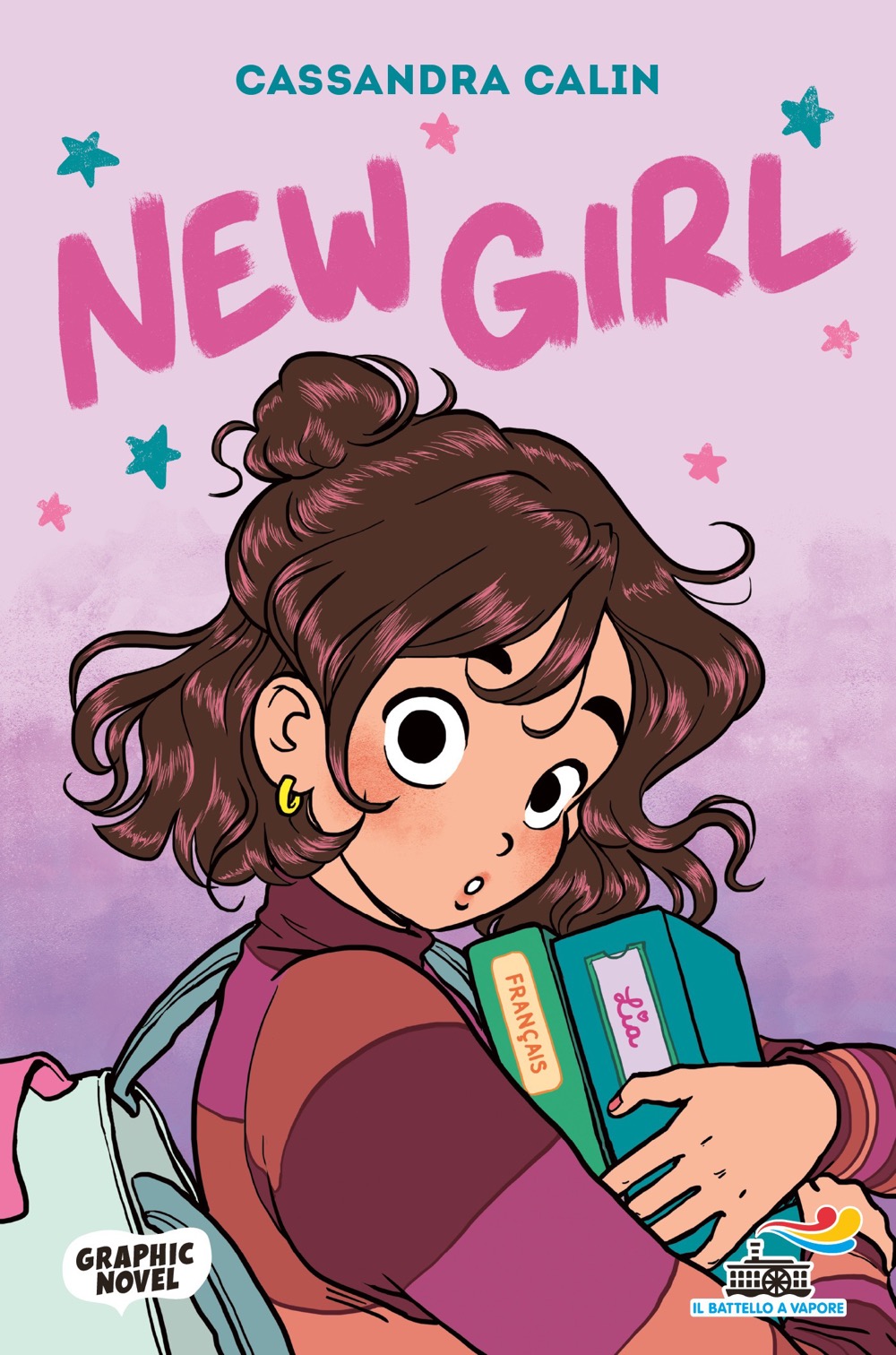
Let’s talk about The New Girl, your first full-lenght graphic novel. It seems inspired by your personal experience. How much of the real Cassandra, of you, lives in the protagonist?
Quite a bit, she is inspired by my younger-self and the experience of immigrating from Romania to Canada. It’s exactly how it went for me, too.
I got my first period at the airport. Everything was based on my true experience: learning a new language… everything. I tried to remember as much as possible from the past, because it was a long time ago. Some scenes are fictional, but most of them are inspired by true events. But, yes, Lia basically embodies my younger-self, and the insecurities I’ve had, and how I had to learn.
You posted a reel on your Instagram and told the world how bringing “The New Girl” to life from the very beginning took you about three years, and how it was a time of effort and sometimes tears too. Which was the hardest part and how did you manage to handle it?
I think the hardest part is I am a workaholic, so I like to work a lot. And I don’t think I knew when to stop. And I think I was working too many late nights in a row, and I couldn’t pace myself enough. And that’s why the tears came, because I was very overwhelmed. It is a big project. It’s 262 pages of just drawings, so I had to commit. It’s very different from the strips. And it’s the first time I did something like this. I didn’t know how much work it takes, but also how much you have to balance your life and your job. And I think I was not balancing enough, and that’s why it was a big challenge. But now I know better. I learned my lesson!
Are there some parts of “The New Girl” and the little girl you were, that you find harder to explain in the comics?
Yes, as an adult, you learn a lot, right? So you try to remember: “how was I back then, when I didn’t know the things that I know now?”. So, I had to really put myself in my 13-year-old shoes and remember what I was insecure about, what I wish I knew back then. So you have to really almost envision yourself as a 13-year-old.
It’s a mind exercise. And I tried my best to look through photos, through birthday cards, kind of seeing that innocence through a different lens. And that really helped, I think, to put myself in that and just bring me back to those memories a little bit.
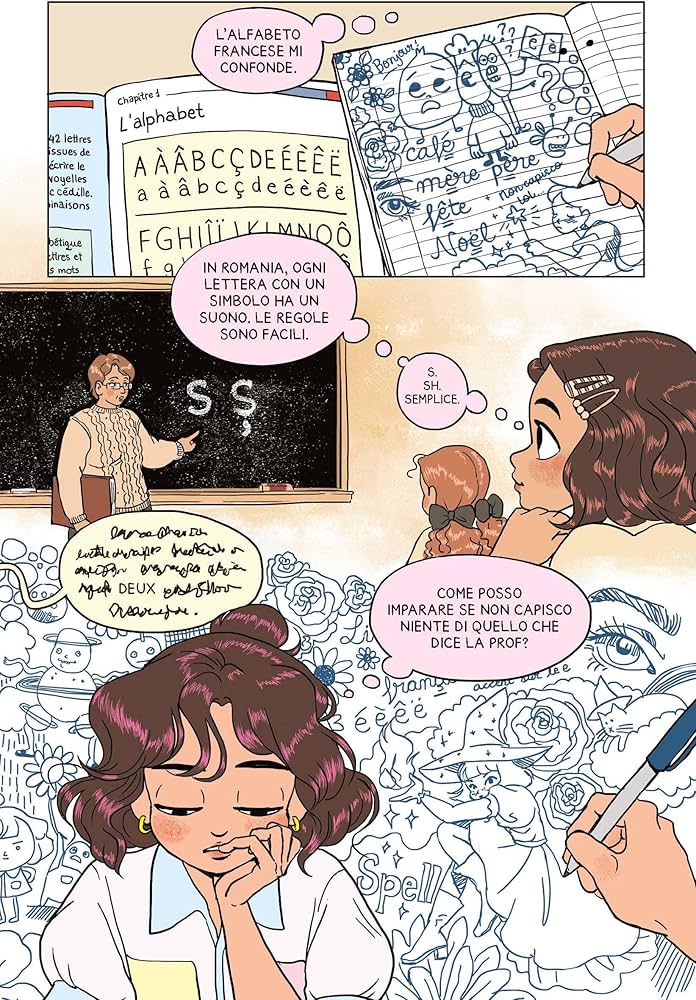
You explore the theme of immigration and leaving your home country. In Italy, more and more young people are leaving the country to move abroad. It’s a situation you’re familiar with. Is there anything you would like to say or any advice you would like to give to those leaving their home country?
I know it’s a very cheesy saying, but I think you’ve got to be patient and trust that you will adapt. I think at first it’s very difficult because everything is so new. Maybe you have to learn a new language. I had to learn a new language from zero: I didn’t know any French. You have a new school, new friends, new this, new that.
Everything different. It’s all at once, so it’s very heavy, and I think at that moment you feel like “This is it. It’s over. My life is over”. But there’s more. Humans are very adaptable creatures, and I think you’ve got to trust that you will adapt to those changes.
It’s just it takes time. So trust the process. You will get there. And now I consider Montréal my home. I love Romania: It’s still home. But to me, Montreal is my Home. It’s where you’re real, home.
“The New Girl”, you must exercise your mind to intercept young Cassandra. If you, present Cassandra, ever met your younger self, is there anything you would like to tell her?
Yes! First of all: “it’s going to be okay. It’s okay, trust the process”. And also, I remember back then I was very into boys. I wanted to have a boyfriend. I was very, like… Crushing on boys and everything. I just want to tell her.
I guess it’s the topic of the sequel.
Yes, exactly. The second book will be about crushes. And I just want to tell her, like, “It’s okay. Enjoy it. You know, life changes. You will change. You will grow. You will have different interests. And just be open to that”. Also, “don’t be so hard on yourself”. I think I was very hard on myself physically and mentally. I thought I was just too strict. And I think I would just say: “Don’t be so hard on yourself. It’s okay.”.
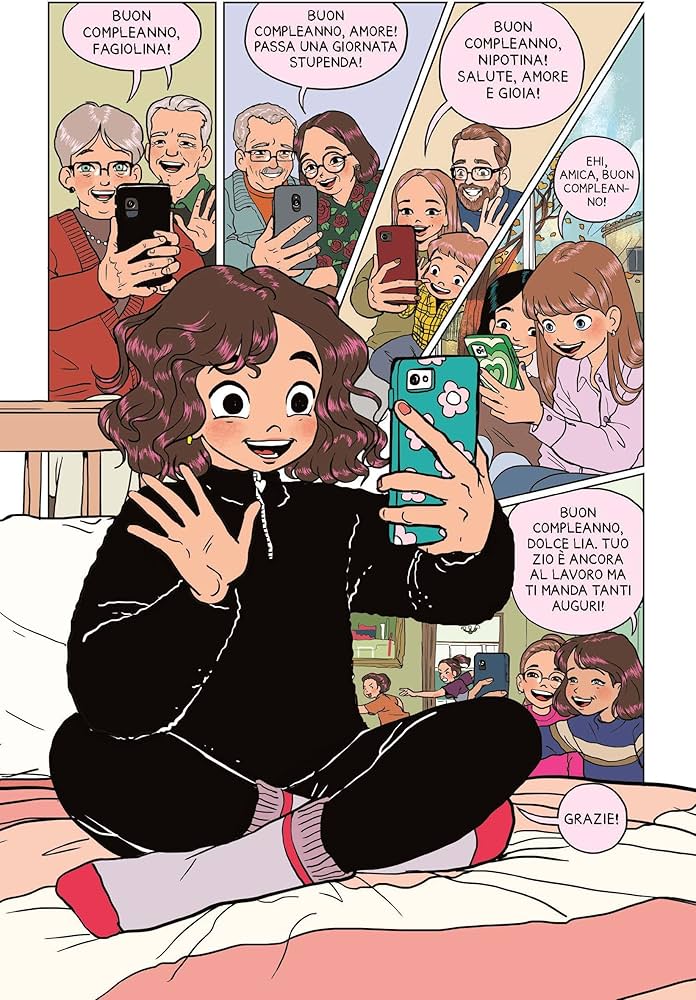
During these last few days, I read the graphic novel and most of your strips. I noticed that you talk naturally of, as you said, people’s everyday problems and flaws through the eyes of girls. However, when I read your comics, as a man, I feel like most of the situations that you describe in the strips are basically what men experience too, although in a different way.
I really appreciate that, especially coming from men. Because I know a lot of women can relate, but I like to hear from men, too how they see my work and how they perceive the messages. And I’m glad to hear that. I truly am.
Is there a completely different genre or theme you’d like to explore in the future?
Romance. I want to try to do maybe romance, maybe a bit older audience, too. I think I would love to explore that. I am very much a romantic person: I like romantic comedies, so I want to explore that a little bit.
I don’t know how long it’s going to take, but I would love to do it one day.
Thank you so much for your time.
Thank you and all the readers of Lo Spazio Bianco. Thank you for reading the interview and I hope if you ever decide to read my comics, I hope you will enjoy them. I hope they bring you some joy, some peace, especially now with the world kind of burning.
Interview conducted during Romics 36, on 10 April 2026
Cassandra Calin
Cassandra Calin is a comic artist and illustrator who has been active online for many years with her series of comic strips inspired by her own life, Cassandra Comics. She moved from Romania to Canada – where she currently lives and works – as a child, together with her family. This experience inspired her first graphic novel, The New Girl, and its sequel, The New Girl: First Crush, published by Graphix.