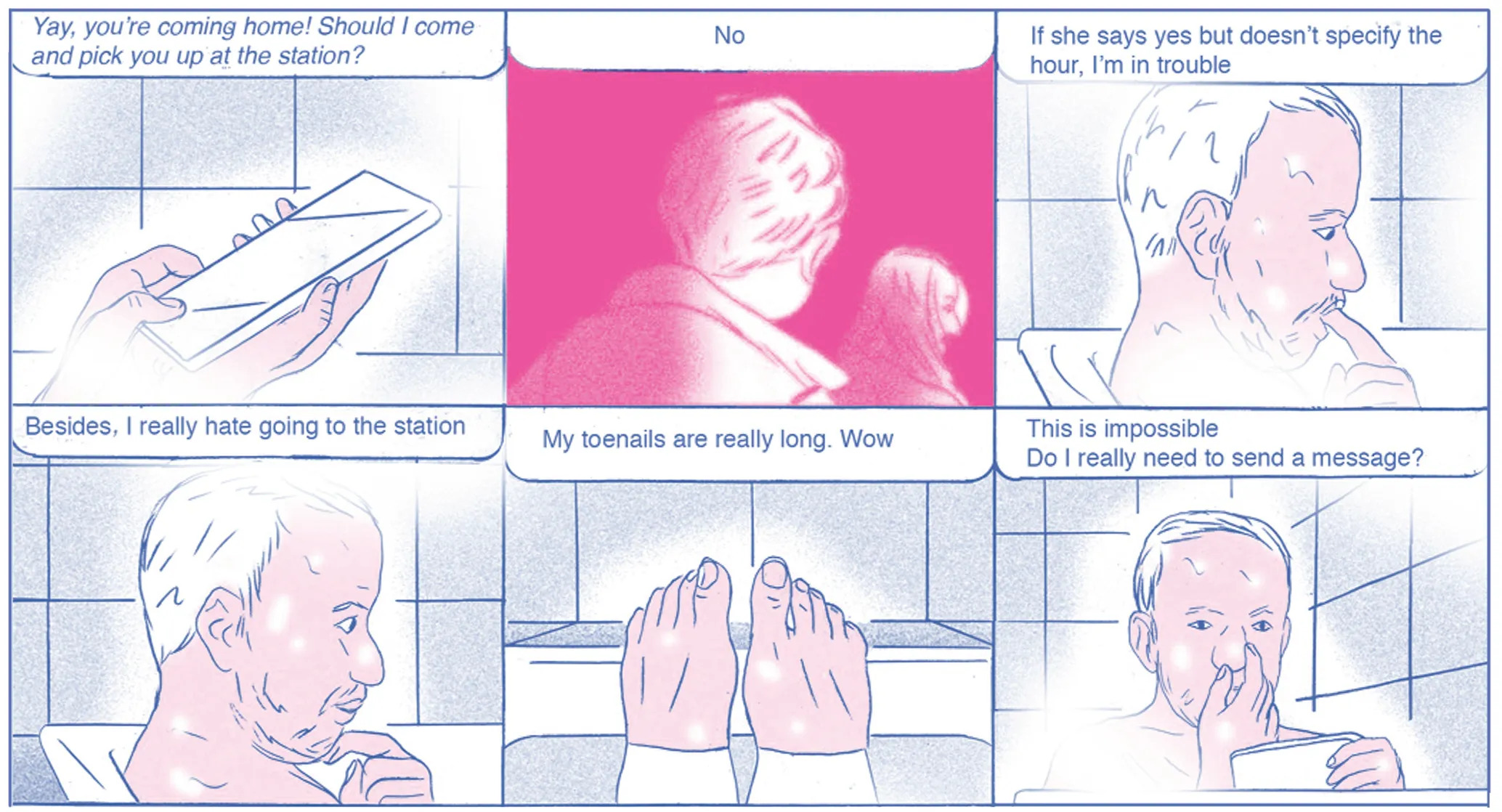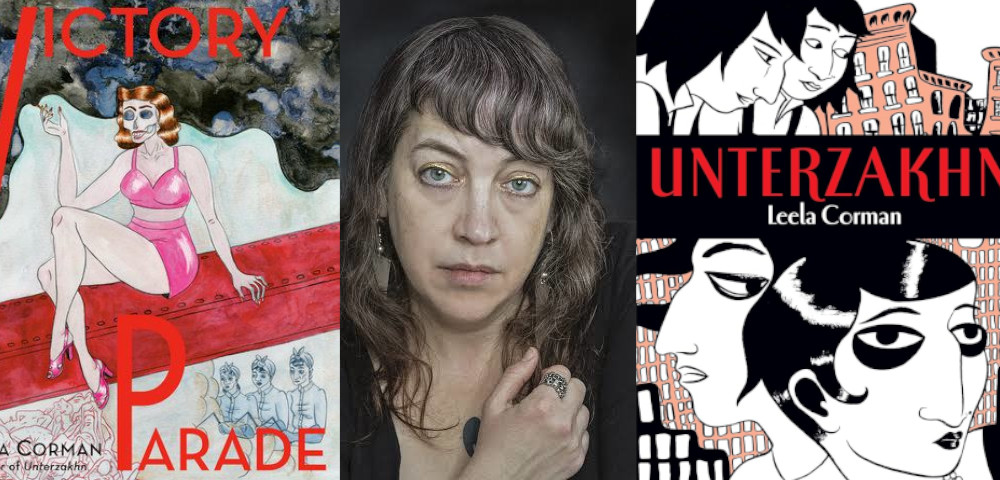
There are artists who, despite their distinctive styles, careers, and importance within the medium, remain relatively unknown in our country. Leela Corman is one of them. Her work was published in Italy only once, in 2014, by the little-known publisher Hop!, with her most famous book, Unterzakhn (released under the bland and rather unappealing title Sotto, and now long out of print). Corman has been active in the American comics scene for almost thirty years. Over that time, she has explored a wide range of genres and styles, always moving between autobiography and fiction, from the more minimalist approach of her early work to the increasingly Expressionist style of her more recent books, alternating between colour and black and white.
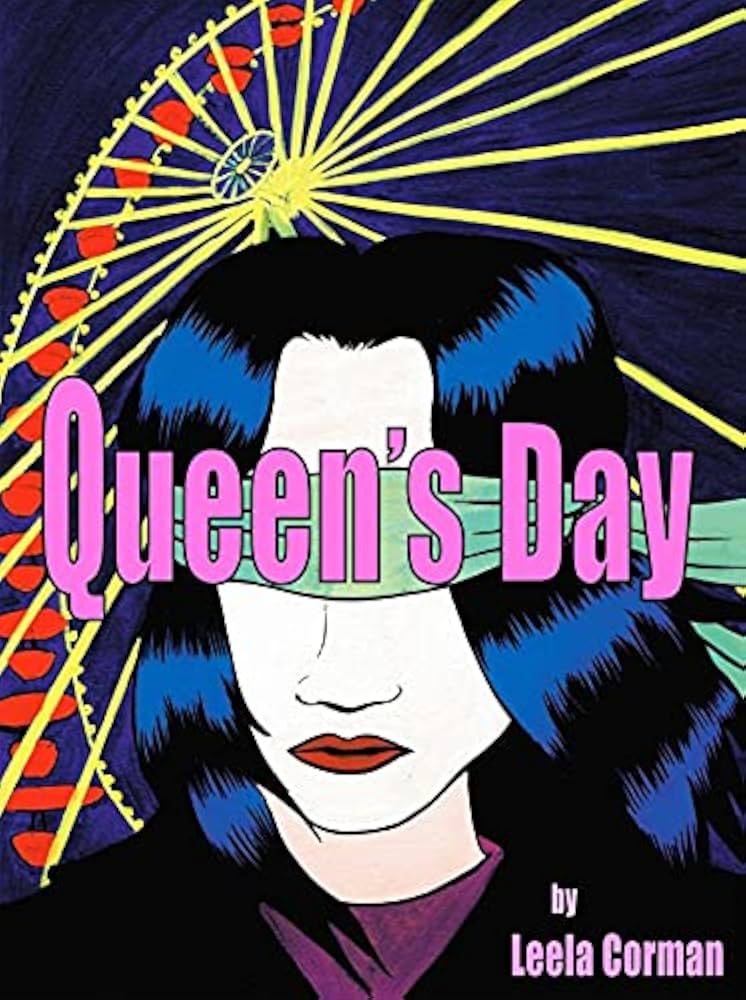
After winning the Xeric Award in 2000 for her graphic novel Queens Day, an episodic collection of stories blending fiction and autobiography through a dreamlike style, Corman went on to produce a variety of work spanning comics — including Subway Series — and illustration.
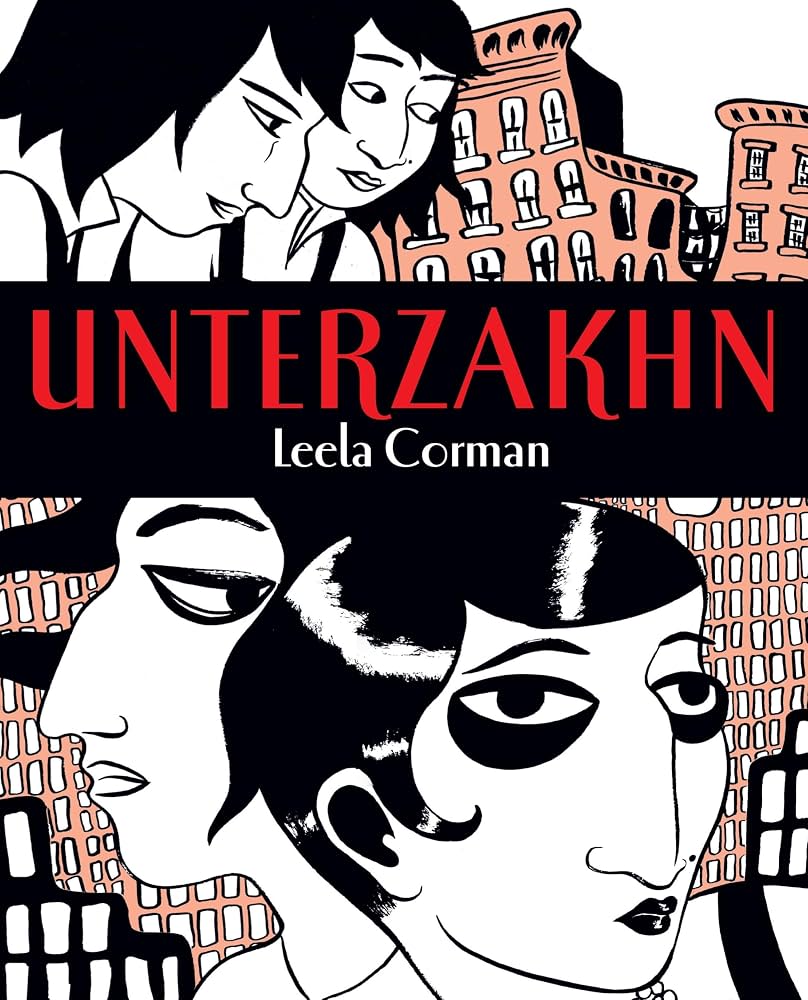
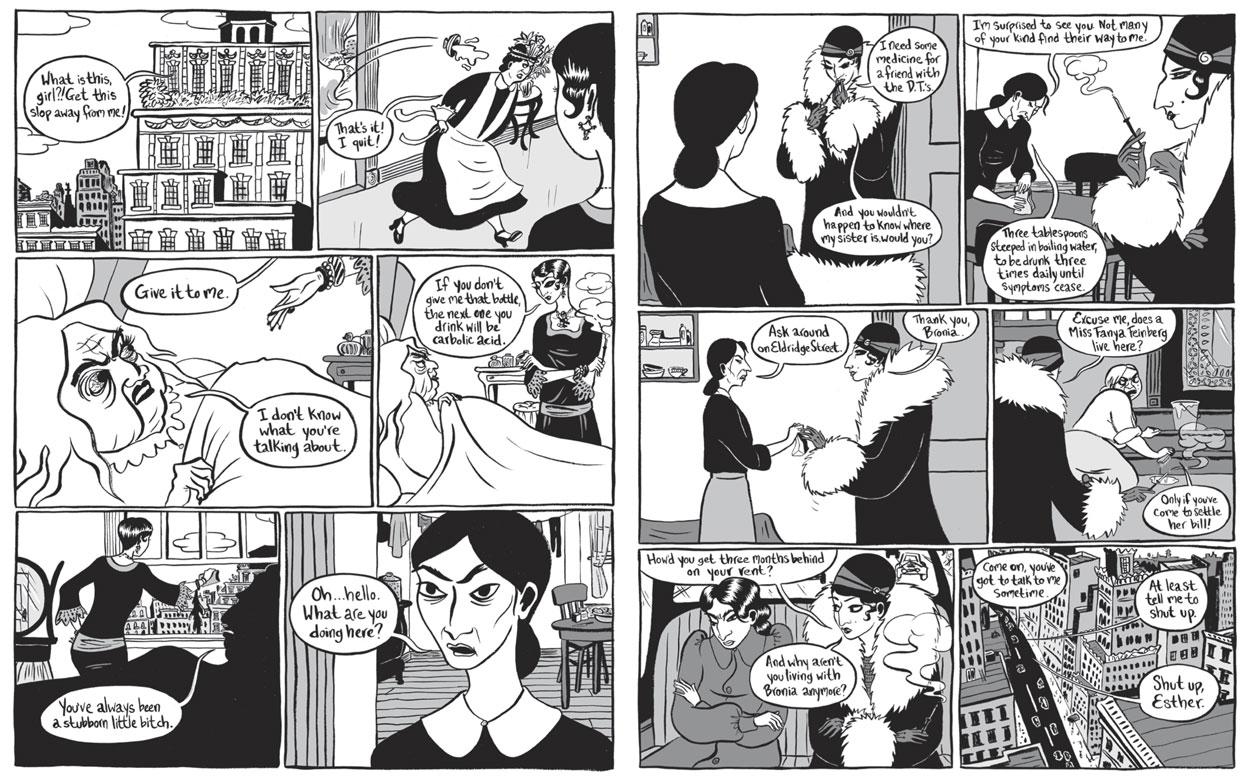
In 2012, Corman published Unterzakhn, a book that marked a departure from autobiographical elements without abandoning the themes closest to the artist. The parallel stories of twins Esther and Fanya, moving in opposite directions, unfold within a modest Yiddish-speaking Jewish family in New York’s Lower East Side in 1910. Through their lives, Corman explores the role of women in society, sexuality and the female body, and the relationship between culture and one’s roots.
In 2016, We All Wish for Deadly Force marked a return to autobiography, also serving as a way of processing the loss of a daughter — an experience that was also recounted by Corman’s husband, Tom Hart, in the beautiful and heartbreaking Rosalie Lightning.
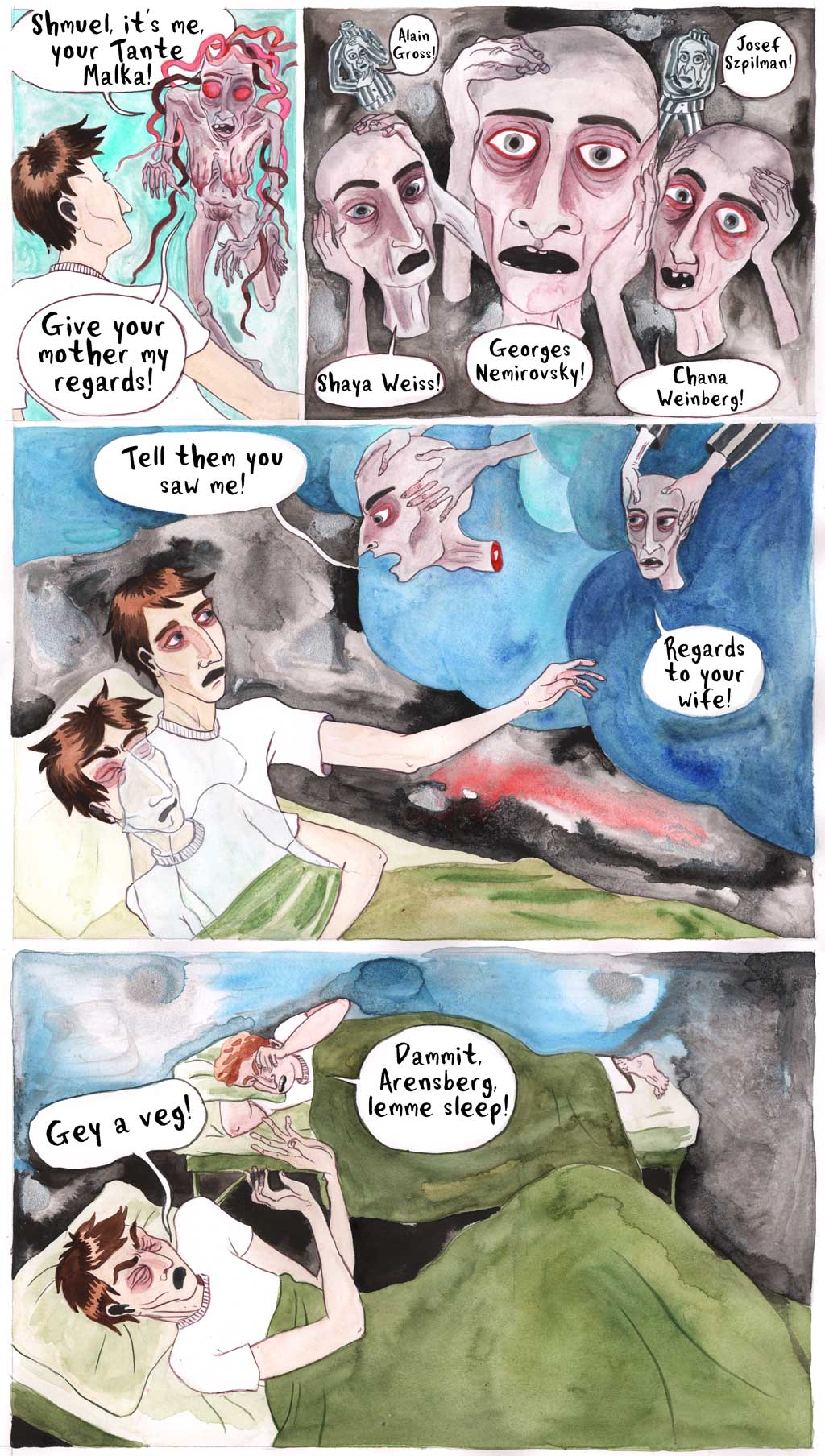
Finally, in 2024, Corman returned to an all-female story set in New York during the Second World War. Victory Parade continues to explore the themes mentioned above through a diverse cast of women from different social backgrounds and cultural roots, while also turning its attention, above all, to war itself. Its final sequence is particularly striking, both visually and narratively, with clear echoes of German Expressionism and the work of Otto Dix.
Talking to Leela Corman about her work is an intense experience, given the passion and deep knowledge of the art world that inform both her inspirations and her highly expressive, strongly Expressionist style.
Leela Corman, first of all, thanks a lot for being here. I would like to start from the beginning. How did you start your journey as a comic artist and what inspired you?
I was always an artist from before I could talk. I grew up reading comics like everybody else. For me it was Archie and Harvey Comics, a big influence on me when I was really young and later on as well. I also noticed its influence on other cartoonists that I love too.
After that I went to art school. I had a really classical training as a figure artist, very academic drawing and painting classes, Bauhaus color theory, all before I started making comics.
I really wanted to make them, but I wasn’t really sure what direction I was going to take. At the beginning I was absolutely sure I was going to be a painter, but then I had a really bad experience with my first oil painting teacher, in my second year of university: she was really awful and went out of her way to ruin my ability to keep painting. After that I was sort of directionless: I did a lot of really big paintings on paper, I made a lot of assemblage and artist books. The whole time I kept thinking about comics, but I didn’t know how to make them, because they seemed really hard to do.
Then, when I was at the Massachusetts College of Art in Boston, I saw a traveling exhibition of American comics spanning about three centuries that was hosted there. It was amazing: that was the first time I saw the originals of Jaime Hernandez, Linda Barry, Art Spiegelman, Charles Schultz, all of these cartoonists that I looked up to. It was really powerful for a young aspiring cartoonist, because what you see are the marks of the hand: you see pencil marks, brush tests, streaks in the ink, and whiteout.
It was at that time, I was 21, that I realized that human beings made all that, so I can do it too, so I started out by making autobiographical short comics and comics based on my dreams.
I didn’t know how to make them technically: any Gen X cartoonist in America you meet had to train themselves. I don’t know how it was in Europe, but in the 1990s there was no training program unless you wanted to make superhero comics, and then you would go to the Joe Kubert School or the School of Visual Arts in New York. But my generation taught ourselves, we all kind of forged our own style, especially the women, but the men too, which is why we’re all a bit grumpy and idiosyncratic.
I remember the first comic I made: for some reason I thought I had to do it on tracing paper, overlaid on Bristol board. I don’t know why….
Well, this is technically really a steep start! (laugh)
Yeah, I was like “What am I doing, I don’t know” (laugh). I remember when I figured out I could get a 12-inch stapler and make my mini comic at the copy shop. Nobody told me how to do, I was once in an office supply store, and there it was this stapler, and I thought, I could probably use that. Later I realized we all had the same thing. We figured out what we needed on our own, and then we would meet other cartoonists and help each other.
I was still in art school, and at that point I had tried a few different majors before settling on one: performance art for a while, then printmaking. When I finally settled on illustration for my degree, people were very hostile to comics, nobody wanted me to make them, I even got kicked out of a couple of classes for making comics.
Your works are connected by many themes, but one element that connects them all even more is your visual style, which is really recognizable.
Your drawings are clear and direct, really expressive, with lot of bold, thick black lines. I would describe this as European, in a way. Were there any particular influences on this style, and how you were trying to define it?
Well, style is a tricky thing. One thing I really love about looking at the whole span of an artist’s life, all of their work across decades, is that you can always see their hand. It’s always them. An example I’ll give is Meret Oppenheim: everyone associates her with Dadaism because of the fur teacup, but she was a working artist for decades after that, and she had many other styles, but it’s all her. So I think my style has changed a lot over the years, but it’s still recognizably me. And influence is a funny thing too, because it isn’t necessarily direct even when it is direct, and this is true in music as well.
Probably the biggest influences on me in comics would be the Hernandez brothers, but I would never claim anything beyond admiration, I could not touch the robes (laugh).
Jaime Hernandez is God, for me. I think there’s a big influence on my work. When I started making comics in watercolor in 2015—because I was always a natural watercolorist and never struggled with that medium, unlike other people who find it difficult and intimidating – that is when it felt like the gates of life and death opened for me in my art. But I still think that if you look at my ink comics and my painted comics, you can see it’s me.
Regarding the influences, I think a really big conscious influence on me are the Weimar painters, like eEanne Mammen and Otto Dix. There are a lot of direct quotes from him in my books, for example the Triumph of Death (Triptychon Der Krieg), to which I was thinking about constantly although I have never seen it in person. In the center panel, there’s this pair of inverted, bullet-ridden legs. I don’t know if they’re a corpse or a statue, but I’ve copied them so many times into so many different stories.
Then I had another funny experience. When I went to Poland the second time, I went to a big painting exhibition of one of my favorite contemporary Polish painters that also included 100 years of earlier Balto-Slavic painting.
And I realized I’m working in that tradition as well. The symbolism in Polish visual art—swamps, forests, witchy women in the woods—was already very present in my work. So I think it’s also a cultural thing.
Following up on colors in your works, what guides your choices regarding color—or its absence? What fascinates you about the expressive possibilities of black and white, and why did you choose to work in color for Victory Parade?
For a long time, from 2015 until now, I stopped working in black and white completely because it didn’t feel alive to me. And in general fo me a lot of artistic decision-making is not only narrative, it’s also about materiality. What materials do I want to engage with?
That’s very physical. It’s like deciding what kind of exercise I feel like doing on a given day, or what I feel like eating. What kind of physical experience do I want? Do I want to lift weights? Do I want to swim? Do I want to take a long walk?
It’s like that.
Since your first book, Queen’s Day, you have explored your own roots and those of your family. Both sides of your family come from Jewish backgrounds—Russian and Polish respectively—and this cultural heritage frequently returns in your work. How has this important aspect influenced not only the themes you explore but also the way you tell stories through images?
That’s a really good question. I think… I’m first of all a New Yorker. I’m from Manhattan. I grew up in New York City. So that’s the biggest influence for me. The city never leaves me even though I don’t live there anymore.
But I think there are probably things I’m not fully aware of that make it into the work, culturally. I don’t know if you could say there’s a specifically Jewish visual influence, but I really relate to a lot of Eastern European printmaking and book arts. That was something practiced by many Jewish artists before the Second World War. The Yiddish Book Center has one of the biggest collections of that. It’s an entire world of book arts, illustration, and printmaking that is absent from American histories of illustration. None of my colleagues were aware of it at RISD, where I teach, even though the Yiddish Book Center is only about a two to three hour drive from Rhode Island.
Unterzakhn (2012) was the work that launched your career and earned you an Eisner Award nomination. In this case, it is a historical novel centered on two Jewish sisters living on the Lower East Side. It is a coming-of-age story that moves back and forth through time, exploring aspects of their family history while placing at its center the relationship between society—and Jewish culture in particular—and women. How did you choose to develop this narrative around two sisters, in a story that could almost be described as a mirror narrative in both its themes and the development of the two young women?
As many fiction storytellers say, the characters tell you what the story is. The idea came to me in a flash, in an image, as most of my ideas. To give a bit of context: I went to a lecture by Kim Deitch, the American cartoonist, and it was held in an auditorium where I used to go to summer camp as a child. The same auditorium where, when I was very little, we would sing songs at the beginning of every day before going to activities.
I remember as a child it felt like a huge room, and when I went back for that lecture I thought, the room was very tiny. While I was sitting there, I had this image of a little girl who later became Fania, and immediately I understood she had a twin sister. From there, I had all in mind: their names, their parents, where they live.
It was a family dynamic and a place completely outside my own history. Autobiographical comics became a standard in the 90s when I was coming up as a cartoonist: it’s a very easy way to learn how to make comics, and I love it for that reason. I’m also very nosy about people’s lives, so I love that so many people make autobiographical comics because I get to learn things about them. It’s wonderful. As a teacher, I think this is also a powerful tool: many students tell me that they always wanted to make comics but they don’t know what to make them about, and then they start telling some wild story from their childhood. This is when I tell them: “There’s your comic. Make it and put it out into the world.”
But for me at that time, I think I was starting to get bored with autobiography. I was also feeling a bit embarrassed by my previous book, where I felt I didn’t succeed artistically, and I also felt uncomfortable that the characters weren’t as disguised as I wanted them to be, they were a bit too close to real people.
So it wasn’t a conscious decision to move into fiction, but I think I was becoming more interested in that kind of storytelling. A big influence on my work is film. Pedro Almodóvar is a huge influence, as is the Turkish-German director Fatih Akin.
At the time I was watching a lot of Pedro Almodóvar movies, and also Fatih Akin’s Gegen die Wand. They are also both very influential on me. Also, the American series Deadwood is a big influence. What I really love are stories that take place in a time and place that has been turned into mythology, but then break that mythology by showing very human stories inside it.
This story is set in a very “mythological” setting: the Lower East Side, the beginning of the 20th century. Was that also a lot of research for you?
Yes, it was very much research. I was lucky that neighborhood was probably, at the time the book is set, the most photographed neighborhood in America, so there were a lot of resources. There’s also a place called the Lower East Side Tenement Museum, a tenement building you can visit to see how people lived, and this was also very interesting and helpful.
There was also s sociopolitical dimension to the story. At the time, George W. Bush was president, and the discourse around reproductive justice, which wasn’t really called that then, abortion and reproductive care was becoming even more intense than it usually was. So I wanted to talk about what happens when people don’t have access to this service, which means that people die. That is how it became part of the book.
On the other hand, I was a belly dancer at the time, and I had a lot of friends who were burlesque performers. I’ve always been very interested in the underground, small-time showbiz world, I love vaudeville, so also that fed into the book.
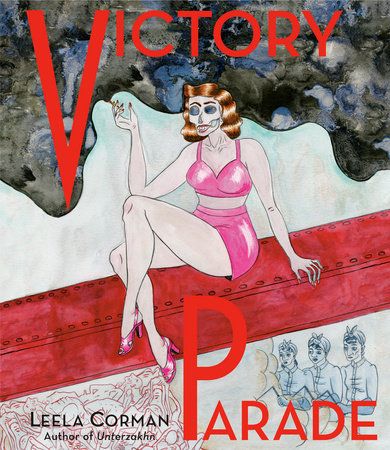
Yes, and these themes also continue to appear in later works, including Victory Parade, where we can see similar influences. One element that particularly connects these projects is your recurring focus on the human body — both female and male. Your work is highly visual, and the representation of naked bodies is a theme that frequently returns throughout your career. What draws you to this subject, and what fascinates you about portraying bodies, especially the female form?
Well, I live in one (laugh). I am the basic unit of my work. I am a figurative artist, and I consider myself an Expressionist, so I think that’s kind of natural, it’s organic.
Connect to this, your work is the recurring focus on women, oppression, patriarchy, and female emancipation, themes that appear in both of your books. Today, compared to the time when Unterzakhn was published, these topics are much more present in public discussion. Back then, they were already central to the story, but they were not discussed in the same way they are today. Now, comics have become one of the mediums that most actively explore and represent these kinds of experiences and narratives. How do you perceive this evolution over the years? And, as a teacher, how do you see your students approaching these themes today?
I think what’s happened in the last 20 years in comics is great. It’s become so much more inclusive. It’s become a lot less white, less heterosexual, less cisgender. I’m talking about the U.S. context—I don’t know about Europe—but I think Europe has had a more diverse comics culture for longer, and more respect for the art form.
In the U.S. it took longer. Now, if I go to the Small Press Expo in the U.S., which is a really nice festival just outside Washington, D.C., it’s incredibly affirming. It’s very queer, there are many creators of color, and so many people making comics.
So there are more stories being told, and that’s what I care about most: a broader palette of storytelling, more representation, and especially people telling their own stories instead of someone outside the group telling them. And I don’t want to be overly categorical about it, but I think it’s really important to make space for everyone.
Returning to Victory Parade, earlier we talked about the idea of mirroring between the two twin sisters, but in this case that dynamic is expanded, as more characters play an important role in shaping their relationship and interactions. Family is also a central theme in this book, as it was in your previous work. What draws you to telling stories about families that are not necessarily connected by blood — chosen families, or groups of people who do not initially belong together but eventually create a bond and become a family?
Also this is something that came organically. I’m glad you picked up on that, because fundamentally what comes into my comics is everyday life. And everyday life is full of chosen family as well as blood family, which can be really difficult. A lot of people have better relationships with people outside their family of origin—less complicated, maybe.
When I think about trying to use my own family experience in my work, I stop short of wanting my parents to appear directly in it, for example. I can’t imagine it except in very hidden ways.
One thing I’ve noticed is that themes appear in my work without me trying to put them there. As we’re talking, I realize that all of my fictional stories have a mostly absent father.
And it’s funny, because the book I’m planning now also has no father—just three generations of women. I don’t know why I do that, because I had a very present father who is still alive.
You don’t always know what you’re making.
Speaking about fathers, men, and women, Victory Parade presents many examples of traditional gender roles being challenged or reversed. For instance, Ruth pursuing wrestling, or another female character exploring her sexuality in a very conscious and self-aware way, even within difficult relationships. The historical setting creates a certain distance from the present, while still allowing the story to address contemporary issues. These are themes that continue to need to be explored and told.
Yes, very true. With Victory Parade, back then the only way I could figure out how to take a stance against fascism was by showing what happens when you dehumanize entire groups of people. It leads to genocide.
I started the book in late 2016, after Trump was elected for the first time, and it was published after the genocide in Gaza began, so the context changed drastically during its making.
Now I really question my own relationship with storytelling about the Shoah, I’m not sure where it fits anymore.
As for the gender roles: the book began with a single image of a woman working in a munitions factory during the Second World War. In the U.S., women worked in war industries because men were away: everyone knows the “Rosie the Riveter” imagery.
The photographs of those women are incredibly powerful. Their hair is messy, they look real, like they could exist today. They’re not stylized or idealized.
Then suddenly the war is over, it’s the 1950s and everything shifts—Dior New Look, corsets again, small, delicate bodies, no muscles.
I was fascinated by that transition: women not necessarily without men, but women with each other. A kind of female solidarity and confidence that I recognize in my own friends.
As for wrestling, I don’t know exactly where that came from, but I read once that many boxers come from childhoods where they were physically hurt, and that made me think about Ruth. A rough childhood in Weimar Germany—so what does she become as an adult? A wrestler, a very direct way to channel anger and trauma.
As a final question, Victory Parade includes many dreamlike and fantastical sequences that move beyond strict realism, often in connection with the horrors of war, very difficult to read and digest. Do you see this use of fantasy as a way to create some distance from those experiences, or was it intended to make their emotional impact even stronger?
It was to go deeper into it, not to get away from it. When I was working on the book, I was very haunted. I was still processing the death of my first child, and I felt like I had one foot in the world of the dead. A close friend had also recently committed suicide, and we were all processing that together.
I was also thinking about what happens spiritually in places where mass death has occurred, and I wanted to depict that visually. That brings me back to Triumph of Death, because I think that’s what that painting is doing.
Another influence was the German band Einstürzende Neubauten and their 2013 project Lament. It’s a sound work created for the centenary of World War I, built from archival material. That had a profound impact on everything I did afterwards.
In Victory Parade, I was trying to create something visually as strong as that. There was also this sense of a haunted underbelly in those places. I started the book as someone very drawn to mysticism, and I ended it much more of a skeptic. I don’t think I could make a book like that again, and I don’t think my next work will have much of that in it. Maybe I’m wrong, but that feeling was very strong during the process, and then it disappeared when I finished.
Thank you very much for your time, Leela.
Interview conducted on June 5, 2026, at the International Comics Salon in Erlangen.
Many thanks to Scott from Scottreaders for his support.
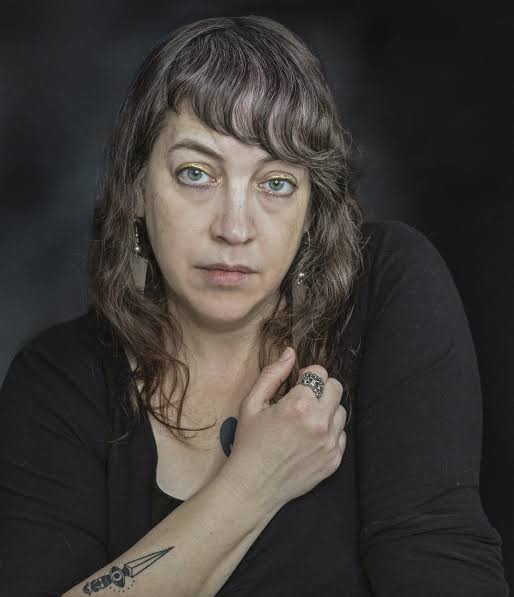
Leela Corman
Leela Corman is a painter, comics maker, and assistant professor at Rhode Island School of Design. She is the creator of numerous works of autobiographical and fictional comics, including Victory Parade (Schocken-Pantheon, 2024), You Are Not A Guest (Fieldmouse Press, 2023), Unterzakhn (Schocken-Pantheon, 2012) and We All Wish For Deadly Force (Retrofit/Big Planet, 2016). She is a founding instructor at Sequential Artists Workshop.