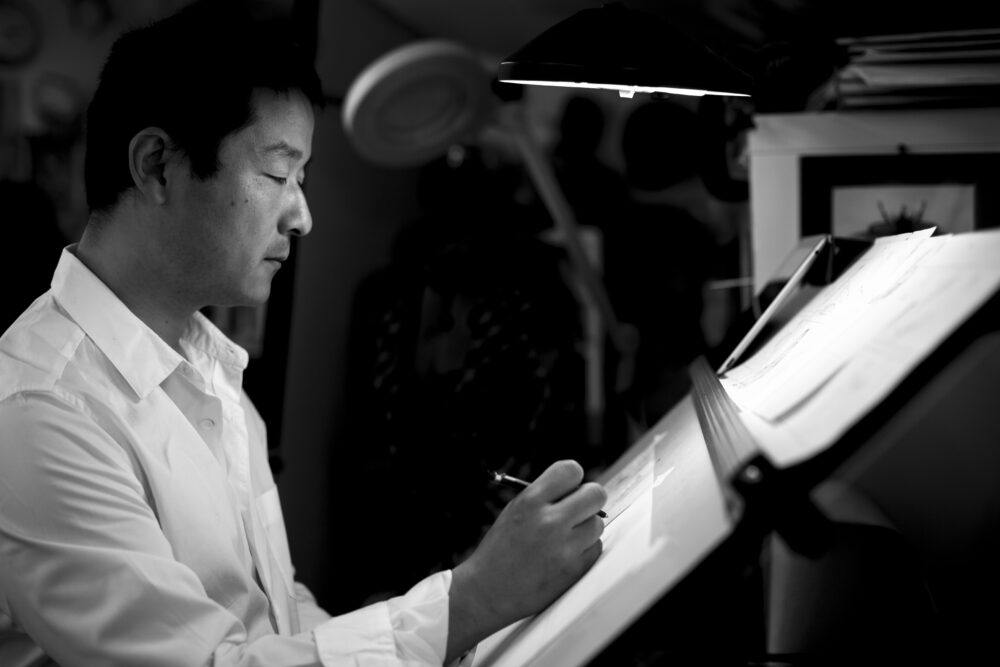
There are works that continue to breathe within us long after we have turned the final page. Kengo Kurimoto’s Wildful is one of them. Drawing on a creative background that spans animation, video games, illustration, and close observation of the natural world, Kurimoto transforms these experiences into a story that embraces contemplation over frenzy and attention to the smallest details over constant explanation. Through Poppy’s relationship with the forest that surrounds her, he crafts a work that invites readers to slow down, observe, and rediscover the beauty hidden within everyday things. On the occasion of the Italian release of Wildful (Il bosco segreto), published by Editrice Il Castoro, we spoke with Kurimoto about the influences that have shaped his artistic vision, the creative process behind the book, and his distinctive understanding of comics not only as a form of storytelling, but also as a means of refining the way we look at the world.
First of all, welcome to Lo Spazio Bianco, and thank you for being our guest on the occasion of the Italian release of Wildful, published by Editrice Il Castoro.
You’ve spoken before about arriving at comics through a wide range of experiences — video games, animation, design, and close observation of the natural world. Wildful indeed feels constructed not simply as a drawn narrative, but almost as a space to move through, to physically explore. In what ways have these different languages and paths influenced the way you think about the page and about storytelling itself?
Pleasure! Thank you so much for inviting me!
Wildful actually began as an animation, and when it became a comic, I was keen to keep the sense of movement. There is so much character in the way a robin cocks its head, or how a woodpecker moves through a hollowed out tree. If I wanted the reader to sense their personality, it would be expressed through the way they move. The same goes for the forest itself. I love getting on my hands and knees, crawling between the roots, discovering all sorts of miniature worlds. I wanted to communicate this feeling just as you would in a film or video game; the world is so three dimensional from this perspective. Often it felt like drawing the “key frames” of an animation, but instead of an animator doing the “in between” frames, the reader would put together the movements in their mind.
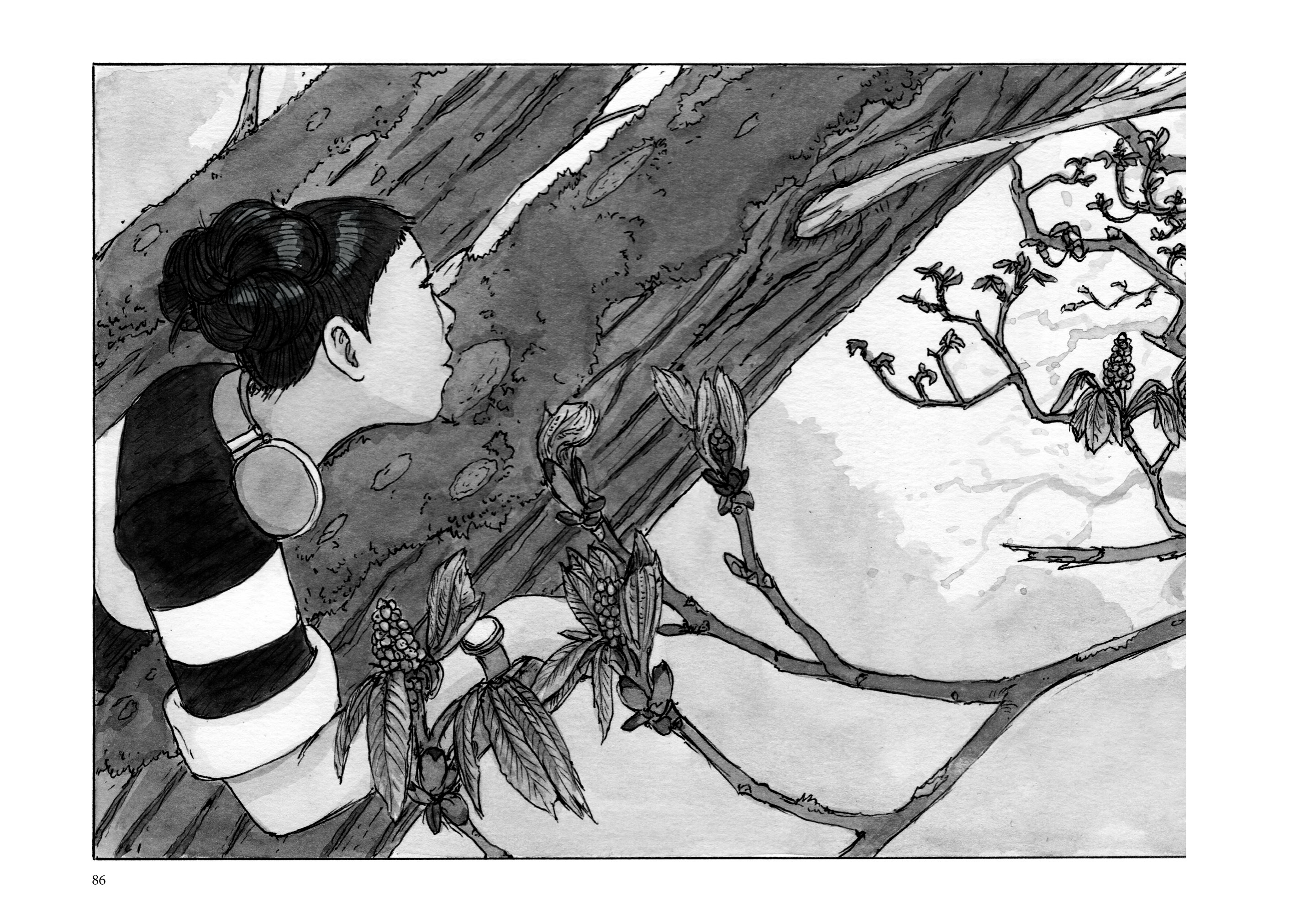
I liked this so much that I wrote this process into the story when Poppy looks at the chestnut buds. She looks at each bud in various stages of growth and puts together the motion of the blossoming tree in her mind; something that would be ordinarily imperceptibly slow to see. It’s thrilling when you see the whole forest moving in this way!
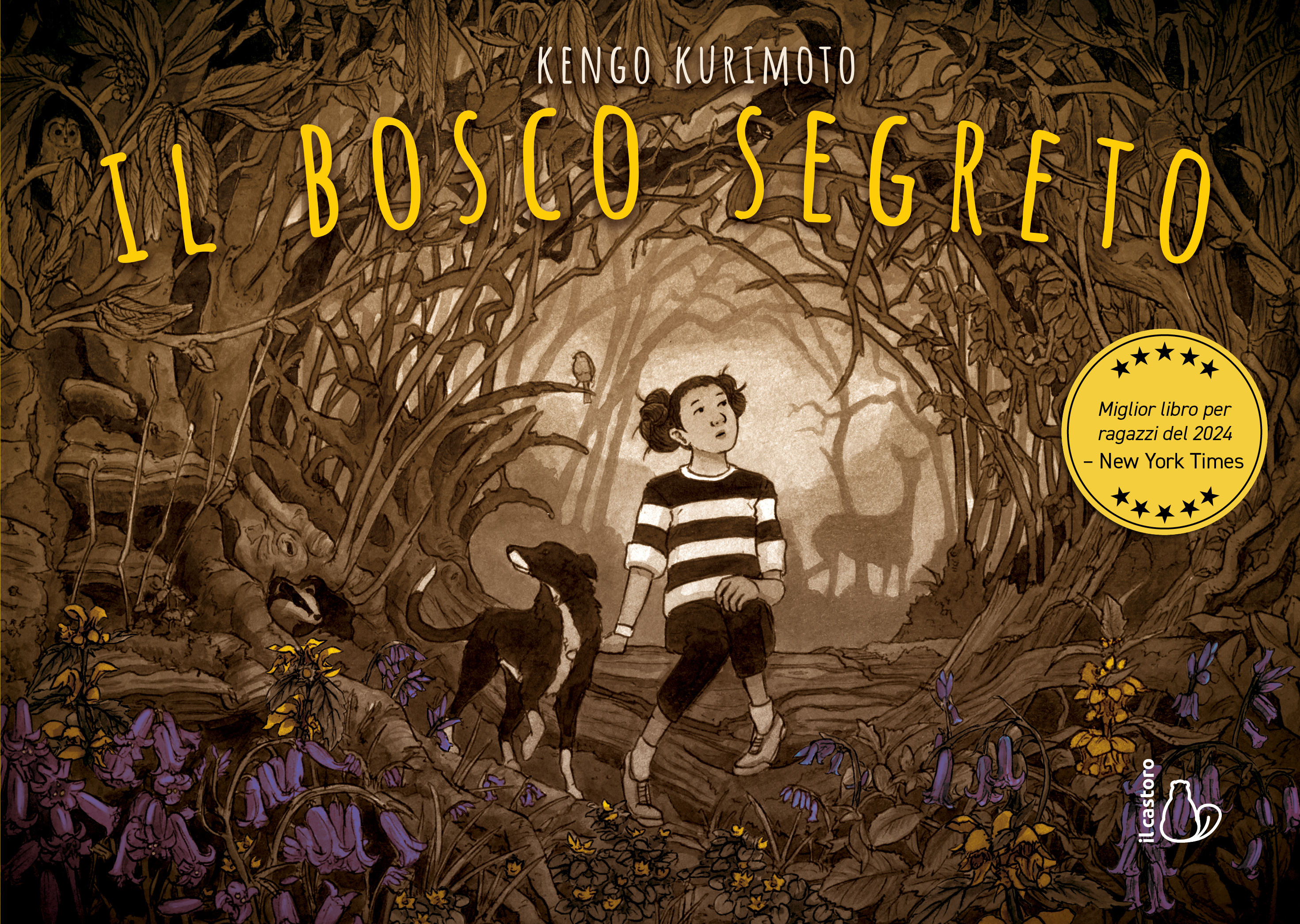
Your visual style seems to move between European comics, naturalistic illustration, and sensibilities connected to animation. Which artists — comics creators or otherwise — have most strongly influenced the way you build images and atmospheres?
Being a kid with Japanese parents, growing up in the UK, my gran would send over anime to encourage me speak the language. It failed, but I fell in love with Miyazaki films. Back then, anime was unheard of and it felt like my own little secret. They definitely had a profound effect on me and I still think his work has never been matched.
Later, movies like Akira and Ghost in the Shell had a huge impact. I remember a sequence in the latter, where the action gave way to a series of cinematic shots around the city, set to music. I’m sure this inspired the scene where Poppy and Rob are listening to the rain.
Another inspiration came from music; a choral piece called Five Hebrew Love Songs 4. Eyze Sheleg by Eric Whitacre. It captured the feeling of twilight in the forest, with an imminent feeling that something will emerge from the darkness. I often had it playing while drawing. I think music is a great way of orientating yourself when making comics; I have heard film industry people say “choose your soundtrack before writing anything”.
In terms of comics, The Arrival by Shaun Tan was definitely an inspiration. I love that book and crucially, it made me confident that a book with very few words could work.
Throughout the pages of Wildful, there’s an almost meditative attention to natural details, light, movement, and the smallest transformations within the landscape. What role do direct observation and drawing from life play in your creative process? Is drawing also a way of learning how to look?
I remember traveling to Guatemala for my gap year. I decided not to take a camera with me and instead draw what I saw. I look at those drawings nearly thirty years later and I can still smell and hear the places that I drew. I think it was the process of drawing that embedded the memory so deeply. For me drawing is an essential tool in learning how to look, and vice versa. I love the way it forces you to not take anything for granted. I’ll look at my drawing and puzzle why it looks a bit blobby, but if I persevere, I begin to see subtleties that were invisible to me before. Learning to see these things definitely helps improve the quality of my work, but there is something even more important; the more I can see, the more I can appreciate the unbelievable beauty of the world. This makes me very happy.
Many sequences in Wildful deliberately slow the rhythm of reading: nearly silent pages, details of leaves, animals, skies, or tiny movements. In a contemporary comics landscape often driven by narrative speed, your work seems to ask readers to pause and observe. How central was the rhythm of reading in the construction of the book? And how difficult is it to find a balance between what is shown and what you deliberately choose not to explain?
My time making Wildful was a bit like being a monk. I would walk 6km through the woods to my studio, draw, then walk 6km back. The most striking thing about walking the same route every day was that I would notice the changes; in the environment, in the seasons, in my emotions.
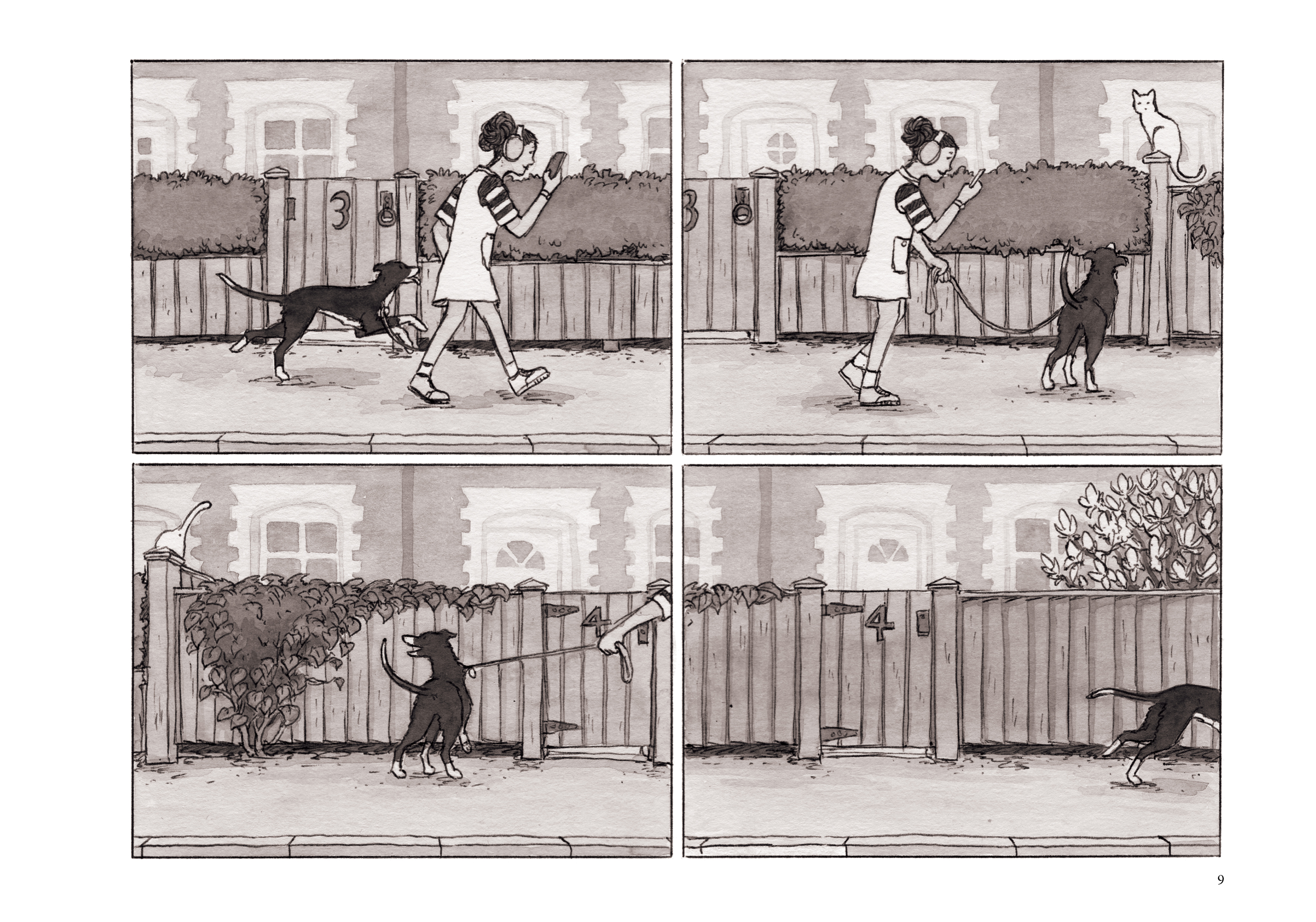
In the book, each chapter opens with Poppy walking down her street. I liked how the same setting would give a baseline to show how she’s changed; what occupies her attention? How does it make her feel?
Rhythm was important in the pacing too. As part of my research, I read “Understanding Comics” by Scott McCloud and he taught me how the width of the frames can describe the pace; numerous narrow frames for fast actions and wide shots where the reader is encouraged to dwell. This was unbelievably useful and actually quite simple to implement.
It was tricky getting the balance right of how much to explain or imply. Originally the book was full of nature facts but I decided to strip most of it out when I realized how many pages were occupied by people just talking. However, I also went too far the other way, and my editor, Sam Dewaele surgically reintroduced some dialogue to help orientate the reader, for which I am eternally grateful for!
At one point in the book, a character says, “A language is not made only of words.” It almost feels like a poetic statement for the entire work, which communicates so much through images, silences, and natural details. Have you ever thought of comics as a medium capable of teaching us a different way of looking at the world?
If comics could be a medium to see the world in a different way, that would be my ultimate dream! I have a number of books that I am working on right now and I have noticed a theme running through all of them; appreciation.
I love to lye on my back under a starry night imagining I am stuck to the bottom of a massive ball. Then I lift my legs into the air as if they are hanging down above the vastness of space. In many ways this perspective is truer than the everyday experience and I think it’s important to be reminded of it. In some ways it feels like my job is to seek out such things and communicate what makes them so compelling. For this, I couldn’t think of a more perfect medium than comics.
In recent years, there seems to be growing space for comics that privilege contemplation, atmosphere, and observation over tighter, more traditional narrative structures. How do you relate to this tendency? Do you feel part of a specific contemporary sensibility, or do you prefer not to think in terms of “movements” or “currents”?
I have noticed as art forms evolve, there is a tendency to go bigger and bolder, while at the same time, a counter thread tends to become more nuanced and subtle, exploring deeper themes. I do see a particular need for it now, when many of us are suffering from anxiety and over-stimulation. My desire to write Wildful came from this need, not at all in a strategic way, but simply because I needed to step away myself.
Having said that, I love the fast-paced, epic stuff too and I think its healthy to have a good mix of it all.
Your work exists within a very international space, where different sensibilities coexist: the contemplative pacing of certain Asian narratives, the atmospheric attention of European comics, and a visual construction influenced by animation and video games as well. Have you noticed differences in the way audiences from different countries respond to your work? Have particular interpretations or sensitivities emerged depending on the cultural context?
Wildful was first published by Groundwood in Canada. Initially, I was surprised that Canadians would be interested, with all their epic landscapes, why would they want to see a book set in a scruffy wood just round the corner from my flat? In the same way, when it was featured in the New York Times, it blew my mind that someone in one of those skyscrapers in Manhattan would like it. I guess we all share the same yearning to connect with Nature?
I have been most bowled over by how Wildful has been received in Italy. I get a sense that the medium is culturally taken more seriously than in the UK, with everything from the Lucca Festival to your own publication. When I visited Vasari’s astonishing paintings on the dome of Florence Cathedral, or the awesome frescoes of Pisa’s Campo Santo, it all made sense; to see the continuous tradition of visual story telling going all the way to Magnus and beyond. It is extremely flattering to think a culture with so many riches enjoys my work!
I would love to see Wildful in Japan one day. The notion that the whole world is alive was very much inspired by Shinto. As well as the meditative rhythms from Zen. Ironically, Japan is also one of the most urbanized, densely packed and hyper-stimulated places on Earth. I wonder how it might be received?
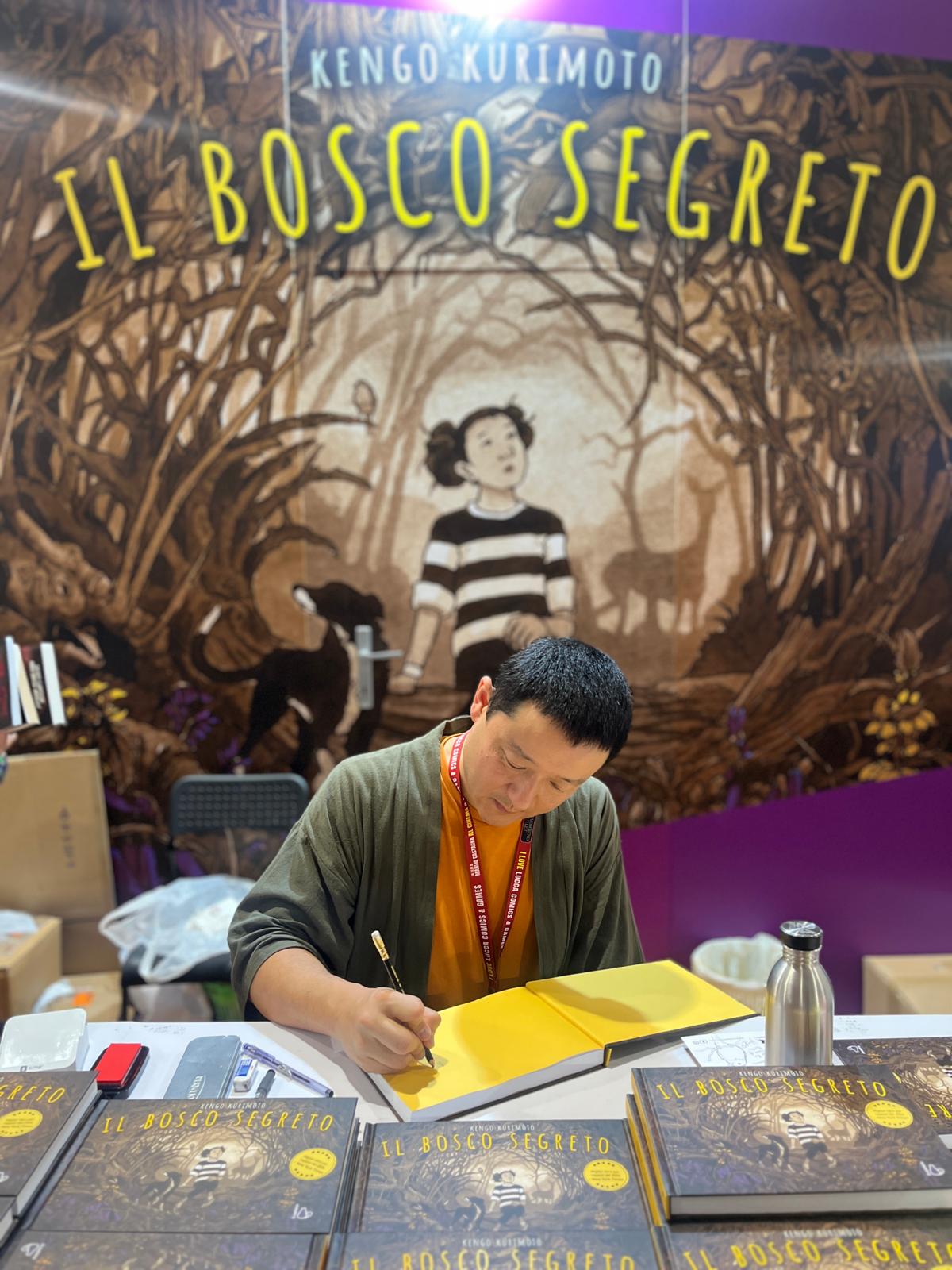
By the end of Wildful, one is left with a rather rare sensation: the feeling of having passed through a work that does not merely present itself, but quietly accompanies the reader. As though, after closing the final page, the forest does not truly end — it simply continues somewhere off-frame, breathing softly. If the comic continues to “breathe” even after its last page, what do you hope truly remains with the reader once they leave that forest behind?
That is the most amazing compliment I have ever heard. Wow!
I would love for readers to notice things in their own world, that bring them joy every day.
I purposefully didn’t want the story to be set in some grand, but distant national park. I wanted to show that beauty exists everywhere, even in a scruffy wood with a broken down car. In many ways, I think the every-day experience of the little things can be just as profound as the presence of a great mountain, and the closer it is to home, the better you can get to know it.
I remember finishing the book and returning to my normal life in games development. It was so easy just to forget everything I had gone through and get sucked into the usual state of busyness. Just like any practice, carving out moments to stop and listen each day, takes a bit of effort to begin with, but ultimately, it’s what makes life feel magic and alive.
Thank you for these questions. I am extremely touched by such a deep interest in my book and all the things that you noticed. It makes the whole process feel truly worthwhile. Warmest regards!
Our heartfelt thanks to Kengo Kurimoto for guiding us through the world of Wildful and for sharing his reflections on comics, observation, and the beauty hidden in everyday things. We would also like to thank Editrice Il Castoro for making this interview possible.
Interview conducted via email between May and June 2026.
Kengo Kurimoto is a British author and illustrator of Japanese heritage, born in Scotland in 1979. After a long career in video games, animation, and design — during which he also served as Design Lead on the acclaimed LittleBigPlanet series — he chose to return to more traditional tools, such as pencil, paper, and ink, bringing to comics the sensibility shaped by his diverse creative experiences. Wildful (Il bosco segreto), his debut graphic novel, published in Italy by Editrice Il Castoro in a translation by Alessandro Zontini, received widespread international acclaim and was named among the best children’s books of the year by publications including The New York Times, The Guardian, and Kirkus Reviews. In 2026, the Italian edition of the book was awarded the Premio Andersen – Il mondo dell’infanzia in the Best Graphic Novel category. He lives and works in Surrey, United Kingdom.