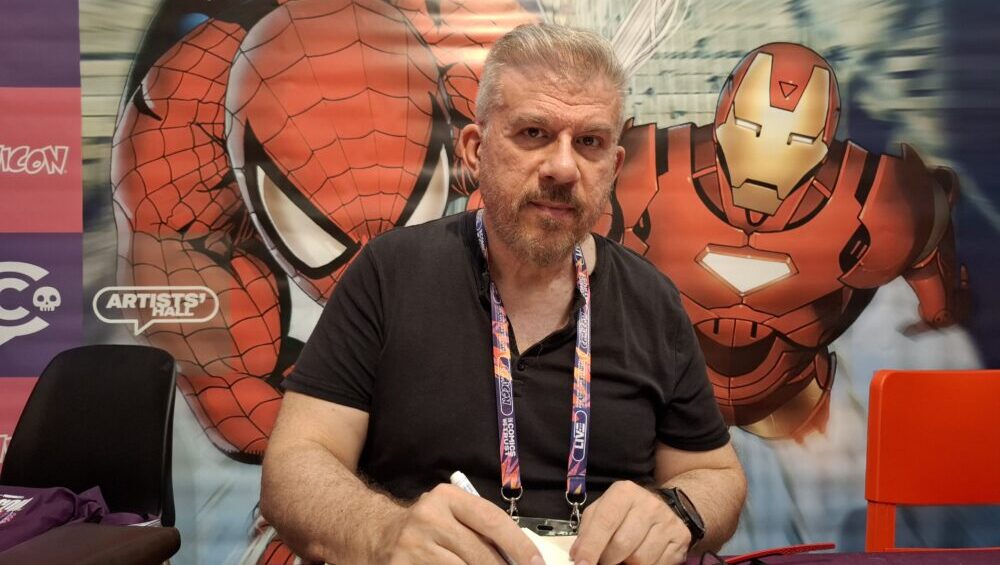
Meeting Gary Groth is always an interesting experience. His vitality and caustically polemical spirit had already struck me at the 2024 Press Café in Lucca, where, in a talk with Riccardo Corbò, he shared numerous anecdotes about The Comics Journal, the magazine he founded in 1976 with Mike Catron, which would forever change the way comics, American and international alike, are critiqued and written about.
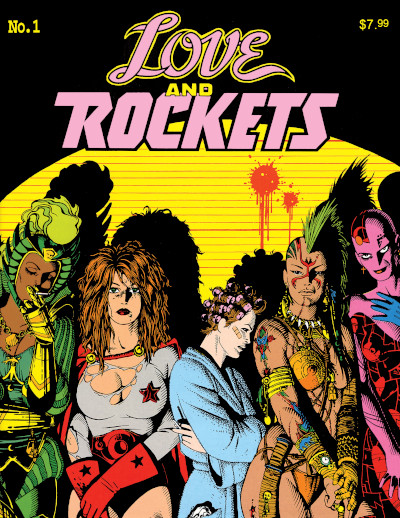
But 1976 also marks the beginning of another venture, one that would truly set sail in 1981 and go on to change the approach of the entire North American comics publishing industry. Fantagraphics, the publishing house that grew out of the taste and experience sown by the Underground movement of the 1970s, introduced the idea of a different kind of comic, auteur-driven and aimed at adults. With the publication of the Hernandez brothers’ Love and Rockets in 1981, that idea found a new and unprecedented form: books of great artistic and literary value, forerunners of those “graphic novels” that are perhaps best left unmentioned in Groth’s presence.
Since then, through successes and failures, through battles won and lost (all recounted in the imposing and richly detailed We Told You So: Comics as Art, the oral history of the publishing house edited by Tom Spurgeon and Michael Dean), Fantagraphics has continued to publish (multi-award-winning) books by American and international authors, from great classics to new names, all with the aim of making the most beautiful comics possible.
And it is precisely this adventure, now fifty years long, that we discussed with Gary Groth, who proved to be just as approachable, generous, talkative, and irreverently polemical as I remembered him.
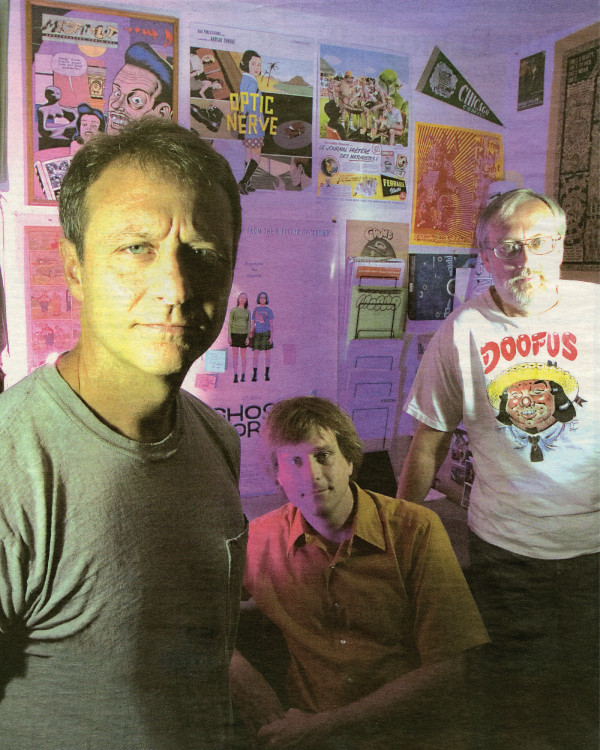
Hi Gary, and thanks for your time. It’s great to meet you a second time, after Lucca in 2024. During your Press Café there, you talked extensively about The Comics Journal. This time, I’d like to focus more on the other side of your work: publishing comics with Fantagraphics, which in 2026 celebrates its 50th anniversary. So I’d like to start from the beginning. What brought you to found a publishing company?
You have a few hours? (laughs)
I was a comics fan and a comics reader when I was a kid. I think I started reading comics around 1964, more or less. When I was 13 years old, I published a fanzine about comics called Fantastic Fanzine. I continued doing that throughout high school, from the age of 13 to 17. I was your typical obsessed comics fan, so I was part of comics fandom. I made a lot of friends, all of whom read comics; some also published fanzines. It was a community. We would meet at comics conventions, exchange ideas, and share our passion.
Eventually, I went through several years of higher education, but ultimately dropped out of the University of Maryland, where I was studying journalism.
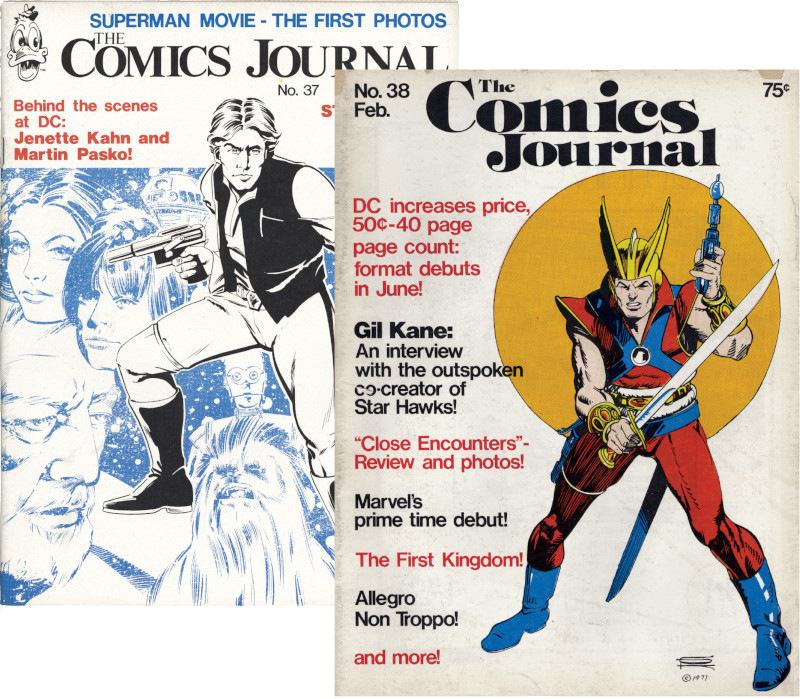
My partner at the time, Mike Catron, and I started The Comics Journal in 1976. It was a combination of focusing on something we had some expertise in — comics and the history of comics — and something we were passionate about. Because I had published this fanzine for so many years, I already knew how to put together and lay out a magazine. At that point in our lives — we were 20 or 21 years old — we wanted to create a serious magazine of journalism and criticism about comics and the comics industry.
We had the feeling that comics, as an art form, should be more advanced and elevated than they were at the time. I had a vision of comics as an artistic and literary form that was rarely being used in that way. You had comic books, newspaper strips, gag cartoons, political cartoons, but you very rarely had what I would call literary narrative comics. The underground comics were predecessors to what I was imagining comics could become. So the magazine devoted itself to envisioning comics as a legitimate art form and criticizing the comics that were being produced at the time.
Then, coming out of the magazine, around 1980, we started publishing comics, and we just sort of fell into it. We had a distribution network, and we were publishing a magazine that was highly critical of what was being published at the time.
After a period in which the underground comics movement had more or less withered away, there had been a period between 1975 and 1980 when there weren’t many interesting independent comics being produced in America.
Around 1980–81, a new generation of cartoonists appeared, while members of the underground comics generation were still producing work. I think RAW, edited by Françoise Mouly and Art Spiegelman, started in 1981. Robert Crumb started Weirdo in 1981. We started publishing Love and Rockets in 1982.
And the 1980s saw what I would call the second revolution in comic art — the first being the underground comics movement of the 1960s and 1970s. That is how we started publishing comics, and that was the context in which we began.
Was publishing comics something you had in mind from the beginning when you launched The Comics Journal, or did it evolve naturally over time? Did you also faced criticism from people who argued, “You criticize comics, yet you publish them yourself.”?
No, we didn’t have any plans to publish comics. We only wanted to publish The Comics Journal.
At that time, our dream was simply to do something worthwhile that we could make a living from. Something that could give us satisfaction and fulfillment, something into which we could pour our principles and our passions.
Of course, it just happened that we knew more about comics than anything else, and we had educated ourselves to some degree about what journalism meant.
I grew up in Washington, D.C., during Watergate, so I was reading the newspaper every day, and I studied journalism at the University of Maryland. Through that, I developed a respect for what journalism could accomplish.
That was one of the things we wanted to do with The Comics Journal: we wanted to write real journalism about the comics industry. At the same time, I was also educating myself about art and literature. The more I learned — by reading contemporary fiction and discovering cinematic art — the more I realised how far comics were from that kind of aesthetic goal. So we really wanted to publish a critical, investigative magazine about comics. We hadn’t even considered publishing comics. We simply fell into it.
Friends of mine started submitting work to us. We already had a distribution network, so we could sell The Comics Journal and enter what was then the nascent comic-book market in the United States. So if we wanted to publish a comic, all we had to do was use the same printer we were using for The Comics Journal, print the comic, and run it through the same distribution network.
It was a very natural and organic progression, because we started publishing the kinds of comics that we had been envisioning through the critical lens of the magazine.
I’m sorry for that incredibly long-winded answer (laugh).
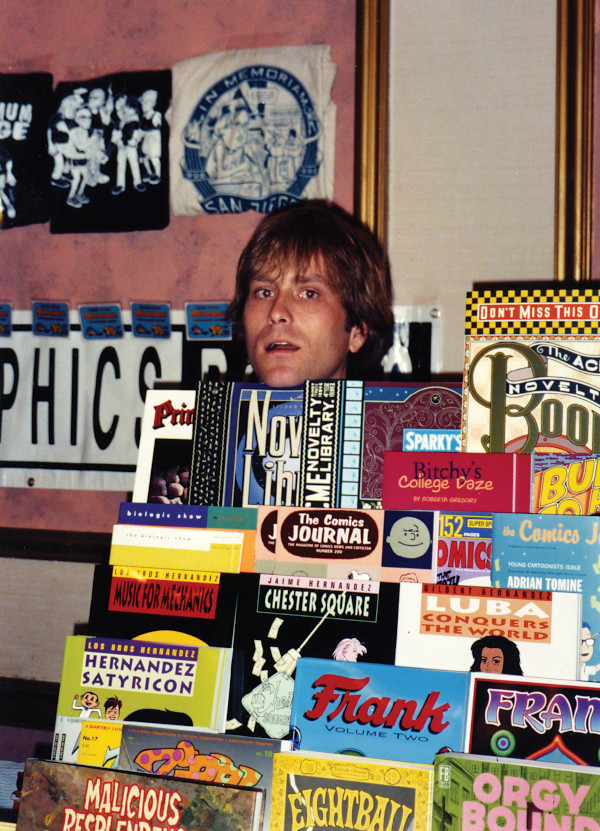
The first comic you published was Love and Rockets: how did you come to that? What was the spark that made it the first comic you published and led you to continue working with the Hernandez brothers?
It was pure chance. Gilbert, Jaime, and Mario had self-published a 32-page magazine called Love and Rockets, and they sent a copy to The Comics Journal for review. I’m not even sure they included a note; if they did, it probably just said, “This is for review.”
At the time, we were working out of a big house where we all lived and worked together, three or four of us. This was before the Internet, so we got big stacks of mail every day. One day I was going through it, opening envelopes, and I pulled out Love and Rockets number one. I read it, I loved it, and I wrote a rave review for the Journal. I basically said that this was the future of comics, that this is what comics should be doing.
Then I got in touch with Gilbert and Jaime. I didn’t remember it at the time, but they had actually contributed some spot illustrations to The Comics Journal before publishing Love and Rockets. I asked them, very casually, if they’d be interested in us publishing it. I admired the work so much and thought it would be a great project to take on. We were all close in age; they were a couple of years younger than me. And they said “Sure,” just as casually.
Then I suggested a crazy format. Most comics at the time were published by Marvel and DC, and they had a very set format: comic-book size, full colour. I wanted to set Love and Rockets apart from those mass-market comics, so I proposed a black-and-white magazine, 64 pages, published quarterly, with each of them doing roughly 32 pages per issue.
Easy for me to say, since I didn’t have to write or draw it. But they agreed, and that’s how we started. After four 64-page issues, we realised it was backbreaking work and there was no way to keep up that pace. We cut it to 32 pages, which made it manageable, and we were able to keep publishing about four issues a year. So that’s how it came about. And now, 44 years later, we’re still publishing it, and they’re still writing and drawing.
Did you realise at the time that you were also creating a model that other people would look to? You had already said that you saw Love and Rockets as the future of comics, but were you conscious that you were helping to establish something new?I think we were aware. We knew that we were creating something new. There are periods in the history of various art forms when something new emerges within the form, and I think we were conscious that we were part of that.
Shortly after we published Love and Rockets, we started publishing Peter Bagge’s Neat Stuff. Then, after that, we published Dan Clowes’ Lloyd Llewellyn. They were all young cartoonists. We were all in our 20s, and many of them were inspired by the underground cartoonists and the ethos of the underground movement: independence, and the need to do exactly what the artist wanted to do without corporate restrictions.
So, embracing that artistic freedom, we started publishing these young cartoonists, one after another. They often approached us because we were publishing The Comics Journal, and then Love and Rockets. And the more comics we published, the more artists were attracted to what we were doing. After Dan Clowes, we started publishing Jim Woodring, Joe Sacco, Carol Tyler, and others. Then it just snowballed. The 1980s were an incredibly fertile period in the history of comics. You could see this movement of independent comics and independent cartoonists emerging. We felt very much a part of a movement.
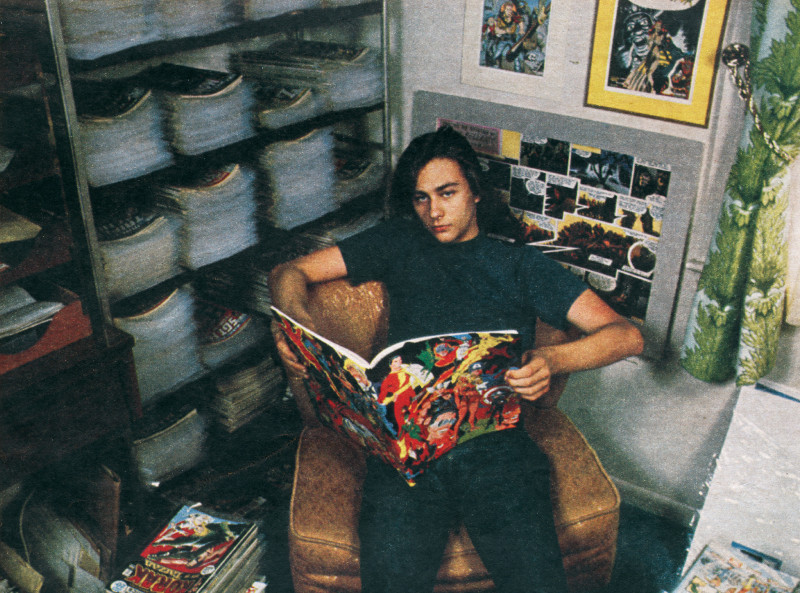
I will pick up directly from your answer: the 1980s were a period in which, as you were saying, Fantagraphics and other independent publishers were emerging, alongside figures such as Art Spiegelman with RAW. At the same time, the decade also transformed parts of mainstream comics. Frank Miller and Alan Moore, for example, were working within that mainstream context, even as their work was pushing comics in very different directions. In a sense, these two worlds were quite far apart, but they were both contributing to a broader change in the way comics were created, read, and perceived — not only in the United States, but internationally.
I was reading an interview with Eric Reynolds in which he said that the 1980s felt like a time when everything was possible, and that some of that sense of possibility was betrayed by the 1990s. Looking back, what do you think was in the air in the 1980s that made that period feel so open and fertile?
Well, there were so many artists coming up who were inspired both by the freedom of the underground cartoonists and by each other. You also had people like Chester Brown emerging in the late ’80s.
Chris Ware was published in RAW in around 1988 or 1989. There was just this ferment of independent cartoonists who were doing fascinating, serious, interesting literary work. You had Joe Sacco, who at the time was, without anyone quite fully being aware of it, championing journalism in comics.
And I always took the position that the stuff coming from Marvel and DC — Frank Miller’s The Dark Knight Returns, Alan Moore’s Watchmen — was a kind of ersatz independent work that DC and Marvel were trying to appropriate without really understanding the artistic impulses behind it. The artists that I knew, published, and respected, we considered that to be somewhat phony independent work, pseudo-independent work: the same old corporate superhero comics dressed up as something allegedly new, which generally they were. So we reveled in: I’m not sure if I would use the word “purity,” but something like that. We felt that there was something among the artists we were publishing that represented or reflected a higher artistic ambition. And that’s where we wanted to take the art form.
If we look at the history of Fantagraphics, it’s also, like any human endeavour, a story about people. There are several key figures in the company’s history, including Michael Catron, Kim Thompson, and, later on, Eric Reynolds, like it is told in the amazing work of Tom Spurgeon We Told You So: Comics As Art, an oral hinstory of the company. Could you talk about their roles and about the importance of your relationships with them in building the company and bringing these comics to the world?
I can go through them. Mike and I met when we were 14 or 15 years old. We were both living in the Washington, D.C., area, and we found each other through comics. He was as much of a comics fan as I was. Once we met, we would get together frequently and talk about comics. He helped me with my fanzine at the time, and we established a friendship based on our mutual love of comics. We also always felt like outsiders. I don’t think we ever quite felt that we fit into mainstream America. So, when we were 20, Mike and I put on what we called a rock-and-roll convention in Washington, D.C., which we modelled after the comics conventions I had also organised. I was familiar with how to put on a convention. Our dream was to put on this convention, make a lot of money, and start a publishing company. Instead, we lost our shirts and had to get real jobs. We were floundering around and didn’t quite know what to do. Then, about a year later, we started putting out The Comics Journal. We actually took over the magazine from The Nostalgia Journal, which was already being published at the time. The editors of that magazine simply gave it to us. We didn’t pay them a penny. They just gave it to us, and we said, “We can do this. We can put out this magazine. We can transform it, we can change it, we can focus it entirely on comics,” which was what we loved. For the first year or year and a half of putting out The Comics Journal, it was just me and Mike.
Then Kim Thompson came on board. Kim lived in Europe. He was born in Denmark and lived briefly in the States, but his family moved to Europe, so he was really raised in France, Germany, and Denmark. He spoke all three languages. He came back to the States when he was 20. We met through a mutual friend. Kim had just come back to the country, had nothing to do, and didn’t know what he was going to do. But he loved what we were doing with The Comics Journal, and he basically asked, “Can I help? Can I come over and work on it?” We needed all the help we could get, so we said, “Absolutely. Come over.”
Kim just fit in perfectly. He was as passionate about comics as we were, he was knowledgeable, and he brought a knowledge of European comics with him. He was in sync with our mission for The Comics Journal. So we basically taught Kim how to edit and proofread and how to work on a magazine, and he picked it up instantly. He became part of the three-man crew that put out the Journal.
Then, when we started publishing comics, Kim and I had different but overlapping sensibilities. I think that actually proved to be a strength in what we published, because he would choose certain things that I wouldn’t have, and I’m sure I chose things that he wouldn’t have. We both respected each other’s judgment. So we just chose what we wanted to publish, and we never really had any disagreements about it.
Kim also started bringing over European comics in the ’80s. We published Alberto Breccia in around 1985, I think, and he published Paracuellos. I think we also published Tardi in the ’80s. Then, in the ’90s, Kim started bringing over a lot more European material, especially work that he had read while growing up.So he really championed our European comics.
Unfortunately he died of lung cancer in 2013. Eric and I continued the tradition he established by publishing European and South American comics.
As in any history, there are always milestones, but also difficult moments. What would you identify as the major milestones and the most difficult periods? Were there particular crises or moments when you thought, “How are we going to get through this?”
It was always hard. I mean, in a way, we were living our dream because we were doing what we wanted to do. I felt, and still feel, incredibly fortunate because I could do what I wanted to do. I was terrified of working in corporate America. I hated the idea. I knew I wouldn’t fit in.I did have a number of jobs in my early 20s, before we could eke out a living with Fantagraphics, and invariably I would quit the job or get fired. I was a terrible employee. I hated working for someone else. I resented the idea of wasting eight hours a day doing work that I had no interest in doing.
It was hard for me to figure out what to do with my life. So when we started Fantagraphics, and then a few years into it we were able to make a living from it, it was like a miracle.
I’m not sure I might have forgotten your question. Oh, the highlights and the difficult moments. Well, you know, it was always hard because we weren’t businessmen. I mean, I never took a business course. I don’t have an MBA. I figured out that you needed to bring in more money than you spent. That was the extent of my business sophistication.
We just kind of muddled through. At the beginning, there were three of us, and eventually we would hire someone else who was invariably a friend of mine. I’d say, “Come on board. We need help designing a magazine,” or whatever. And so we slowly enlarged the staff to four or five people.
But I’m not interested in the business side. It’s the part I like the least. What I like most is the reason I started it, which was to engage with creative people, to put their work out there, to look at it critically, and to use those critical skills in a real and meaningful way. The business side was simply what I had to do in order to accomplish that.
Because I didn’t know what I was doing, it was incredibly hard. And because I’m sort of stubborn and pigheaded and willful, I wanted to compromise as little as possible. I didn’t want to publish superhero comics, and I didn’t want to publish genre comics.So that led to a series of economic disasters, and we just always had to push through them. We were always skating on thin ice.
The most fulfilling part of it was being able to publish artists like Jim Woodring or Carol Tyler. And the worst part was striking that balance between making enough money to have a viable business and not succumbing to the temptation to publish stuff that we would be embarrassed to publish. Not that we haven’t. We did. I never believed in purity.
We did what we had to do to stay in business, which is why we published Eros Comix in 1990 or 1991. It was our line of erotic comics, and we did it because we were going to go out of business. I discovered that we were just losing money every month. There didn’t appear to be anything we could do about it. We were publishing the books, we had the overhead, and we weren’t making enough money to cover it.
And then I had the bright idea that we should publish erotic comics, and that worked. We dug ourselves out of a hole and continued. Eros Comix helped us get through the ’90s.
There was also another difficult moment, in 2013, when you had to turn to crowdfunding. And about ten years earlier, there had been another situation like that. Did these experiences, despite the high amount of stress and uncertainties, create a stronger relationship with your audience? Did they lead you to engage more with the people who were reading your books, people who wanted to help because they didn’t want to see you disappear?
We did crowdfunding a couple of times. We did it before there was crowdfunding, in early 2000. Once again, we were on the brink of catastrophe. But the Internet existed by that point, so we sent out an alert that basically said, “Please buy our books. We need your help. We’re in another economic downturn, and we need you to buy books.”
A lot of people spread it all over the web. People who had fan bases helped us, and again, readers came through. That was a period when, if enough people bought books directly from us, it would get us over the economic hump. And you’re talking about so little money — $50,000, $60,000, maybe $70,000 would allow us to continue publishing. It’s kind of a drop in the bucket in the grand scheme of things. I mean, it’s like nothing. But if you don’t have it, you don’t have it.
One of your long-standing goals has been to establish comics as an art and literary form, and as a medium for adults. You, and later others, helped make that happen: comics are now widely recognised as something adults can read, not only because of the stories they tell but also because of the formats in which they’re published and sold.
Fantagraphics was one of the publishers that helped establish the graphic novel as a format. How do you see your role in turning it into something that could be published and sold as a book? And what do you make of the graphic-novel market today?
There’s also a criticism you hear quite often now: that “graphic novel” has become a label stuck on a book to make it seem more respectable, so people can say, “I’m not reading comics, I’m reading a graphic novel.” What do you think of that?
I have to say that in the ’80s and ’90s, we all really hated the term “graphic novel.”
First of all, they weren’t necessarily all novels. I mean, there was memoir, there was autobiography, there was journalism. So we resisted the term for a long time, until you couldn’t anymore. In fact, comics just became known as graphic novels, and that’s what we’re stuck with. I don’t know what role we played. I mean, we were really pushing against the prevailing notion of comics as essentially a frivolous and mindless distraction, and the notion that comics could be art.
When we started in 1976, the proposition that comics could be looked at in the same way that literary fiction or art films could be looked at was just laughable. No one even conceived of it, and no one thought it should be the case. People were very happy with the way comics worked. So we were really pushing against that monumental zeitgeist that looked at comics as just junk. And I think we went a long way toward establishing the fact that comics can stand alongside any other art form in the depth, profundity, and expressiveness of the form.
I don’t know how to quantify it, but we did feel like we were an instrumental part of that movement. And I guess, in a way, we still are, 50 years later. We still feel that way. I’m not sure what we, or I, envisioned. You’re so much a part of a moment that you’re not looking 20 or 30, much less 50, years down the road. I just wanted comics to attain the same level of aesthetic value as other forms. And I guess at one point I thought comics could either become a mass medium, which they weren’t in the 1970s and ’80s — they were a very tiny niche medium by that point — or they could go the way of poetry. They could become a bunch of comics being produced for a handful of connoisseurs who appreciated the form. Of course, what happened is somewhere in the middle, and something much more complicated. So, you know, not quite the way I envisioned it.
The way comics have evolved over the last 25 years is complex and interesting. What you have now are comics dominated by YA, manga, and superheroes. The kind of comics we championed, the literary comics, are actually, and still, in the distinct minority now.
Yeah, although there are also critics and readers who are interested in these kinds of comics. So, from your point of view, is there still an audience for them? How does the market and its structure work today? Is there a market that can actually sustain literary and adult comics?
This market is small. I mean, it’s a real minority market.In a way, we missed a certain window with comics. I don’t know what it’s like over there in Europe, because I don’t know enough about it. But in the ’70s, there were serious critics who wrote about fiction, film, music, theater, and so on. And now there are mostly just pop-culture reviewers who are not serious critics.
Concomitant with that is the fact that the readership for serious works of any kind has diminished. As a result, most people are very happy sitting at home watching some piece of shit on Netflix — just some middle-of-the-road, well-produced movie with a star or two in it. They’re all at the same level. They’re not terrible, they’re not very good, and that’s what pop culture seems to have degenerated into.To find the interesting stuff, you’ve got to dig. You’ve got to really dig, and you’ve got to be able to make a distinction between art and all this corporate-produced junk that’s out there. Fewer and fewer people, I think, are interested in making that distinction.I was railing about this in the ’70s, ’80s, and ’90s, and I think it’s probably at least as bad today as it was then. So, you know, we’ve established this beachhead where comics are art, and people have some idea that comics are art and recognise them as art. But the conception of art has changed, too. I don’t know, does that make sense?
Yes, absolutely, that was actually part of the thinking behind my question. My impression is that there’s much more to read and discover now than even ten years ago. There’s a huge amount of work out there: a lot of it is very good, and of course a lot of it is mediocre or simply not good.
So my question was also about what it means to be a publisher looking for interesting work today. There’s so much material, so many people trying to break into the field, and you keep finding hidden gems, yet some really great artists still get overlooked. How do you approach that?
There’s probably more cartooning being done today than there ever has been in the history of the world, which makes it all the more important to engage your critical faculties so you can separate the wheat from the chaff, which I think fewer and fewer people are interested in doing. So you’ve got paradoxes within paradoxes.
Curiously, I think more film is available today, readily available to people, than ever before in the history of the world. I remember in the ’70s and ’80s — or I guess the ’70s, because VHS came along around 1980 — if you were looking for a film, you had to go to a repertory theater, or you’d have to watch it butchered on television. It was hard to find.
If you wanted to watch all of Fellini, I mean, it was a task. You had to be focused on it. Now you can buy a DVD, you can stream, you can find almost anything. But paradoxically, fewer people are cinematically literate today. A smaller proportion of people are cinematically literate than they were in the ’70s.
Why is that? I’m not entirely sure, except that we’re being drowned in mediocrity. We’re just being drowned in dreck. People grow up watching brainless movies on Prime or Netflix or Hulu or whatever, and they don’t cultivate an interest or a taste for great work.
So trying to publish great work is difficult because what’s most difficult about it is finding the readers — finding the discriminating readers that you need.
This connects to something we touched on earlier: how criticism, and comics criticism in particular, has evolved. You were the editor of The Comics Journal, which has changed enormously itself, moving from print to the Internet and beyond. Today more people are talking about comics than ever, but the way they talk about them has changed a lot too. We’ve seen this ourselves running a web-based comics portal for about 25 years, and I’ve noticed it even in my own ten years in this field. How do you see that shift? And has it changed the way people encounter and engage with comics?
Mass culture has always had a flattening effect, a kind of deadening, soul-killing effect. Depending on where you want to start, you can trace it back to the Industrial Revolution in the late 19th century, or to post-war America, when mass culture really took off. And that’s what we always fought against, because we thought that great art was essentially life-affirming, in the sense that it reflected and underscored what’s significant and moving about being human. I mean, that’s what Love and Rockets is about. The Hernandez brothers pretty much devoted their lives to that.So, you know, it’s always been bad. I was railing against mass culture in the ’70s. I don’t know if it’s technically worse, but I can certainly say it’s probably no better.
I read an essay — it was about 25 years ago — by Philip Roth. He was writing about literary culture and how it was under siege by mass culture. And I think he said that literary culture was essentially supported by about 5,000 people. These were the 5,000 people who bought all the literary books out there. I remember being struck by that at the time, thinking, “Holy shit, that’s not very many people to support an art form.”
And I don’t know how it was with writing, but I feel the same way: there’s just a small number of people who are passionately devoted to whatever art forms they’re devoted to, who are interested in the kinds of work that we do, and who support what we do.
Since we talked about cinema earlier, I’d like to touch on one last aspect before a couple of final questions. Today comics are deeply involved in transmedia storytelling, with adaptations everywhere, from manga turned into major anime series to superhero comics turned into blockbusters. Fantagraphics was involved in this quite early with Ghost World. Daniel Clowes’s book, originally serialised in Eightball, became a film in 2001, directed by Terry Zwigoff, and its screenplay was nominated for an Oscar. What was it like for an independent publisher to see the work of one of its cartoonists adapted by a filmmaker who also came from an independent background, with Crumb? And what did you learn from that experience?
I’m not sure I learned anything (smile). I mean, Terry really lucked out because Daniel was an outsider. I mean, Terry was an outsider himself. He liked incredibly obscure music. Before he did Ghost World, he did a documentary on a blues singer (about Howard “Louie Bluie“ Armstrong, NdR), then on Robert Crumb. He travelled in those circles in San Francisco.
And then somehow he convinced somebody to give him money to make a movie, and he and Dan collaborated on Ghost World. But that’s so unusual: to be able to have Dan’s vision transferred to the screen with as much fidelity as they did.
People have been trying to license Love and Rockets since approximately 1984. And Gilbert and Jaime have just refused to license it because they know that if they give up control over it, God only knows what the results are going to be. They’ve hung tough about it. They wanted to be involved in any film that was being made. Of course, people with a lot of money don’t want to involve them in the film. They want to hire their own people to adapt it.
So I think it’s unusual when anything is adapted into a film and makes it there unscathed, much less accurately or creatively or imaginatively transformed on the screen.
But I don’t think it’s really helped comics in any way. And I agree with Martin Scorsese about Marvel movies: all that stuff is just kind of destroying film, one Marvel movie at a time. I mean, God, is there anything stupider than a Marvel movie? It’s just terrifying how stupid and popular they are.
But, you know, that’s not something we had in the ’70s. I mean, you had shitty movies in the ’70s, or you had lousy Hollywood movies, but they didn’t reach the pinnacle of idiocy that Marvel or DC movies or whatever have reached.
Going back to Fantagraphics’ history: many of your authors are famous, at least among comics readers. This might be a mean question, a bit like asking which of your children you love most, so feel free to dodge it. Are there authors from Fantagraphics’ past you’d like to see rediscovered? Artists or works you felt were groundbreaking at the time but never had the impact they deserved, and aren’t talked about much anymore? And on the other hand, are there artists working today who are still under the radar and deserve more attention?
I know, it’s a mean question.
That’s a tough question indeed. I don’t want to leave out two dozen artists if I start talking about just a handful of artists whom I love.
A lot of the artists we started publishing in the ’80s and ’90s have gone on to great success — artists like Joe Sacco, Charles Burns, and Chris Ware. People do know them.
Emil Ferris, for example, was an artist who came out of the blue and was a revelation when I read My Favorite Thing Is Monsters for the first time. It was just another agented submission that I started reading, and it was a revelation. An artist whom I think has not been given her due is Cathy Malkasian. We’ve published seven or eight books of hers, and I think her work is so intelligently conceived and beautifully drawn, and rich in emotional, sociological, and political aspects. She’s, I think, terribly underrated. There are a lot of artists out there whom I wish had achieved greater popularity. And I always feel terrible when we publish someone we believe in and it’s just hard to sell them. That happens.
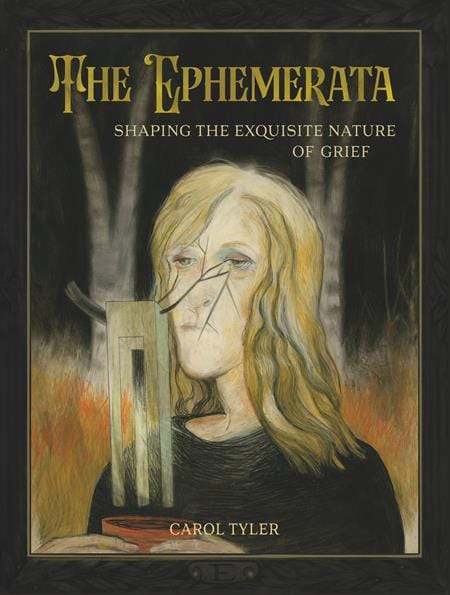
Carol Tyler’s latest book, The Ephemerata, is just extraordinary. It’s a book about the necessity for grief and how to grieve, and it’s probably — I think it’s the best thing she’s done. It’s a magnificent achievement. It is getting a lot of press, and she is getting a lot of attention, but I still wish we’d sell ten times as many as we’re going to. She deserves that. And I think people deserve it too: it’s not just the artist who deserves to sell, it’s the people whose lives would be enriched by reading it.

To close, I’d like to look to the future. This year you’ve launched or announced several new initiatives: the first two seasons (or the early years) of MAD, a complete new edition of Corto Maltese, and Takumi Graphics, a new line dedicated to Asian comics and manga. These are quite different projects, though connected in some ways. What’s the thinking behind each of them, and what audience are you hoping to reach?
I’ll tell you something: in the ’70s and ’80s, I was naive enough to think that everybody who appreciated good comics appreciated all good comics — every mode of cartooning. I thought people would appreciate all of it. I discovered that that’s not entirely true. Some people like newspaper strips, some people like comic books, some people like underground comics, and people break up into different camps. My feeling was always that it was just great cartooning. It was done in different modes, whether it was editorial cartooning, gag cartooning, narrative cartooning, or whatever. So our mission has always been to publish great cartooning, irrespective of what category it falls into, and not only to publish new and original work, but also to preserve the great work from the past.
MAD, which was actually a project proposed by the person in my office who’s editing the book, is a perfect example of trying to preserve a landmark work in a new way and present it in the best way it’s ever been presented. We’re also publishing all the magazine editions of MAD that Harvey Kurtzman either edited or edited material for before he left MAD. I think we’re publishing seven issues of the magazine along with the complete MAD comic, because all or most of it was produced by Kurtzman, who created MAD.
Regarding Takumi Graphics, we’ve been publishing manga for about 15 years or more, and it’s always just been integrated into the rest of our line.
One of our earliest manga collections was by Moto Hagio, who pioneered what’s called shōjo manga in the ’70s. That was brought to us by a manga expert named Rachel Thorn, and we started publishing her work. I think it was among the earliest manga we published, around 2011.We’ve been publishing manga since then, but it was just part of our larger line.
Recently, I thought maybe we should actually have an imprint devoted to manga, where we could focus on it and give it more attention. I’ve been learning more about manga over the last decade or so. There was a long period when I didn’t pay attention to manga. I was sort of repelled by that big-eyed aesthetic, I just didn’t get it. And I didn’t realise that, particularly in the ’90s, when manga was coming up and becoming a force, there was also a literary tradition in Japanese comics. So we started Takumi Graphics, and we’re looking for the same kind of work in manga that we publish from American, European, and South American cartoonists.
Regarding Corto Maltese, we really enjoy publishing European and South American work. And Hugo Pratt is one of the great European cartoonists. The series has never been published in colour before in America. It has been published a couple of times — NBM published it, maybe in the ’80s and ’90s, and I think IDW published it more recently. But we spoke to the rights holders in France, Casterman, and they presented us with full-colour Corto Maltese, the colour of which Hugo Pratt apparently supervised. So he approved of it. And we thought that would be a great new way of presenting it. It follows our desire to publish the world’s greatest cartoonists.
We’re publishing six volumes of Corto Maltese, with two stories in each volume, in large hardcover books. I met Hugo Pratt once, I think it was in Lucca. He kind of reminded me of Fellini. He was holding court in the hotel lobby, and there were a whole bunch of us sitting around. He was a very oversized kind of personality. He was speaking voluminously, and I can’t remember if he was speaking in Italian or English. But I just remember enjoying his presence. So that kind of adds another dimension to publishing Hugo Pratt — the fact that I was able to meet him so many years ago. One of the joys of this job is publishing artistic heroes of mine whom I read many, many years ago and often befriended — people like Jack Kirby — and then publishing them, which I could never have foreseen when I started The Comics Journal.
Yes, and that was along one of the questions I wanted to ask. Another important part of Fantagraphics’ catalogue is the republication of historic comics, from the complete Peanuts to projects like Lost Marvels. Are these also part of the mission you mentioned: not just publishing comics, but preserving the history of the medium?
Yes: preserving the great work of the past, trying to make it relevant today, and introducing it to young readers. We publish George Herriman’s Krazy Kat, and we’re planning to publish his work from the years before Krazy Kat too. So yes, that’s an important mission.
I was thrilled when we were able to publish the complete Peanuts. I’d gotten to know Charles Schulz, and then the opportunity to publish Peanuts came along . A lot of our books came about that way: I’d seek out an artist to interview for The Comics Journal, get to know them, and then the next step was, “Could we publish your work?” That’s what happened with Jules Feiffer. I interviewed him for the Journal, and then it dawned on me that we could publish a lot of his earlier work that no one else was publishing. And invariably, when I proposed it, the artist was enthusiastic and said, “Sure, let’s do it.”
An now the very last question. We’ve talked about Fantagraphics’ past 50 years and its present. What do you hope for the future, whether the next 50 years or just the years ahead?
You know, you or your son will be interviewing my son 50 years from now about how Fantagraphics has evolved. And we won’t be publishing anymore, we’ll be making holographic comics that people watch through a chip in their brain (laugh).I don’t know. Even to me, having lived it, it’s mind-boggling that 50 years have gone by and I’ve been doing this the whole time. We have a steady-state mission: to publish the greatest art and the best cartoonists we can find. I don’t know what pop culture will look like in the future or how that will change the mission and its nuances, but I think we’ll stay on that course. I hope that’s not too banal. That’s what we’ve done for 50 years, and I hope that’s what we keep doing.
Many thanks Gary, looking forward to the next 50 years of Fantagraphics.
Interview done via Google Meet in April 2026
A big thank you to Tucker Carson for his help and support

Fantagraphics
For 50 years, Fantagraphics has published some of the finest comics and graphic novels the medium has to offer. Its mission is to celebrate great cartooning in all its forms, from the art form’s early luminaries to the contemporary artists shaping the future of visual storytelling. Alongside its long roster of established talent, Fantagraphics continually seeks out new voices from around the world, honouring the rich history of comics while giving space to bold new stories, styles, and perspectives that push the boundaries of the medium. (Adapted from Fantagraphics website)
Gary Groth
Gary Groth is the co-founder and publisher of Fantagraphics Books, which he launched in 1976 with Mike Catron and ran for decades alongside Kim Thompson, who joined shortly after. As longtime editor of The Comics Journal, he became one of the most outspoken voices in American comics criticism, championing comics as an art form for adults. Under his direction, Fantagraphics helped shape alternative comics with titles such as Love and Rockets, Hate, and Eightball, and became a leading publisher of classic strips, including the complete Peanuts, Krazy Kat, and Popeye. Fifty years on, he continues to publish both contemporary cartoonists and the masters of the medium’s past.