In the last few years, if one had to name the most iconic, important, and influential Batman artist, the answer could only be one: Jorge Jiménez. With his clean, expressive linework and dynamic, versatile storytelling, Jiménez has been working with DC Comics for many years, illustrating numerous Superman stories (including a recent one for the anthology Superman: The World, set in his hometown of Granada), but above all, an impressive number of Batman issues. His work spans across three distinct creative eras: the technological, acidic, almost cyberpunk tone of James Tynion IV; the more cerebral and introspective phase with Chip Zdarsky; and now the new relaunch from issue #1 alongside Matt Fraction.
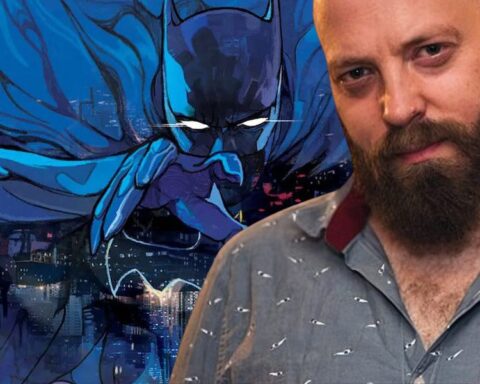
This new beginning owes a great deal to the Spanish artist’s pencils, who has reinvented Batman’s costume by drawing inspiration from the 1970s version — featuring the iconic blue cape and yellow utility belt, made legendary by artists such as Neal Adams and Norm Breyfogle.
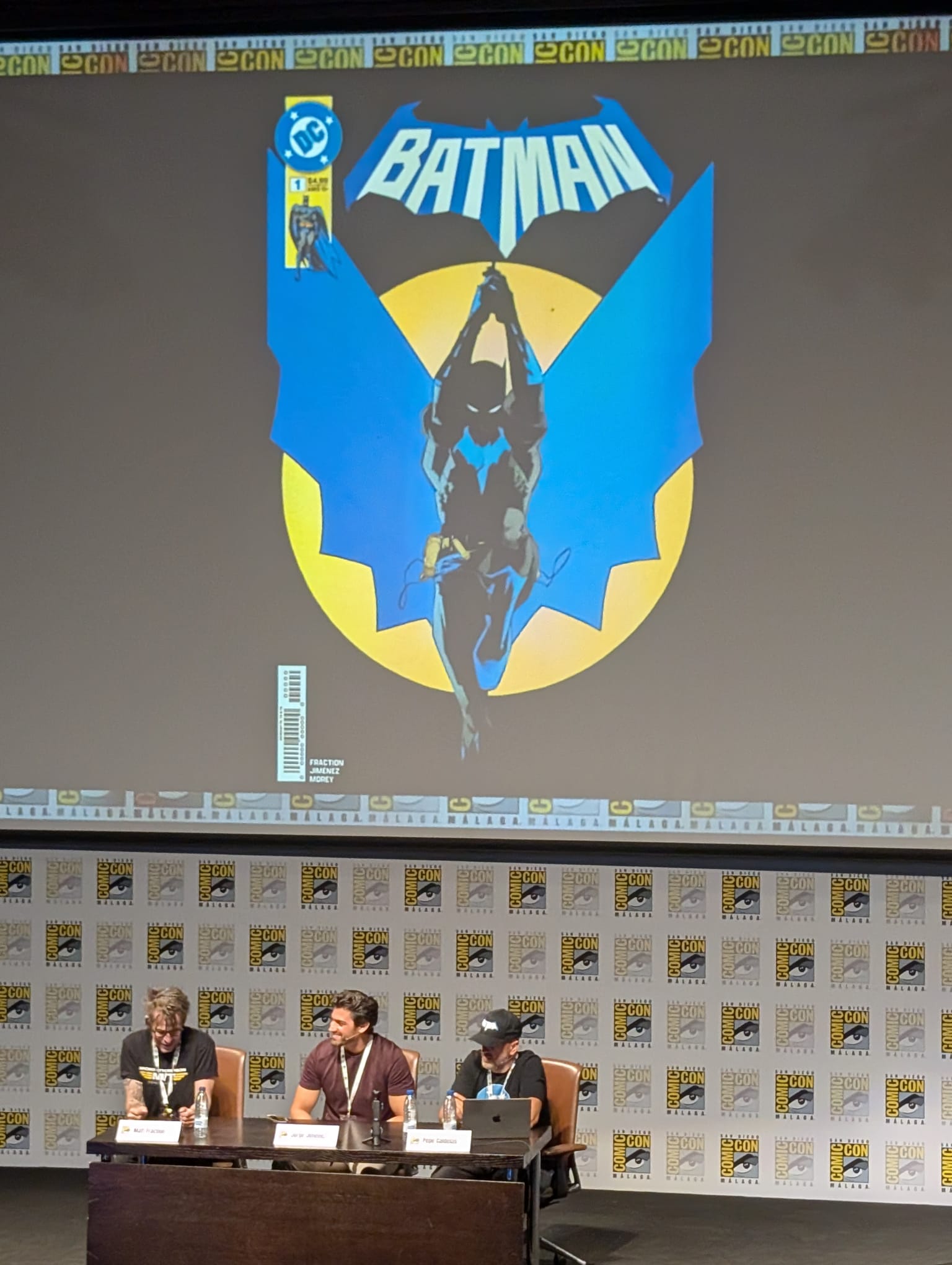
During San Diego Comic Con Malaga, we interviewed the artist, who, together with Matt Fraction in a dedicated panel, talked to us not only about his career and his many interpretations of Batman, but also about the new nemesis created for the upcoming issues: Minotaur.
Hi Jorge and thanks for your time. I would like to start how you start drawing, and if it was your dream to work in the United States?
That was my hobby, my childhood game, but I dedicated my life to sports. I studied physical education, and while I was halfway through my degree, I suddenly realized that what I was really good at as a child was drawing. So I completely rethought my life and said to myself: I’m going to be an artist.
I started drawing comics, making pages, and showing them at different conventions. Eventually, someone —my first agent— discovered me (I was 23 back then) and said: “There’s something in your art that I really like. I’ll start promoting your work in France and the U.S.” I was not sure, but he was really convinced of it. And that’s how I got my first job, which led to another, and then another —and here I am, more than 10 years later.
And were superhero comics something you always liked?
Yes, I’ve always loved superheroes. Superman was my favorite since I was a kid, but Batman is the one I’ve read the most, had the most toys of, and watched the most on TV. But Superman has always been special to me. Apart from superheroes, I also loved manga and anime. It was watching Naruto that made me remember how, as a child, I used to draw Goku from Dragon Ball, and that reignited my passion for drawing. I was 23, watching the anime and thinking: “This is so cool, I’m going to draw again!” That’s when everything changed again, and I started making comics. And being able to draw superheroes now is truly a dream come true for me.
Since you mentioned Superman, instead of starting with Batman, I’d like to go straight with him. He’s a character you’re closely connected to, having illustrated many of his stories. First of all, who is your favorite Superman among all the artists who have drawn him?
I will not talk about comics, because for me there is only one Superman: Christopher Reeve. In my imagination, in my mind, he is Superman. Everything else is just a version of him, who is the real one. That’s how I feel in my heart.
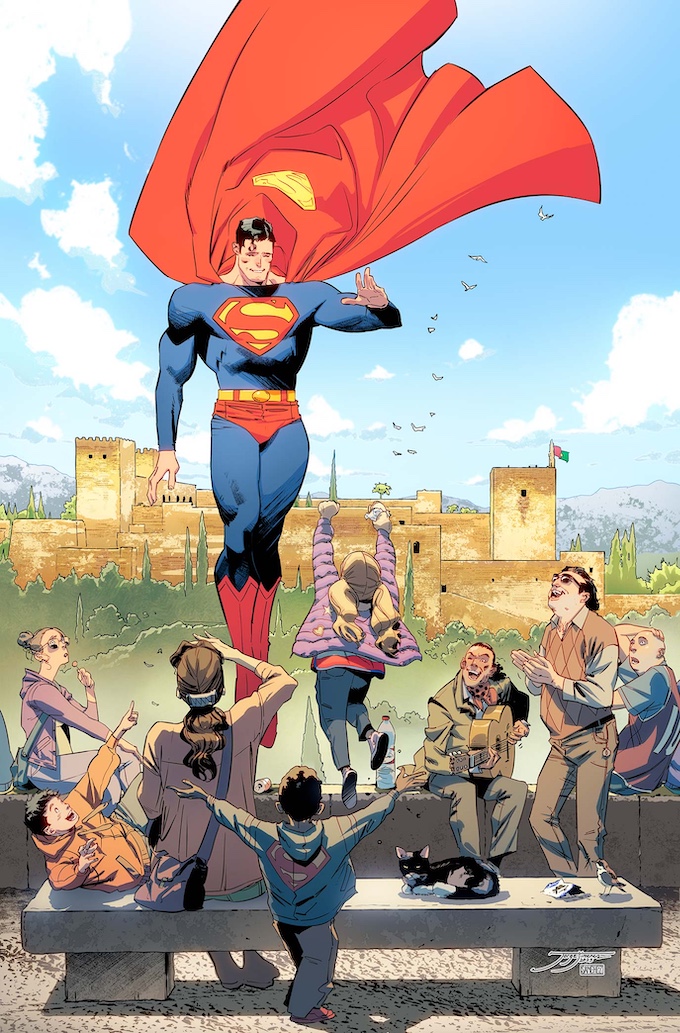
For Superman: the World, you created a story with Superman set in your hometown, Grenada. How was that experience? How did you approach the story?
The script is mine —I was both writer and artist. I don’t usually do that; I normally just draw. But this time it was something special: it was my land, my city.
I gave the story a humorous, simple tone. I wanted to include small references to my region, to important places like Sierra Nevada, the Alhambra, all those things from Granada. For me, it’s another dream come true —to officially bring Superman to my homeland in a DC Comics story is something beautiful that I’ll never forget.
Did you enjoy the writing experience? Would you like to continue doing it?
I like it. It’s fun, demanding, and difficult. And maybe someday I’d like to do something written entirely by me. But right now, I’m very happy drawing. I’ve always loved drawing —interpreting what a script says, acting as the “director” of a film that someone has written, and translating it into my own visual storytelling. That’s enough for me. It’s a job that fulfills me deeply. So, for now, I haven’t really thought much about writing something myself.
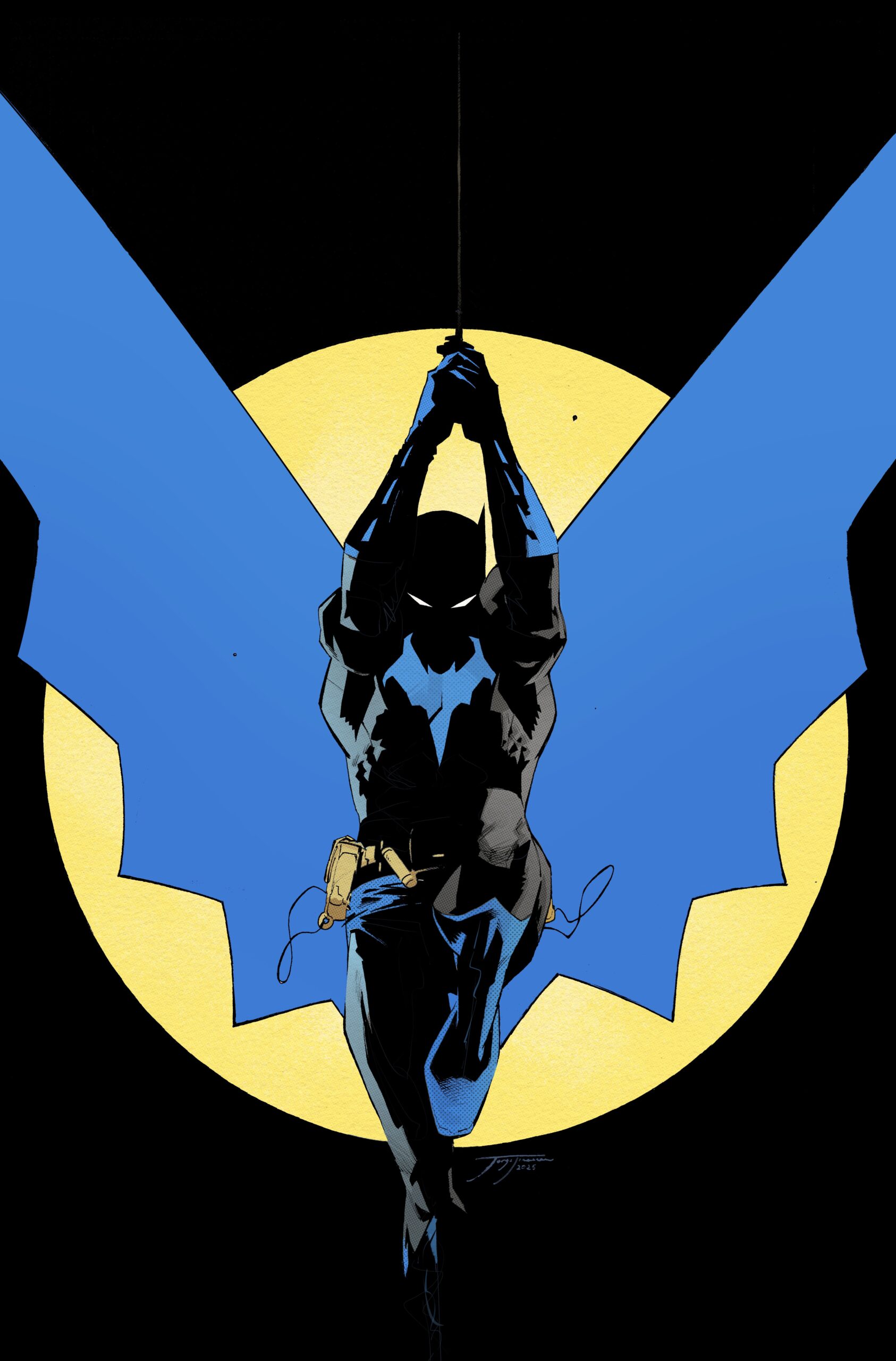
Now, speaking of Batman: over the past ten years, you’ve been the most representative Batman artist. You’ve worked with three different writers, yet you’ve always remained on the book. You’ve also told very different stories —with James Tynion IV, with Chip Zdarsky, and now with Matt Fraction. First of all, how has it been for you to interpret Batman in so many different ways, even in such a short time?
It feels different every time, and I think that’s helped a lot. But in this latest stage, with Matt, I wanted to go further, because after so many years with the same tone, the same line, the same costume design, I felt we needed a small change —something that made readers feel this new era was truly different. That’s why I brought back Batman’s blue suit, like in the 1970s, and talked with Tomeu Morey, the colorist, about giving it a slightly more pop, colorful, and vibrant look. I think that helps make it feel different again from previous eras —but in an organic way, not forced.
You mentioned that this change felt organic to you. At the same time, every writer has their own distinct style. So how was the change between writers for you? Did you notice differences in storytelling or communication? I was surprised when you said this was the first time you’d met Matt in person —it feels like you’ve been working together forever!
Yes, exactly. At the beginning, the relationship is a bit colder, because we’re just getting to know each other —he sends the script, I start working, doing storyboards, asking questions, and gradually a relationship forms until we end up as friends.
The same thing happened with Tomeu Morey on colors, and with all the writers too. With James Tynion, we’re already friends; with Chip Zdarsky, he’s a colleague I have so much fun with —he’s super fun. And I’m sure that with Matt, in time, it’ll be the same, because even in a short time, we’ve already clicked and built a strong professional friendship.
For me, that’s essential —because the better the communication between the writer, artist, colorist, and the whole team, the stronger the final product will be for the reader.
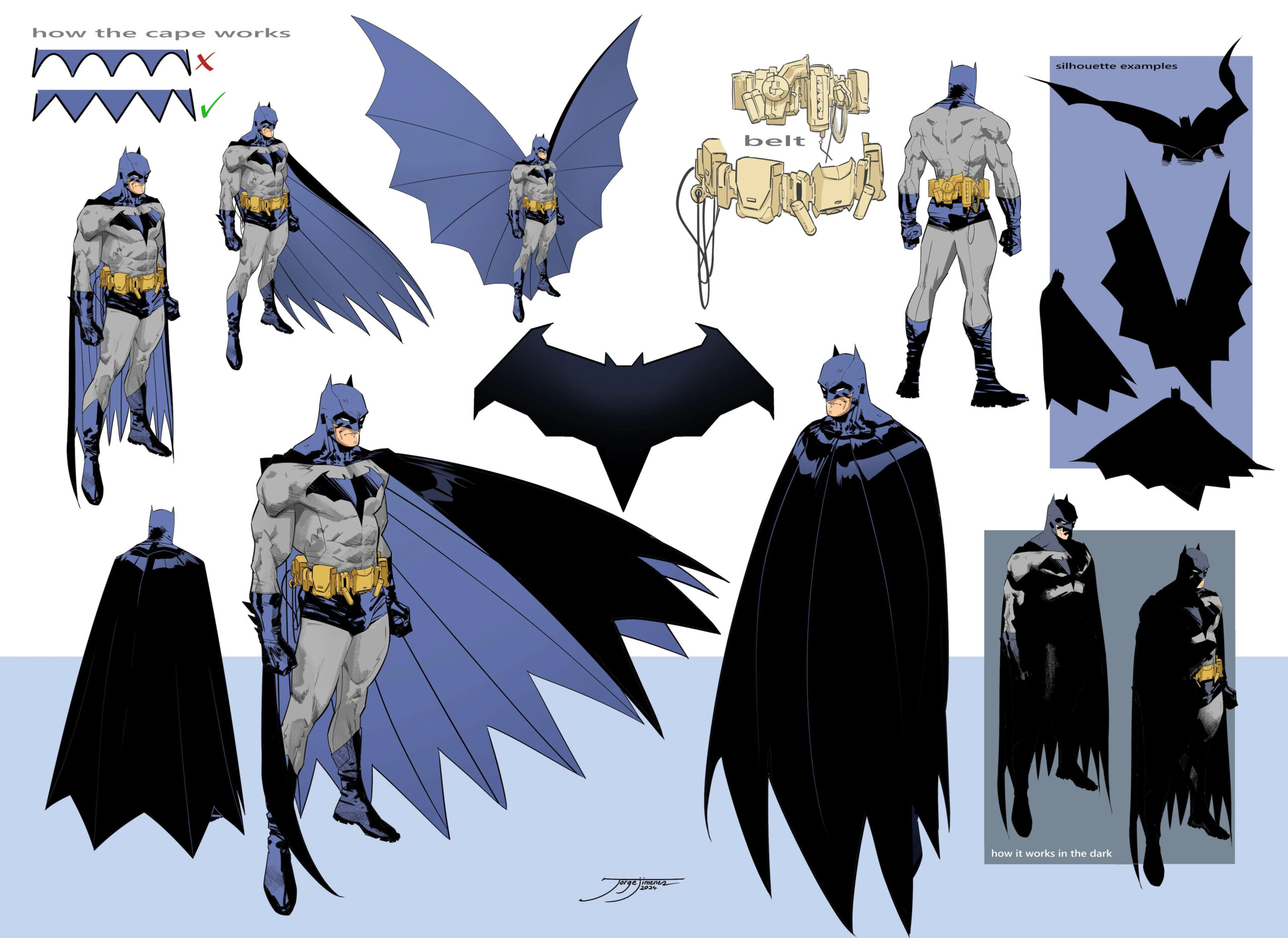
You mentioned also the latest Batman look, which is somewhat a reinterpretation of the famous Neal Adams version. How was that for you? Did you study his comics?
I’ve studied his work a lot but I also studied a lot Norm Breyfogle. He’s an artist that, for some reason, people often compare me to. I didn’t know much about his work before, but people would tell me: “You’re like a modern version of him.” So I looked into it, and I found great strength in his linework and his use of color —especially the blue tones— which have inspired me a lot in this new phase. Neal Adams, of course, has been also a major influence.
And you also cited Tomeu Morey, with whom you have worked since many years. How did your relationship evolved during these years?
We’re very close friends. We talk constantly and give each other direct feedback every day —“Hey Tomeu, can you change this?” “Yeah, maybe let’s adjust the light here.” It’s a continuous collaboration; we’re totally in sync.
When I proposed this new change —making it more colorful, simpler, using flatter colors without such heavy rendering— he was immediately on board. It makes the comic’s reading and storytelling flow much more smoothly.
And the last question —here at SDCC Malaga you and Matt have revealed the new villain, the Minotaur.
At this point Matt would probably jump in and say: “Careful!” (laughs). Yes, Matt had a very clear idea of what he wanted to portray, and we tried different mask designs until we realized that the Minotaur’s horns gave the exact cold and terrifying vibe we were looking for.
I was also inspired by the main villain from Squid Game for the mask’s front structure —I wanted it to be made of sharp planes rather than smooth, rounded shapes. I think that gives it a colder, more menacing tone. And the overall look —a very elegant, high-end suit— makes him even more striking. I think the character has great potential.
We’ll see how it turns out! It actually reminded me a lot of the Court of Owls series, with those depersonalizing masks.
Exactly —and that was something I found really interesting. As you keep reading the story and understand this character’s role, you’ll see that the connection with the Owls makes even more sense. I hope you’ll like it.
Interview done on the 27th September 2025 at San Diego Comic Con Malaga
We gratefully thank the press team of SDCC
Jorge Jimenez
Born in 1986 in Cádiar, a small town in the province of Granada, Spain, after studying physical activity and sports sciences at the University of Granada, he decided to dedicate himself fully to drawing and comics, a passion he had pursued since childhood. His first professional experiences came through collaborations in Spain and later with the American publisher IDW, where he worked on series such as Jurassic Park and Transformers.
Jiménez soon joined DC Comics, where he established himself as one of the most distinctive artists of his generation. His style—dynamic, expressive, and characterized by bold compositions—quickly attracted attention. Over the years, he has illustrated several major titles for the publisher, including Superboy, Earth 2: World’s End, and Justice League. He gained broader recognition with Super Sons, written by Peter J. Tomasi, which showcased his energetic storytelling and detailed character work.
In the following years, Jiménez became one of the main artists on Superman and later on Batman, collaborating with writer James Tynion IV, then Chip Zdarsky and in 2025 with Matt Fraction, with whom he relaunched the character from issue number one.