Americans look wistfully to the West as their mythic frontier, and many peoples around the world look to the Global West — America itself — as the outer edge of expressive possibility. Ironic, then, that it is often in the eyes of those from outside that we Americans find our dreams reflected in the way we most recognize — and which has the most refreshed relevance.
I first saw Carmine Di Giandomenico’s art when he drew, suitably enough, a Captain America story set in the century of America’s westward expansion for What If?, and Vegas, a modern drama of super-cowboys and meta-lawmen in George W. Bush’s Texas. Later these were fittingly enfolded by Di Giandomenico’s landmark work in Iron Man #500 and a run of Iron Man 2.0. Like Captain America’s morality, Tony Stark’s futurism represents the country as it *should* be; like the pioneers of old, Stark is the essential American entrepreneur, one of whom famously said “Go West, young man.”
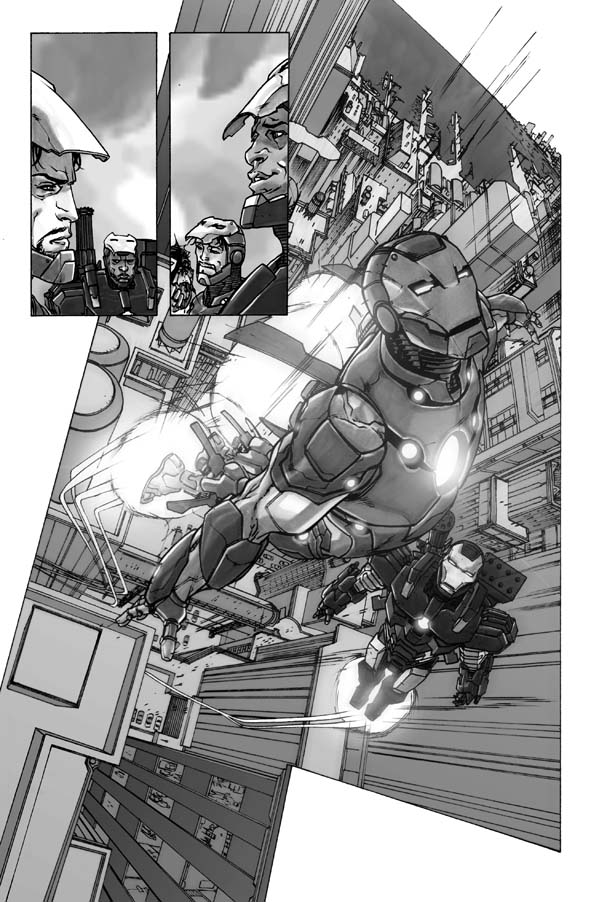
Di Giandomenico excels at the beautiful yet honest variety of human flesh young and old, and at operatic intensity that is never overboard. This suits him to generational sagas like the Iron Man anniversary issue, and to epics of America’s dark passages like the Depression- and segregation-era Spider-Man Noir, as well as the guarded (and armored) optimism of Stark’s Black counterpart James Rhodes in Iron Man 2.0 (not to mention the exoticism and squalor of America’s imaginings and anxieties about its foes as dramatized in Di Giandomenico’s stunning Mandarin sequences from the 2010 Iron Man Annual).
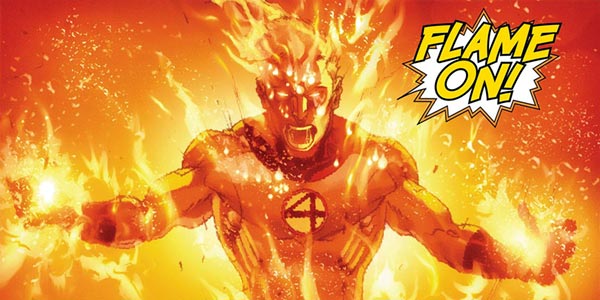
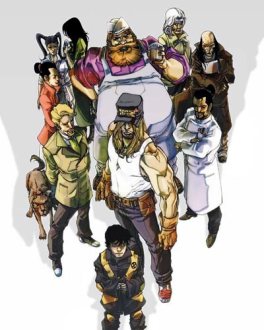 It’s no more than fate’s due that Di Giandomenico completed an epic update of The Odyssey in his native Italy before his creative crossing to American comics to crown some of that industry’s long line of achievement — his art is rooted in and reaches toward the fabric and far horizons of fantasy itself, no more in his Odyssey than in the utterly unearthly, fundamentally human visions he brought to the mythic Journey Into Mystery and Exiled series, and the scope of his encompassing eye from the intimate pathos of Battlin’ Jack Murdock’s post-immigrant melodrama to the grand tragedy of Fantastic Four #600’s dimension-crossing passage from sci-fi inferno to archetypal resurrection for Johnny Storm.
As white Americans will, I like to think of when I “discovered” Di Giandomenico’s art — but, like the land we conquered and the wise people already living on it, Di Giandomenico was there all along, and his gifts are a revelation it’s an honor to open our eyes to.